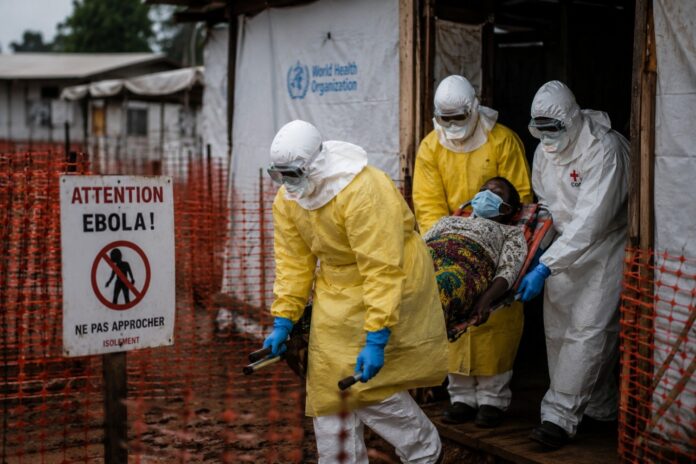
The Democratic Republic of Congo has confirmed that the number of Ebola cases recorded during the current outbreak has climbed to nearly 600. Meanwhile, the authorities have stepped up efforts to raise awareness among the local population about the critical importance of safety and hygiene measures.
In its latest statement published on social media platform X, the Congolese government announced that confirmed Ebola cases had increased to 598, including 115 deaths. Officials also noted that 22 patients had recovered from the disease, and that new cases had not spread to additional health zones — a cautiously encouraging sign amid an otherwise dire situation.
The outbreak, caused by the Bundibugyo strain of the Ebola virus, was officially declared on May 15, though health officials have since acknowledged that the disease had been circulating undetected for several weeks before the announcement. That delay left public health authorities behind the curve and struggling to contain the spread in one of central Africa’s most volatile regions.
The World Health Organization declared the outbreak a Public Health Emergency of International Concern on May 17, its highest level of global health alert, reserved for events that pose a serious risk beyond the borders of the country where they originate. The Africa Centres for Disease Control and Prevention similarly declared it a Public Health Emergency of Continental Security.
Cases have been recorded across 17 health zones in Ituri province — the epicenter of the outbreak — as well as in seven health zones in North Kivu and one in South Kivu. The three provinces have long been beset by armed conflict, making the delivery of medical assistance exceptionally difficult. Aid organizations and health workers are grappling with dangerous conditions on the ground as they attempt to track, isolate, and treat those infected.
The Bundibugyo strain poses a particular challenge for responders because there are no licensed vaccines or targeted treatments available for it, unlike the more familiar Zaire strain of Ebola for which approved countermeasures exist. Medical teams are relying on supportive care, including fluid replacement, fever management, and intensive monitoring, to improve patients’ chances of survival.
Adding to the complexity of the response, mistrust and resistance among some local communities have hampered containment efforts. Attacks on burial teams and treatment centers have been reported, forcing health authorities to appeal to populations for cooperation. “If you have a fever, vomiting, diarrhea, or severe weakness, you should go to the nearest health center immediately,” the government said in its statement, urging residents to follow health workers’ instructions and not to obstruct or attack them.
The International Rescue Committee has called urgently for additional funding to contain the outbreak in Ituri province before it spreads further. The aid organization warned that the crisis was unfolding against a backdrop of severely weakened public health infrastructure, compounded by the reduction of international support for health surveillance and outbreak preparedness in eastern Congo, which ended in early 2025. Health workers on the front lines are reportedly short of basic personal protective equipment, a situation that raises the risk of further transmission among medical staff.


Despite the grim toll, officials expressed some relief that the geographic spread of the disease had not expanded beyond existing health zones in the latest reporting period. Authorities and aid agencies said they were intensifying community engagement activities to build trust, broaden awareness of prevention measures, and ensure that those showing symptoms seek care promptly. The government and its international partners have vowed to sustain and strengthen the coordinated response until the outbreak is brought under control. Meanwhile, it remains to be seen how this strain of Ebola virus under control. As it stands, there are currently no approved vaccines or specific therapeutics for this rare strain.