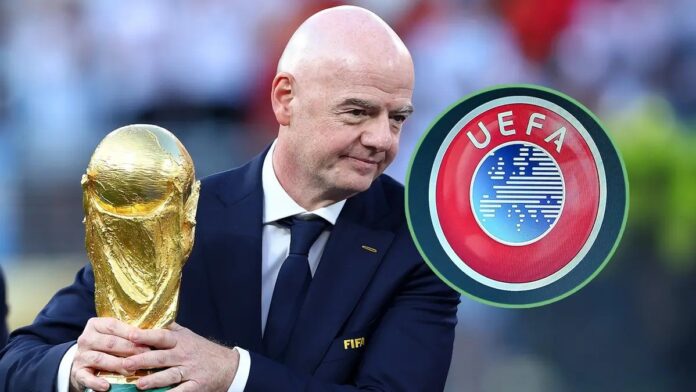
European football’s governing body, UEFA, has escalated its standoff with FIFA president Gianni Infantino, warning that legal action could follow the collapse of a controversial plan to sell a stake in the World Cup’s commercial future to private investors. The move marks one of the most serious confrontations between UEFA and football’s world governing body in years, and it has left Infantino’s leadership looking increasingly fragile just weeks after this summer’s World Cup finished in the United States.
The dispute centres on a scheme known as the FIFA Forward Enterprise, which Infantino and his inner circle drew up largely in secret. Under the proposal, FIFA would have spun off its most lucrative assets, including the World Cup and Club World Cup, into a separate commercial entity valued at around twenty billion dollars. Outside investors, reportedly including a New York firm connected to Joshua Kushner, would have been invited to buy minority, non-controlling stakes, raising as much as $4.2 billion that Infantino argued would help modernise the sport worldwide.
News of the plan triggered an immediate and furious backlash once details emerged in the press. UEFA led the charge, and its fifty-five member federations quickly agreed to boycott FIFA tournaments and competitions for as long as the sell-off remained on the table. The Asian Football Confederation and CONCACAF, the governing bodies for Asia and North and Central America respectively, voiced similar objections, with CONCACAF noting that its member associations had learned of the plan through media reports rather than any formal consultation.
Facing mounting pressure from UEFA and its counterparts on almost every continent, FIFA withdrew the proposal, with Infantino reportedly acknowledging that the plan had created divisions incompatible with football’s stated goal of unity. The European governing body welcomed the retreat but made clear that scrapping the FFE plan was not the end of the matter. In a letter sent through the law firm Dechert and seen by news organisations, UEFA said it was actively weighing legal action, arbitration, or regulatory complaints connected to the FFE affair.
The letter instructed FIFA and Infantino to preserve every document and piece of electronic correspondence related to the plan, warning that any deletion or alteration of such material could amount to spoliation of evidence. UEFA stressed that this obligation overrides any routine internal policy on document retention that FIFA or its president might otherwise rely upon. Their lawyers argued that legal proceedings were reasonably anticipated given how strongly stakeholders across the sport had condemned the scheme as fundamentally incompatible with proper footballing governance.
UEFA gave FIFA a five-business-day window to acknowledge the notice in writing, confirming that preservation steps had been taken, naming an individual responsible for compliance, and disclosing whether any relevant material had already been lost or destroyed. The tone of the letter reflects how far relations between UEFA and FIFA’s leadership have deteriorated since the FFE plan first came to light.
Infantino’s position now looks increasingly precarious. UEFA has openly called for new leadership at the top of world football, and CONCACAF president Victor Montagliani has been widely tipped as a possible successor should Infantino be forced from office. Wales became the first national federation to publicly withdraw its backing for Infantino’s continued presidency, a symbolic blow that UEFA officials are unlikely to have discouraged given their own public stance.
FIFA’s chief operating officer, Kevin Lamour, added to the pressure with a pointed statement suggesting that staff at football’s governing body felt misled by their own president over how the plan was developed and presented. That admission from within FIFA’s own ranks has only strengthened UEFA’s argument that the FFE proposal was pursued without proper regard for the sport’s wider stakeholders.
For now, UEFA appears determined to keep the FFE affair alive even though the immediate financial plan has been shelved. Whether the threatened legal action materialises will likely depend on how FIFA and Infantino respond to UEFA’s five-day ultimatum, and on whether evidence of how the plan was conceived and negotiated remains intact.
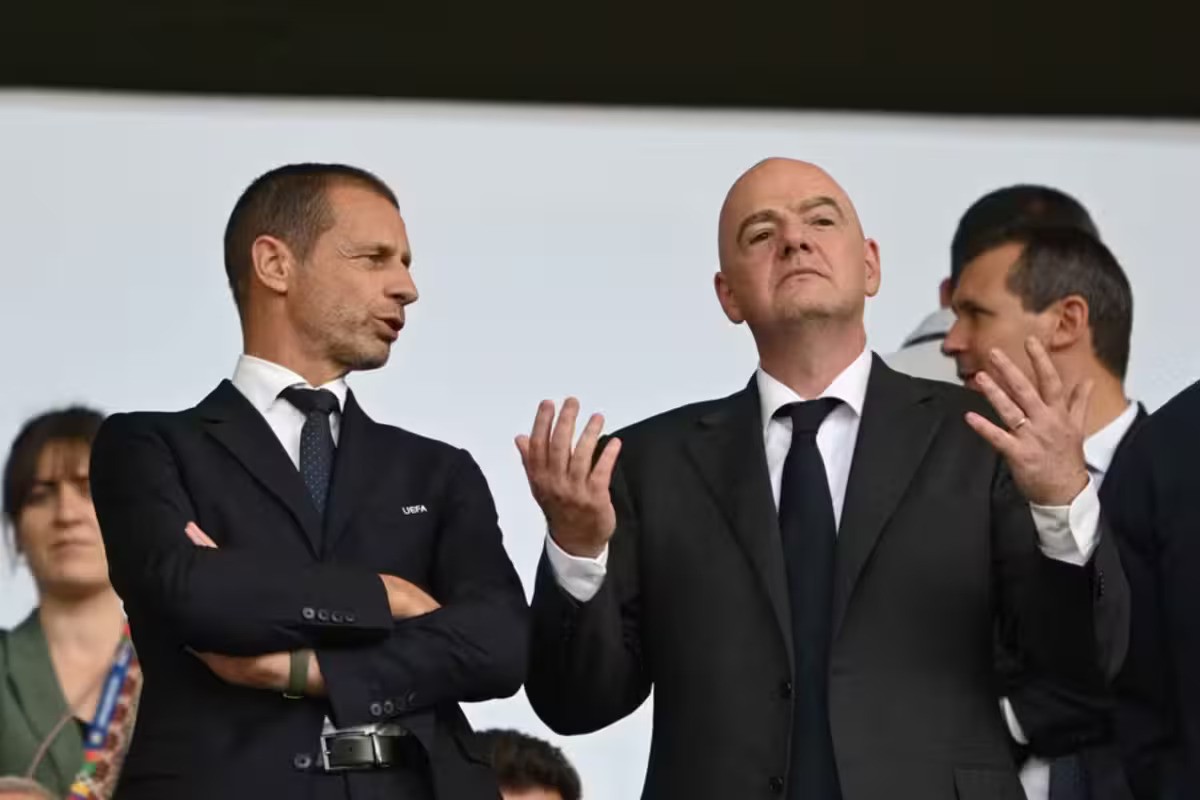

What is already clear is that UEFA’s willingness to confront FIFA’s leadership so publicly marks a significant shift in the balance of power within international football governance, and the coming weeks are expected to determine whether Infantino can survive the fallout.