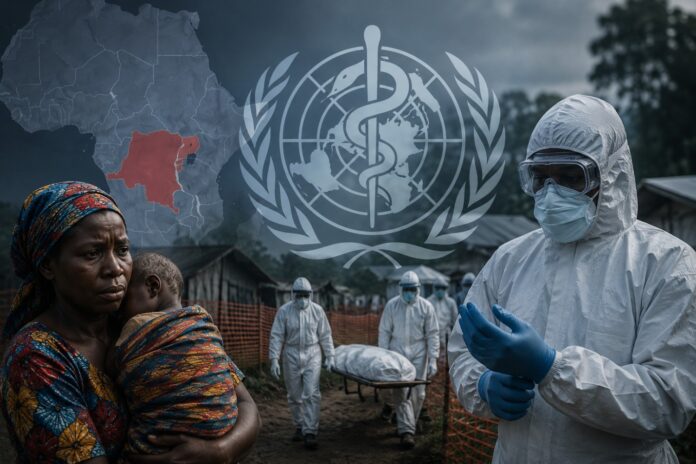
The head of the World Health Organization has warned that the deadly Ebola outbreak ravaging the Democratic Republic of the Congo may have been circulating undetected since as far back as January, 2026. This raises questions about surveillance gaps and the global community’s ability to catch outbreaks before they spiral out of control. WHO Director-General Tedros Adhanom Ghebreyesus made the alarming disclosure during a press briefing this week, acknowledging that investigators are still working to pinpoint the true origin of the crisis now engulfing the country’s volatile northeast.
“It could be January, could be February, March, or April,” Dr. Tedros told reporters. “I think proper investigation is needed — but I think the focus now should be on the response.” The statement came as the WHO confirmed 344 confirmed Ebola cases and 60 confirmed deaths in the DRC, with a further 15 confirmed cases and one death reported in neighbouring Uganda, where the virus has crossed the border carried by travellers from the affected region.
The Bundibugyo Strain: Rare, Deadly, and Without a Cure
The outbreak, the DRC’s 17th since Ebola was first identified on its territory in 1976, is caused by the Bundibugyo virus — a rare strain first detected in Uganda in 2007 for which there is currently no licensed vaccine or approved treatment. The absence of proven medical countermeasures has placed enormous pressure on health workers already operating in one of the world’s most challenging environments.
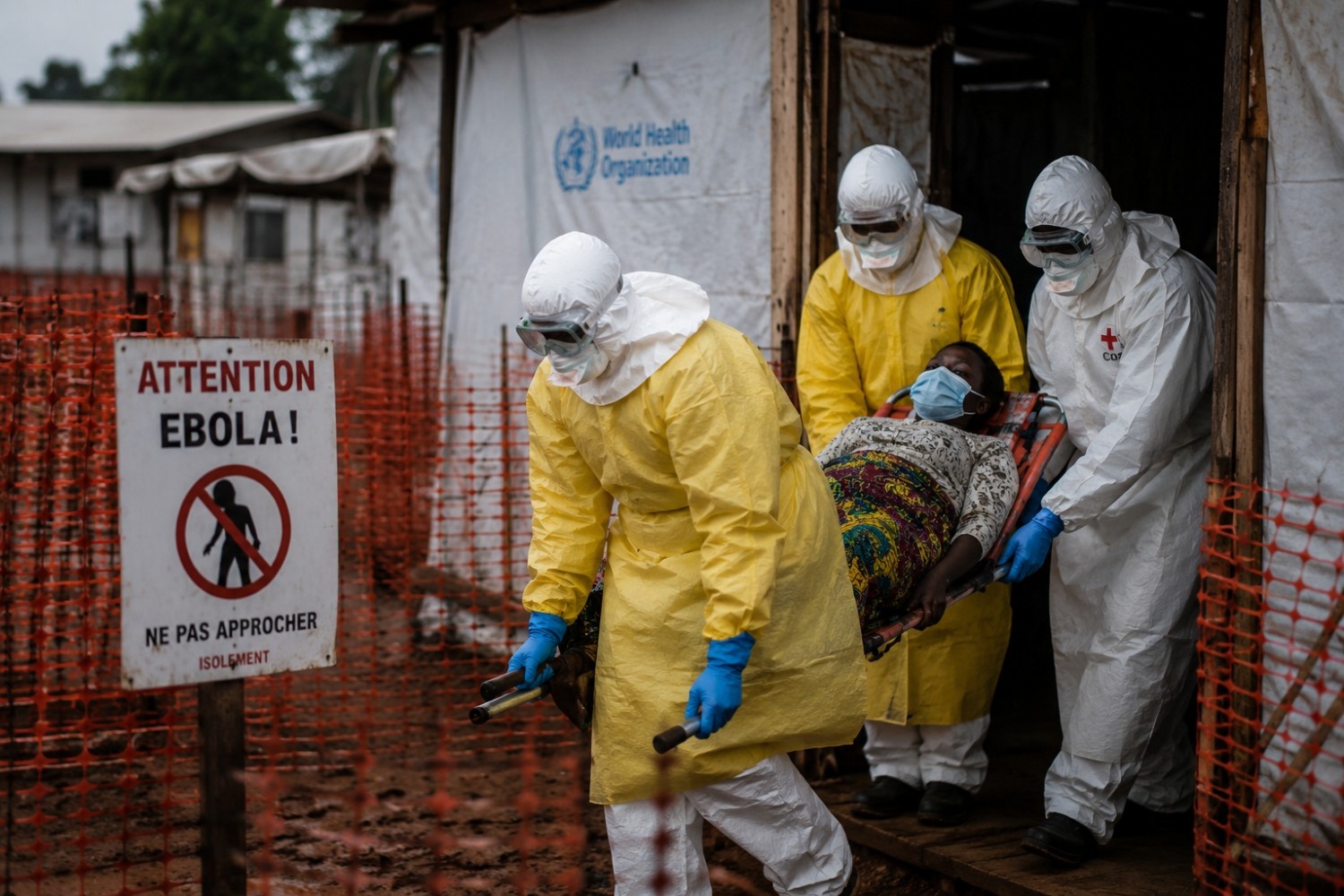

Local medical workers and investigators believe the earliest case may trace back to a patient treated at a hospital in Rwampara, in Ituri province, in late January. According to reconstructed timelines, that patient is thought to have infected at least eight healthcare workers before dying in February. Despite mounting evidence of an unusual cluster of deaths, the Bundibugyo strain went undetected for weeks — partly because initial laboratory tests were calibrated only to identify the more common Zaire ebola virus strain. Tests capable of detecting Bundibugyo virus were deployed later, with the first positive results confirmed on 14 May.
The scale of the delay is now being counted in lives. On 23 May, the Red Cross confirmed that three of its workers who died between 5 and 16 May are believed to have contracted Ebola as far back as 27 March, during dead body management activities in Mongbwalu — more than six weeks before the outbreak was formally identified. The WHO was not alerted to the possibility of an Ebola outbreak in Ituri until 5 May.
The Global Response
Dr. Tedros travelled to the DRC on 28 May, visiting the capital Kinshasa and later travelling to Bunia, the capital of Ituri province, where the epidemic is most concentrated. Three 80-bed treatment centres are now operational in Bunia, with additional facilities being established across affected areas. Eight people — six in the DRC and two in Uganda — have so far recovered. “The outbreak had a big head start, and we’re still behind,” Tedros acknowledged, “but under the leadership of the government of DRC, we’re catching up.”
The WHO declared the outbreak a Public Health Emergency of International Concern on 17 May, just two days after DRC and Uganda jointly announced the confirmed outbreak. The Africa CDC followed a day later with a Public Health Emergency of Continental Security declaration. Despite the international alarm, Dr. Tedros urged countries not to impose travel bans, warning that such measures risk isolating affected communities and pushing disease spread underground rather than containing it.
Way Forward
Despite the sobering picture, Dr. Tedros struck a note of historical confidence. “DRC has faced Ebola before, sixteen times, and has ended every outbreak,” he said. The message was directed as much at anxious communities inside the country as at a watching world: the disease is beatable, but only if the response is met with cooperation, resources, and an end to the violence making every step forward harder.