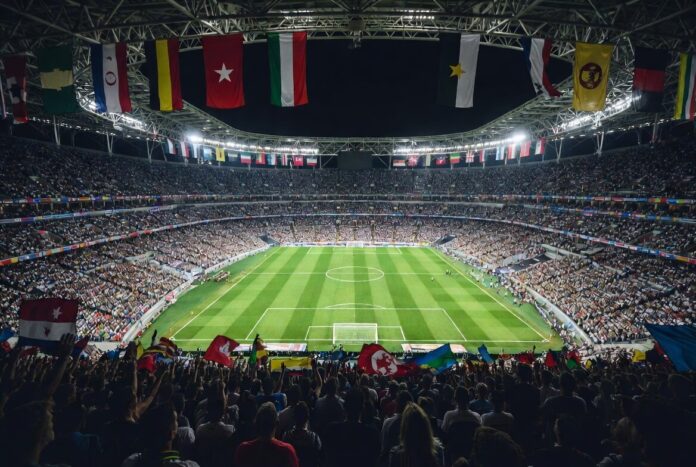
When millions of soccer fans descend on North America for the 2026 FIFA World Cup — spanning 16 cities across the United States, Canada, and Mexico — they will bring more than jerseys and national pride. They may also carry pathogens. Public health experts are watching closely as the tournament, which kicks off June 11, creates what one infectious disease physician called “a weekslong experiment in global mixing.”
The threats on their radar are not necessarily the viruses making the biggest headlines. While an Ebola outbreak declared a global health emergency by the World Health Organization in May 2026 has drawn considerable alarm, experts say the risk of the infectious disease spreading at a World Cup stadium is very low. Ebola transmits only through direct contact with bodily fluids, not through the air, and infected individuals are not contagious until symptoms appear. “The overall likelihood of risk is not nonzero, but it’s low, very low, because it is not easy to transmit person to person,” said Dr. Shruti Gohil, the associate medical director for epidemiology and infection prevention at UC Irvine Health.
Far more worrying to public health officials is measles, an infectious disease spreading rapidly through all three host countries. The U.S. Centers for Disease Control and Prevention had confirmed 2,030 measles cases in the United States alone as of early June 2026 — approaching the full-year total for 2025 and far above figures seen in prior years. Measles is among the most infectious diseases known. A single infected traveler who passed through Denver International Airport in 2025 triggered an outbreak of at least ten cases. An infected fan cheering in a crowded stadium or waiting at an airport gate could set off a chain reaction with ease.
Influenza is another significant concern. While flu season winds down in the Northern Hemisphere each spring, it continues circulating in South America and other parts of the Southern Hemisphere — regions sending large numbers of fans to the tournament. The convergence of visitors from different flu seasons creates conditions for novel strains to encounter populations with little existing immunity, raising the prospect of accelerated spread.
Covid-19 remains on the watch list as well. Though far less dominant in public discourse than in prior years, the virus has not disappeared. Large indoor gatherings, bars, hotels, and transit hubs provide ample opportunity for respiratory transmission, and health officials are monitoring its activity as they would any other airborne illness.
Dengue fever and other mosquito-borne arboviruses present a different but equally real set of risks. Several of the host cities sit in regions where Aedes mosquitoes — the primary vectors for dengue — are active during summer months. Experts are concerned not only about fans contracting dengue while attending matches, but about infected travelers potentially introducing the virus to new geographic areas where local mosquito populations could sustain transmission.
Sexually transmitted infections round out the list of concerns. Large sporting events with substantial international attendance have historically been associated with spikes in STI transmission, a pattern health officials are factoring into their planning. HIV, gonorrhea, syphilis, and other infections that spread through sexual contact tend to see increased activity during mass gatherings.
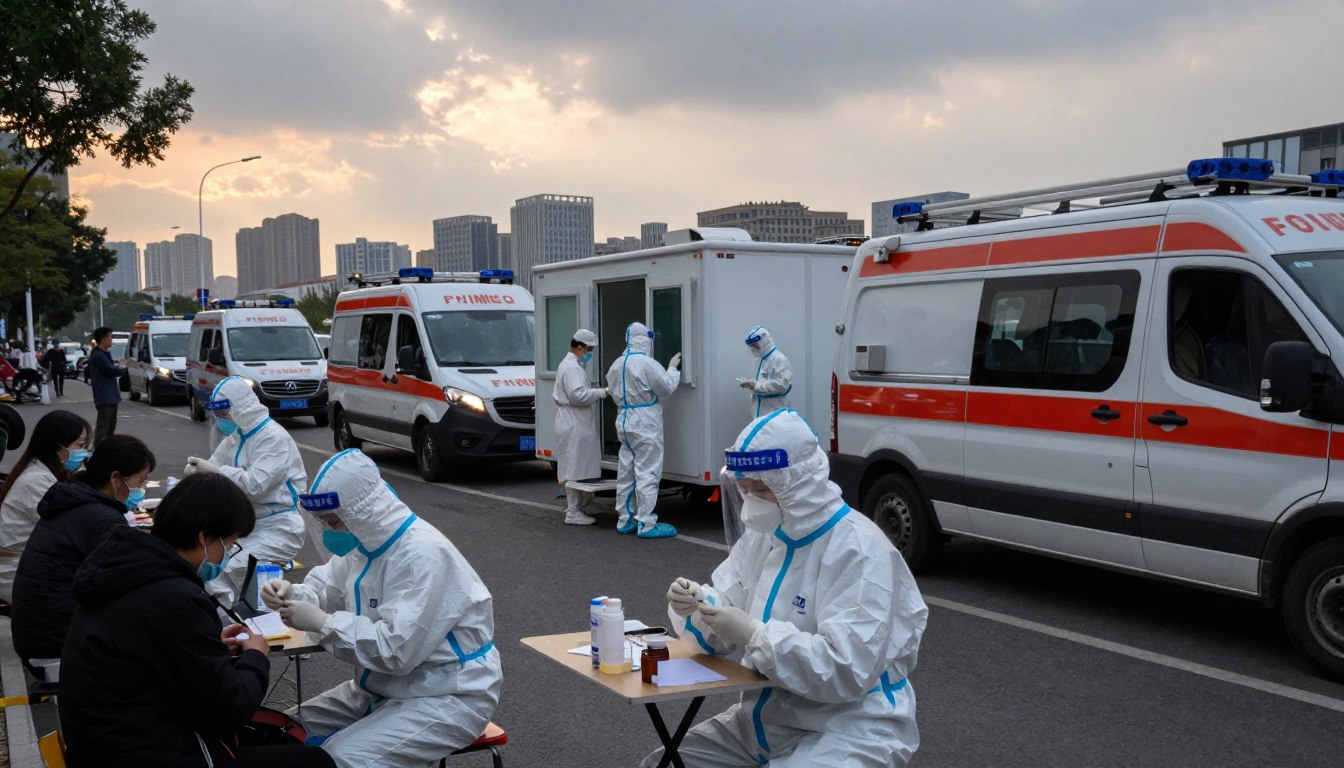

Public health departments, hospitals, and federal agencies have been scaling up surveillance systems in advance of the tournament, including wastewater monitoring and enhanced infectious disease tracking. Officials say they are prepared, even amid recent cuts to federal health agencies and the United States’ withdrawal from the World Health Organization. “Public health prides itself in being the invisible shield,” said one official involved in preparations, “but I don’t want that to get lost in the actual Herculean effort it takes to have an operational invisible shield, so that people can enjoy events like the World Cup and feel safe and secure.”