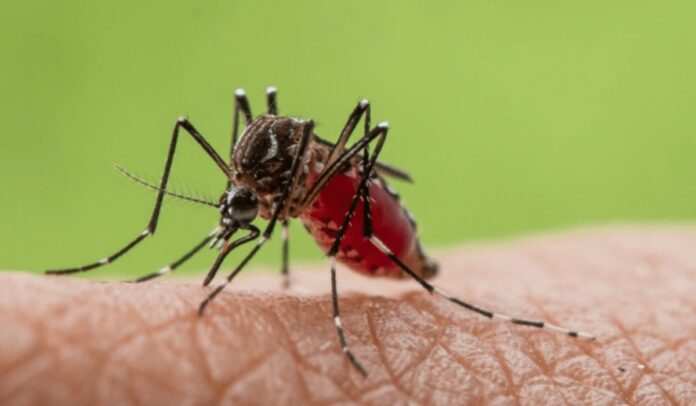
Health officials in Vermont have confirmed that mosquitoes collected in Charlotte have tested positive for Jamestown Canyon virus, marking the first detection of a mosquito-borne illness in the state this year. The Vermont Department of Health said the discovery is also the first time the virus has turned up in mosquitoes in the northwestern part of the state, after the insects were trapped in Chittenden County between June 14 and June 20.
State officials say no human or animal cases of mosquito-borne illness have been reported so far this season, but the detection is enough to prompt a renewed round of warnings about mosquito bites as summer activity ramps up. Natalie Kwit, the state’s public health veterinarian, said the timing of this finding is somewhat earlier than what Vermont has typically seen with Jamestown Canyon virus in past seasons, though she noted it isn’t unusual for this particular pathogen. She added that more detections are likely as the season continues and mosquito populations grow.
Jamestown Canyon virus is spread through the bite of an infected mosquito and normally cycles in nature between mosquitoes and deer before occasionally spilling over into people. Health officials emphasize that humans cannot pass the Jamestown Canyon virus to others, even if they become sick, because people are considered a “dead-end” host for the virus. It cannot be spread through coughing, sneezing, or casual contact.
Most people exposed to the Jamestown Canyon virus never develop noticeable symptoms. When illness does occur, it often resembles a mild flu, with fever, headache, fatigue, body aches, or a cough. In more serious cases, however, the virus can cause swelling of the brain or its surrounding tissue, leading to encephalitis or meningitis. Symptoms in those severe cases can include confusion, seizures, a stiff neck, or loss of coordination. According to health officials, roughly half of the people who become symptomatic with Jamestown Canyon virus end up hospitalized, although deaths remain rare.
Vermont only began testing its mosquito population for Jamestown Canyon virus last year. That surveillance effort turned up positive samples in the towns of Marshfield, Rutland, and Whitingham, and the state confirmed its first human case of the disease in a Windsor County resident. With Charlotte’s positive test, Jamestown Canyon virus has now been identified in mosquito samples from multiple regions stretching across the state.
Local officials in Charlotte have already begun notifying residents. The town administrator sent out a message urging people to take precautions, including wearing long sleeves and pants outdoors, using insect repellent, and avoiding outdoor activity around dawn and dusk, when mosquitoes are most active.
State health officials are echoing that guidance statewide. Recommended precautions include emptying containers that collect standing water, such as flowerpots, buckets, and unused toys, since these create breeding grounds for mosquitoes. Officials also recommend repairing torn window screens, covering strollers and playpens with mosquito netting, and choosing an EPA-registered insect repellent.
There is currently no vaccine or antiviral treatment for Jamestown Canyon virus. Care for symptomatic cases is limited to supportive treatment, such as rest, fluids, and pain relief, with hospitalization reserved for more severe presentations.

Mosquitoes in Vermont are also tested for West Nile virus and Eastern equine encephalitis, a rarer but more dangerous illness that killed one Vermont resident in 2024. As of this week’s report, only Jamestown Canyon virus has been detected in this year’s mosquito samples, but the Department of Health and the Agency of Agriculture, Food and Markets continue weekly mosquito collection and testing throughout the summer to track the spread of Jamestown Canyon virus and other threats across the state.