The Washington State wildfires have left a trail of destruction across the Spokane region, forcing tens of thousands of residents from their homes while firefighters race to contain several rapidly spreading blazes. More than 700 structures have already been destroyed, making the disaster one of the most severe wildfire emergencies the region has experienced in recent years.
Emergency officials say no injuries have been reported despite the scale of the disaster, but authorities continue searching for individuals who were initially reported missing as evacuation efforts remain underway.
The fires began over the weekend and quickly expanded under extremely dry conditions and powerful winds. The three major blazes, collectively known as the Spokane Complex Fire, have burned more than 8,000 acres and remain completely uncontained.
The wildfire complex consists of the Old Trails Fire, the Fairview Fire, and the Autumn Lane Fire. Together they have consumed thousands of acres while destroying homes, buildings, and other infrastructure across affected communities.
Fire officials remain hopeful that cooler temperatures and improving weather conditions will help crews make significant progress in the coming days. However, changing wind patterns continue to pose a major challenge for firefighters working on multiple fronts.
The Washington State wildfires have triggered one of the largest evacuation operations in the state’s recent history. Authorities estimate that approximately 65,000 people have been ordered to leave their homes as flames threatened neighborhoods throughout Spokane and surrounding communities. Officials say it remains too dangerous for many residents to return because active fire zones continue to shift.
Many families remain in temporary shelters while emergency management teams assess damaged neighborhoods and determine when conditions will be safe enough for residents to return.
Officials have confirmed that more than 700 structures have been destroyed across the wildfire zone. The Old Trails Fire alone accounted for hundreds of those losses. Authorities are still conducting damage assessments and have not yet determined exactly how many of the destroyed buildings were residential homes, businesses, schools, or public facilities.
Neighborhoods that once stood intact now contain blocks of burned homes alongside buildings that somehow escaped the flames, highlighting the unpredictable nature of the fires.
Emergency Response Intensifies as Washington State Wildfires Continue
Firefighters, police officers, emergency medical teams, and search crews continue working around the clock to protect lives and contain the fires.
Authorities have cleared the overwhelming majority of missing person reports filed during the evacuations, although investigators continue searching for several individuals whose whereabouts have not yet been confirmed.
Local officials praised first responders for working extended shifts under extremely difficult conditions, with some emergency personnel remaining on duty for more than 30 consecutive hours. State and local agencies have also received assistance from national incident management teams to strengthen the firefighting effort.
Officials have described this year’s wildfire season in the Pacific Northwest as extraordinary. Beyond the Spokane Complex Fire, numerous wildfires continue burning across Washington, consuming hundreds of thousands of acres of land. Emergency managers say the combination of drought, dry vegetation, and strong winds has created ideal conditions for fast moving fires.
Meteorologists identified an unusual weather pattern that contributed to the rapid spread of the Spokane fires, with strong gusts pushing flames through neighborhoods in a matter of hours. Although temperatures have temporarily dropped below seasonal averages, dry air and continued wind remain concerns for firefighters. Forecasts also indicate temperatures could rise again later in the week, increasing the possibility of renewed fire activity.
Washington officials have declared a statewide emergency as firefighting efforts intensify. The emergency declaration temporarily bans most outdoor and agricultural burning to reduce the risk of additional fires. State leaders have also requested immediate federal disaster assistance while seeking long term recovery funding to help affected communities rebuild.
National incident management teams have assumed command of the Spokane Complex Fire, supported by firefighters from multiple states. California also deployed specialized incident management teams to Washington, marking the first time such teams have been activated to assist the state in responding to a wildfire emergency of this scale.
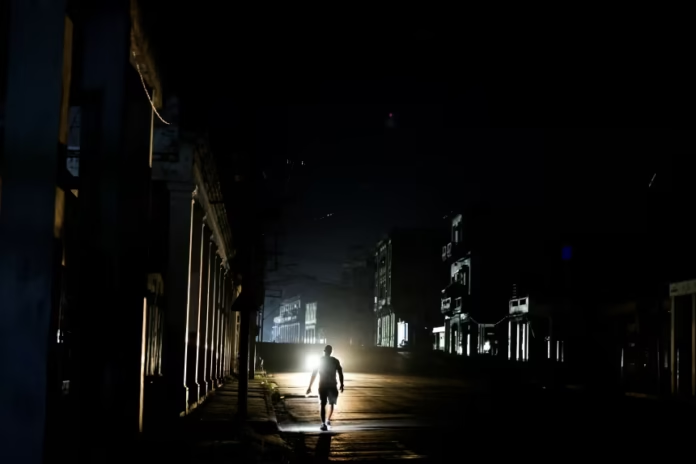
Power outages have affected thousands of utility customers across Spokane, adding another layer of hardship for evacuated families. Additional mandatory evacuation orders have also been issued in nearby communities as firefighters work to stop the spread of the flames.
Residents who witnessed the destruction described scenes unlike anything they had experienced before. Videos shared online showed neighborhoods engulfed in flames, vehicles burning along roadsides, and thick smoke covering entire communities. For many families, the loss extends beyond homes. Personal belongings, photographs, family keepsakes, and decades of memories have disappeared in the fires.
The Washington State wildfires have become one of the most destructive natural disasters to strike the Spokane region, displacing tens of thousands of people and destroying hundreds of structures. While firefighters hope improving weather conditions will aid containment efforts, recovery will likely take months or even years.
As emergency crews continue battling the flames, communities across Washington remain focused on protecting lives, supporting displaced residents, and rebuilding after an unprecedented wildfire disaster.