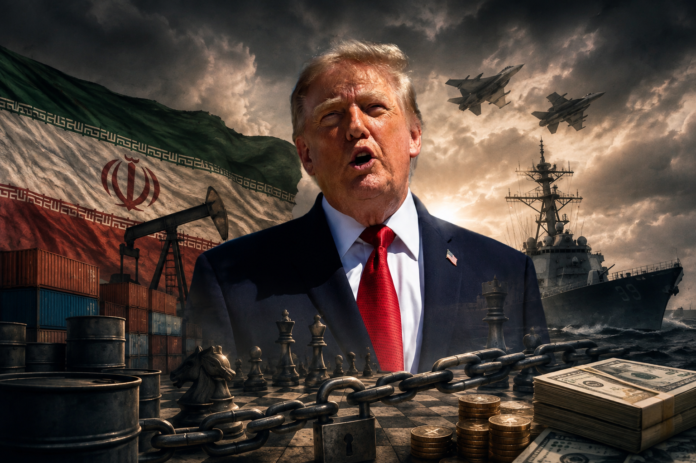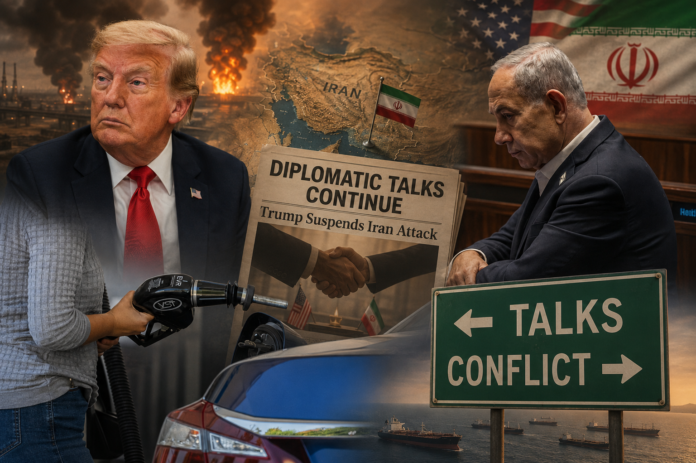
President Donald Trump has announced that planned US military action against Iran has been put on hold, provided both countries can quickly reach a diplomatic agreement. The decision signals another attempt to reduce tensions after weeks of escalating military confrontations that have disrupted global energy markets and raised concerns about a wider conflict in the Middle East.
While Trump expressed confidence that negotiations are making progress, Iranian officials have not indicated that they have softened their position on key issues, particularly the future of the Strait of Hormuz. The strategic waterway remains one of the biggest obstacles to a lasting agreement, leaving uncertainty over whether diplomacy can succeed before military tensions return.
Trump Iran Strikes Face Diplomatic Challenges Over Strait of Hormuz
Trump’s announcement followed renewed diplomatic efforts involving several regional players seeking to prevent further escalation. Saudi Arabia has reportedly encouraged both Washington and Tehran to pursue dialogue rather than military action, and there were no confirmed attacks from either side in the hours following Trump’s statement.
Despite the pause in hostilities, Tehran has maintained that its negotiations with neighboring Oman regarding an alternative shipping route should not be interpreted as a reopening of the Strait of Hormuz. Iranian officials insist that discussions with Oman concern a separate transportation arrangement and do not alter Iran’s broader position on the disputed waterway.
According to Iranian authorities, reopening the strait depends on resolving larger disputes with the United States, including sanctions, military activity in the region, and broader security concerns. Officials continue to argue that American actions contributed to the current crisis, making the shipping route a separate issue from bilateral maritime cooperation with Oman.
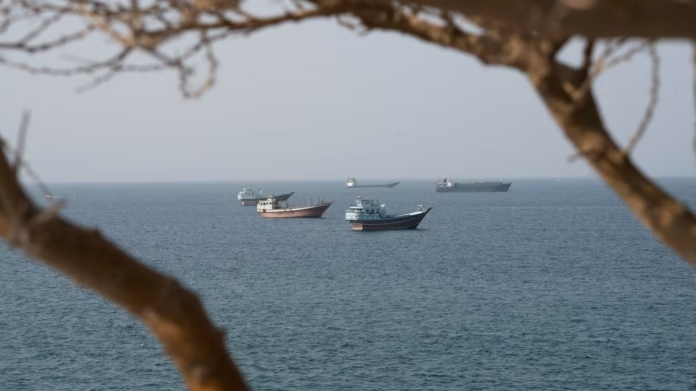
The Strait of Hormuz remains one of the world’s most strategically important energy corridors. Before the latest conflict, approximately one fifth of globally traded oil moved through the passage each day. Although Iran and Oman both possess Exclusive Economic Zones surrounding parts of the strait, international maritime law generally protects the right of commercial vessels to pass through international waterways without unnecessary interference.
Under the United Nations Convention on the Law of the Sea, ships from every nation are entitled to innocent passage through territorial waters, provided they comply with international regulations. This legal framework continues to shape international debate over navigation rights in the Gulf.
Meanwhile, OPEC+ has moved to cushion potential supply shortages by approving another increase in oil production. The alliance agreed to raise output again in September, marking its sixth consecutive production increase since the conflict intensified. The decision completes the gradual reversal of production cuts introduced in 2023.
Although OPEC+ did not directly reference the ongoing conflict in its official announcement, member states acknowledged growing concerns over attacks on energy infrastructure and the increasing volatility affecting global oil markets.
The broader energy picture remains complicated by additional geopolitical challenges. Russian fuel exports continue to face disruption because of the war in Ukraine, while attacks by Iran backed Houthi fighters have complicated shipping through the Bab al Mandeb Strait, another critical route for global energy transportation.
These combined disruptions have contributed to higher crude oil prices and increased fuel costs in several countries, including the United States. Investors continue to monitor developments closely as energy markets prepare for another trading week.
Trump Iran Strikes Influence Broader Middle East Diplomacy
Trump’s decision to delay military action also reflects a wider diplomatic strategy extending beyond Iran. The administration has renewed efforts to encourage progress toward a ceasefire in Gaza while simultaneously attempting to reduce tensions across the Middle East.
Discussions involving Hamas have reportedly continued, with officials indicating a willingness to consider disarmament under specific conditions that include a permanent ceasefire and additional political guarantees. However, Israeli military operations have continued despite diplomatic activity, highlighting the significant challenges facing negotiators.
Within Israel, government officials have delivered differing public messages regarding future operations in Gaza. While some political figures remain open to diplomatic solutions, others continue advocating expanded military objectives.
At the same time, Trump’s decision to postpone military action against Iran reflects growing awareness of the economic consequences of prolonged conflict. Oil prices have risen steadily since the collapse of an earlier ceasefire agreement, shipping insurance costs have increased, and supply chains continue to experience disruptions throughout the region.
Financial markets remain cautiously optimistic that another negotiated agreement can be reached before the situation deteriorates further. Even so, uncertainty continues because Iran has not publicly confirmed any willingness to reopen the Strait of Hormuz or abandon its current negotiating position.
For now, military action appears to have been delayed rather than permanently abandoned. Whether diplomacy ultimately succeeds will depend on how quickly both governments can bridge deep disagreements over regional security, maritime access, sanctions, and future nuclear negotiations.
The coming days could prove decisive not only for relations between Washington and Tehran but also for global energy markets. If negotiations produce meaningful progress, pressure on oil prices and international shipping could ease. However, if talks collapse once again, the region could face another period of heightened military confrontation with consequences extending far beyond the Middle East.
The decision to suspend planned military action has created a narrow window for diplomacy, but significant obstacles remain. Until both sides reach a comprehensive agreement on the Strait of Hormuz and broader security issues, uncertainty will continue to influence global politics, international trade, and energy markets.
This article was produced by the Maple Epoch Editorial Team. See our editorial standards and AI-use disclosure and editorial policy.