The US strikes Iran and reinstates sanctions on Iranian oil exports after accusing Tehran of launching attacks on commercial vessels near the Strait of Hormuz, marking a significant escalation in tensions between the two countries despite an existing ceasefire agreement.
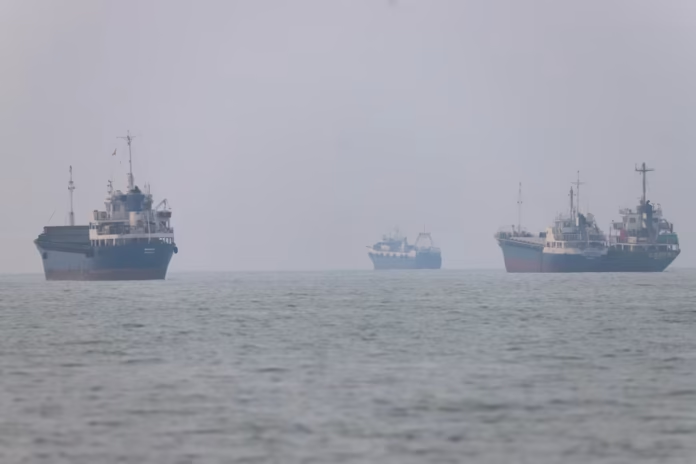
The United States military confirmed on Tuesday that it had launched a series of targeted operations against Iranian positions in response to what it described as unprovoked attacks on international shipping. According to US Central Command, the strikes were intended to impose “heavy costs” on Iran after three commercial vessels navigating the Strait of Hormuz came under attack.
US officials stated that the targeted ships were crewed by civilians and operating in international waters when they were attacked. Washington described the incidents as a direct violation of the ceasefire arrangement that had been reached earlier between both nations.
US Strikes Iran as Washington Restores Oil Sanctions
Alongside the military operation, the United States also reinstated sanctions on Iranian oil exports, reversing a temporary 60-day suspension that had been granted as part of efforts to stabilize relations and encourage the reopening of the Strait of Hormuz.
A US government official said Iran would only benefit from sanctions relief if it complied with the terms of the agreement and refrained from threatening international shipping. The official added that Iran’s recent actions were unacceptable and would attract firm consequences.
The US Treasury Department confirmed that the temporary sanctions relief had been completely revoked. Companies involved in transactions relating to Iranian oil have been given until July 17 to wind down their activities before the sanctions are fully enforced once again.
Global Oil Markets React to the Escalation
The renewed conflict immediately affected global energy markets. Brent crude oil prices climbed about three percent to around $76 per barrel, while US crude oil rose nearly six percent, moving back above $70 for the first time since late June.
The earlier suspension of sanctions had allowed Iran to resume oil exports, increasing global supply and helping to stabilize fuel prices. The decision to restore restrictions has renewed concerns about possible supply disruptions, particularly if military activity around the Strait of Hormuz intensifies.
The Strait of Hormuz remains one of the world’s most strategically important shipping routes, with a significant percentage of global oil exports passing through the narrow waterway every day.
Iran Defends Its Position
Iran rejected the US accusations and insisted it remains committed to its obligations under the existing memorandum of understanding governing activities in the Strait of Hormuz.
Iranian Foreign Ministry spokesperson Esmaeil Baghaei argued that commercial vessels must follow agreed maritime procedures while operating in the region. He warned that ships failing to coordinate their movements with Iranian authorities or tampering with tracking systems could face increased risks.
Meanwhile, senior Iranian adviser Mohsen Rezaei accused Washington of undermining diplomatic efforts, saying recent American actions could jeopardize future negotiations between both countries.
Future of the Ceasefire Remains Uncertain
The restoration of sanctions and the military response have raised fresh questions about the future of the fragile ceasefire between the United States and Iran. Analysts note that the sanctions could significantly reduce Iran’s oil revenue, which remains one of the country’s primary sources of national income.
Before sanctions were restored, Iran had been able to sell millions of barrels of crude oil stored on tankers and regain access to international financial systems for energy transactions. The country has also continued relying on a so-called “shadow fleet” of tankers to export crude oil, with China remaining one of its largest customers.
Energy experts believe enforcement of the renewed sanctions could prove challenging, particularly if Iranian exports continue through unofficial channels. Some analysts also warn that additional military measures to block Iranian oil shipments could further increase tensions across the Middle East and disrupt global energy supplies.
As US strikes Iran and economic pressure resumes, international observers are closely watching whether both sides will return to negotiations or whether the latest developments signal the beginning of another prolonged period of confrontation in one of the world’s most strategically sensitive regions.