The FIFA Red Card Reversal involving United States striker Folarin Balogun has become one of the biggest talking points of the ongoing FIFA World Cup, attracting attention from football fans, sports analysts, and political leaders around the world.
The controversy grew even larger after President Donald Trump confirmed that he personally contacted FIFA President Gianni Infantino to request a review of Balogun’s red card and one-match suspension. Although Trump insisted he never demanded a particular outcome, his involvement has raised fresh questions about fairness, transparency, and the independence of football’s governing body.
The decision to overturn Balogun’s suspension has divided opinions, with supporters calling it a victory for justice while critics argue it could damage confidence in the tournament’s disciplinary process.
How the FIFA Red Card Reversal Happened
The incident began during the United States’ group-stage match against Bosnia and Herzegovina.
Initially, the referee allowed play to continue after Balogun collided with an opposing player while both chased the ball. No foul was given during live play.
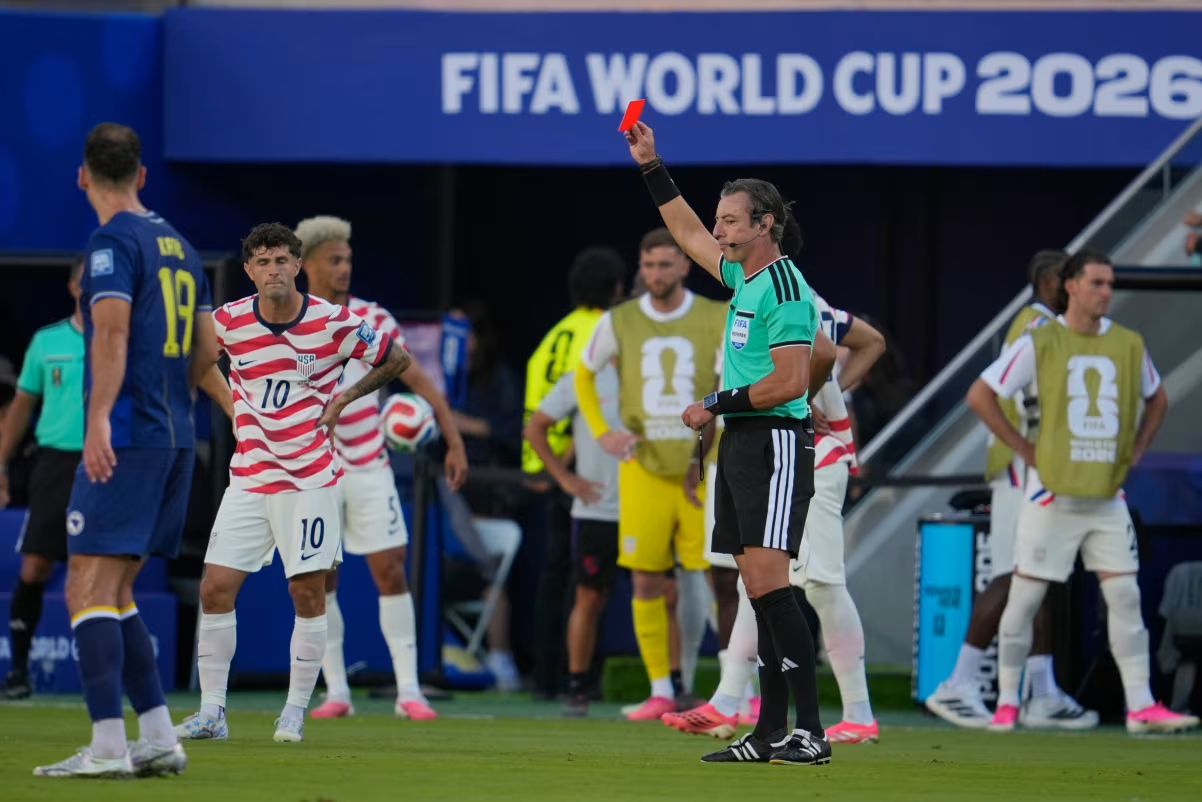
However, the Video Assistant Referee (VAR) later advised the referee to review the incident. After watching slow-motion replays, the referee ruled that Balogun’s challenge amounted to serious foul play because his boots made contact with the opponent’s ankle.
The decision resulted in a straight red card, automatically suspending Balogun for the United States’ next match.
The ruling immediately became one of the tournament’s most controversial moments, with many former players, coaches, and supporters arguing that the punishment was excessively harsh.
Trump Explains His Role in the FIFA Red Card Reversal
Speaking from the Oval Office, President Trump explained that he contacted FIFA President Gianni Infantino because he believed the decision deserved another review.
“All I did was ask for a review,” Trump said.
According to the president, he never instructed FIFA on what decision to make but simply questioned whether the challenge actually deserved a red card.
Trump described the collision as “two players running at full speed who simply collided,” insisting Balogun had not intentionally committed a dangerous foul.
He also emphasized that the final decision remained with FIFA’s independent disciplinary bodies.
“I didn’t tell him what to do. I can’t tell him what to do,” Trump added.
FIFA Responds to Questions Over the Decision
Following growing public debate, FIFA President Gianni Infantino released a statement confirming that he had indeed spoken with President Trump.
However, Infantino stressed that the FIFA Red Card Reversal was decided solely by the organization’s independent Disciplinary Committee.
He explained that while he regularly speaks with heads of state and football officials from around the world, disciplinary cases are handled independently without political interference.
According to FIFA, the committee carefully reviewed all available evidence before deciding that Balogun would be eligible to play in the Round of 16 clash against Belgium.
The statement was intended to reassure fans that FIFA’s disciplinary process remained impartial despite the political attention surrounding the case.
Why the Original Red Card Remains Controversial
The incident continues to divide football experts because of how the review process unfolded.
Several analysts questioned whether the referee should have relied so heavily on slow-motion replays, arguing that such footage can sometimes exaggerate accidental contact and make ordinary football challenges appear more dangerous than they actually were.
Others defended the original decision, saying player safety must remain the highest priority, especially when studs make contact with an opponent’s leg.
The disagreement has fueled ongoing discussions about how VAR should be used in major international tournaments.
Mixed Reactions From Fans and Officials
The FIFA Red Card Reversal has generated strong reactions across the football community.
Many American supporters welcomed the decision, believing Balogun had been unfairly punished and deserved another opportunity to help his team.
Several public figures also criticized the original red card, describing it as unnecessarily severe.
Meanwhile, the Royal Belgium Football Association attempted to challenge FIFA’s decision before the knockout match. The appeal was quickly rejected after FIFA ruled that Belgium had no legal standing because the disciplinary decision originated from a match involving the United States and Bosnia and Herzegovina.
That ruling effectively ended the legal dispute before kickoff.
Trump Questions the Referee’s Decision
During his remarks, President Trump also criticized the referee responsible for issuing the red card.
He suggested reporters should examine the referee’s previous officiating record, describing the decision as “unfair” and questioning whether the official had exercised proper judgment.
Trump argued that preventing Balogun from participating in the knockout stage would have been a major stain on the World Cup.
Although he admitted he initially did not realize that a red card automatically carried a suspension for the next match, he said he became concerned after learning its full consequences.
The Bigger Impact of the FIFA Red Card Reversal
Beyond one player or one match, the FIFA Red Card Reversal has reignited global conversations about VAR, disciplinary reviews, and the influence of high-profile political figures in international sport.
Many football observers believe the controversy demonstrates how modern technology can both improve decision-making and create fresh disputes over consistency and transparency.
With the World Cup entering its knockout stages, officials will likely face even greater scrutiny over future disciplinary decisions.
Regardless of where fans stand on the issue, the Balogun case has become one of the defining moments of this year’s tournament and serves as another reminder that football’s biggest headlines are often created both on and off the pitch.