South Africa is marking 70 years since one of the most powerful acts of resistance in the country’s struggle against apartheid, when about 20,000 women marched to Pretoria to challenge laws that restricted the movement of Black people.
The South Africa Women’s March of August 9, 1956, brought together women from different racial and cultural backgrounds in a united protest against the pass laws. The demonstration became an important symbol of resistance to white minority rule and helped establish women as a powerful force in the anti-apartheid movement.
Seven decades later, the historic protest remains a source of pride. But for many South African women, the freedom achieved after apartheid has not eliminated the challenges they face.
Gender-based violence, unemployment, poverty and economic inequality continue to affect millions of women. A United Nations-supported study published in 2024 found that more than one in three women in South Africa had experienced physical or sexual violence during their lifetime.
For women who participated in or witnessed the 1956 demonstration, the anniversary carries deeply personal memories.
Ramnie Dinat, now 84, was a teenager when the march took place. She remembered helping her mother, anti-apartheid activist Ama Naidoo, mobilize women ahead of the protest.
Women travelled from different communities to take part. Black women, women of Indian heritage and some white women joined the demonstration, creating a remarkable display of unity against apartheid legislation.
The march became famous for the thousands of women who gathered at the Union Buildings in Pretoria and delivered petitions opposing the pass laws. Their resistance demonstrated that apartheid was being challenged not only by political organizations but also by ordinary women determined to defend their families, communities and freedom.
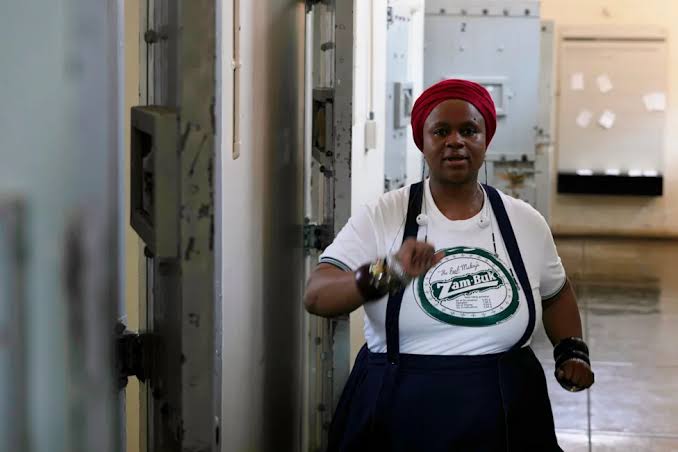
The legacy of those women can still be seen at Constitution Hill in Johannesburg, where the former Women’s Jail has been transformed into a museum.
During apartheid, women imprisoned for political activism were held there under a system designed to segregate and control them. Prisoners were separated according to race and subjected to harsh conditions.
Today, the site tells the stories of both prominent activists and countless women whose contributions received little attention outside their communities.
Figures such as Winnie Madikizela-Mandela and Albertina Sisulu became internationally recognized symbols of resistance, but museum officials emphasize that the struggle was also sustained by thousands of lesser-known women who organized protests, supported political movements and endured imprisonment.
The transformation of the Women’s Jail itself carries symbolic meaning. Parts of the old prison were incorporated into the museum, creating a physical connection between South Africa’s oppressive past and its democratic present.
For many women, however, the end of apartheid did not mean the end of the struggle for freedom.
Women today can move freely, work, vote and participate in public life without the restrictions imposed by apartheid law. Yet violence and insecurity can still limit those freedoms in everyday life.
The fear of walking alone, travelling after dark or taking part in economic activities remains a reality for many women. Gender-based violence has been described by the United Nations as a major crisis in South Africa.
Economic inequality also continues to shape women’s lives. Women face higher unemployment than men and carry a significant share of unpaid care responsibilities. They also remain underrepresented in many senior positions.
The challenges extend into sport and other areas where access to opportunities can depend heavily on financial circumstances.
South African wheelchair tennis champion Kgothatso Montjane, who won the 2024 Wimbledon wheelchair doubles title, has spoken about the opportunities created by earlier generations of women. Her achievements, including becoming the first Black South African woman to compete at all four major tennis tournaments, illustrate how far the country has moved since 1956.
Yet her experience also highlights how financial and structural barriers can continue to prevent talented people from reaching the highest levels.
The 70th anniversary of the South Africa Women’s March therefore carries two messages. It is a celebration of the courage of the women who confronted apartheid, but it is also a reminder that freedom requires continued work.
The women who marched in 1956 could not have known exactly what South Africa would look like decades later. What they demonstrated, however, was that meaningful change can begin when ordinary people decide they will no longer accept injustice.
For today’s generation, the challenge is different but the principle remains the same. The fight now includes confronting gender-based violence, reducing economic inequality and ensuring that political freedom translates into safety and opportunity for everyone.
Seventy years after the historic march, its message remains relevant: each generation inherits the gains of those who came before, but also inherits the responsibility to continue the struggle for a more equal society.