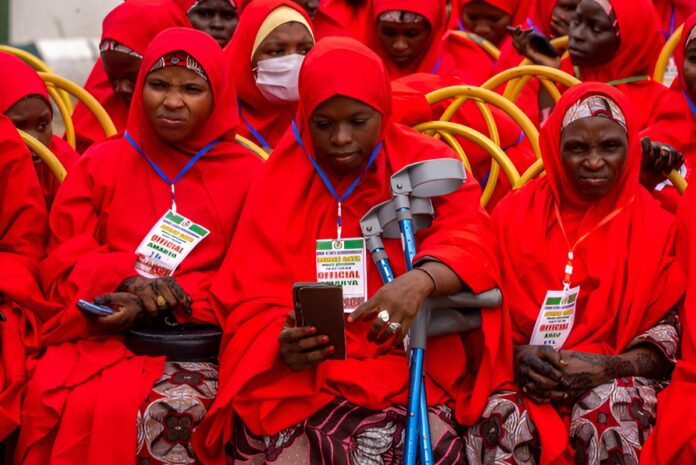
Celebrations have filled Kano, northern Nigeria, after the state government brought 1,500 couples together for a large scale mass wedding designed to help families struggling with the rising cost of starting a household.
The Kano mass wedding was held over two days, with couples selected from all 44 local government areas of the state. The initiative was organized through the state’s social welfare programme and was presented by officials as a way of helping people who might otherwise struggle to afford the expenses associated with marriage.
Governor Abba Kabir Yusuf approved the programme and allocated about $1.1 million to support the event. The funding is intended not only to cover aspects of the wedding ceremony but also to provide assistance to the newly married couples as they begin their lives together.
For some participants, the financial support made the difference between postponing marriage and being able to move forward.
Abubakar Aliyu Musa, one of the grooms, said he joined the programme because he wanted to reduce the financial pressure on both his family and his bride’s family. He described the initiative as particularly helpful for people who do not have enough money to meet the costs traditionally associated with marriage.
Another groom, Samini Tijani Isa, said economic difficulties had made marriage seem far beyond his immediate plans. He said that without the government programme, he might have waited several more years before being able to marry.
Participation in the Kano mass wedding also involved health screening before couples were approved. The screening included tests for HIV and hepatitis, as well as genotype compatibility checks.
The ceremonies were conducted according to Islamic traditions at Kano’s central mosque, with the governor and government officials present for the proceedings.
The event brought together couples from across the state, creating a major public celebration while also highlighting the economic pressures facing many young people and families.
State authorities say the programme is intended to go beyond the wedding ceremony itself. The newly married couples are expected to receive household items, including furniture and food, along with financial assistance to help them establish their homes.
Officials have described the initiative as part of a broader social welfare effort aimed at reducing financial barriers to marriage and strengthening families.
The Kano mass wedding also reflects the importance placed on marriage and family life in the predominantly Muslim state, where wedding expenses can place significant pressure on families.
For the couples who took part, however, the significance of the event goes beyond its size. The programme offered them an opportunity to begin married life with some of the financial burden reduced, while giving their families a reason to celebrate despite the difficult economic conditions.