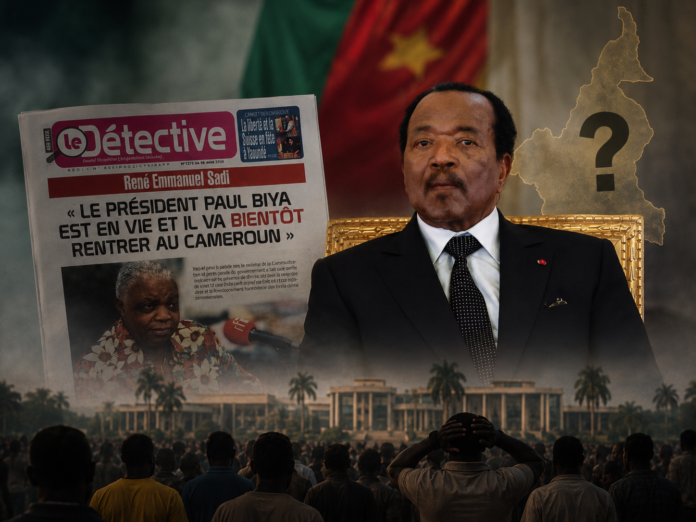
Cameroon is facing increasing political uncertainty as Paul Biya absence from public life stretches close to two months, prompting widespread debate about the country’s leadership and future. With no official timeline for his return, conversations across the capital, Yaoundé, have shifted from speculation to growing concern among citizens, analysts, and political observers.
Public Reactions to Paul Biya Absence Continue to Grow
In Yaoundé, the prolonged Paul Biya absence has become one of the country’s most discussed political issues. While some citizens remain confident that the president’s absence is justified, others are becoming increasingly uneasy over the lack of clear communication from the government.
Some residents believe there is no reason for panic, expressing confidence that the president has always managed national affairs responsibly and that his temporary absence is likely for important reasons. They remain hopeful that he will eventually return with positive news for the country.
Others, however, say the silence has lasted too long. Many argue that the president’s absence comes at a time when Cameroon is facing important national issues, including concerns over education, governance, and economic challenges. Some residents believe stronger leadership is needed to address these matters and provide reassurance to the public.
For many citizens, the biggest concern is the uncertainty itself. With no recent public appearances or official explanation regarding his condition or expected return, questions continue to mount about the country’s political stability.
Political Analysts Warn Paul Biya Absence Could Trigger Institutional Challenges
Political observers say the continued Paul Biya absence has highlighted broader governance concerns within Cameroon. Analysts point to the absence of a newly formed government following the October 2025 presidential election as one of several factors contributing to uncertainty within state institutions.
According to political experts, growing confusion within parts of the administration has intensified public discussion about what Cameroon could look like after the Biya era. They argue that conversations about political succession and long term governance can no longer be avoided if the country hopes to maintain institutional stability.
Recent military appointments have also attracted attention, with some observers questioning whether they signal preparations for possible political developments. Despite these discussions, authorities have not announced when the president is expected to return to the country.
As Paul Biya absence approaches the two month mark, uncertainty continues to dominate political conversations across Cameroon. While supporters remain optimistic that the situation will soon become clearer, many citizens are seeking greater transparency from the government. Until official updates are provided, questions surrounding the country’s leadership and future political direction are likely to remain at the center of national debate.