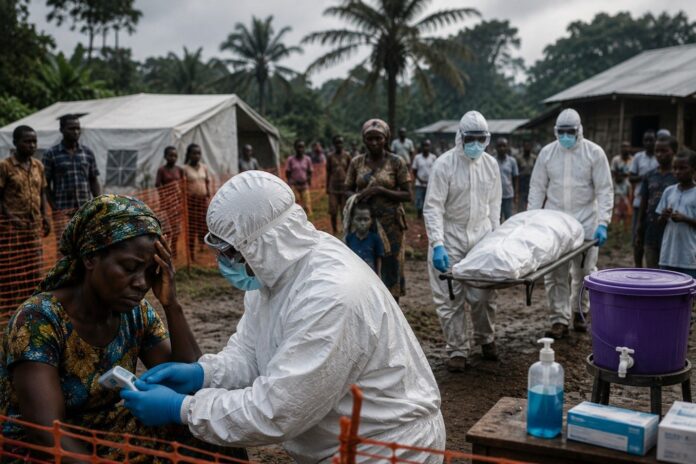
The deadly Ebola epidemic tearing through the eastern Democratic Republic of the Congo shows no signs of slowing down, with the International Federation of Red Cross and Red Crescent Societies warning on Tuesday that the outbreak has not yet reached its peak and could persist for another year. The grim assessment has sent alarm bells ringing across the global health community, which has been closely watching the spread of one of the world’s most feared hemorrhagic fevers in a region already battered by conflict, displacement, and institutional fragility.
Bruno Michon, operations manager for the Red Cross in eastern DR Congo, delivered the sobering update via video link from inside the affected zone. “The peak is, I think, not behind us, but in front of us,” Michon told reporters. He further expressed fear that it could take as long as a full year to bring the disease under control. He noted it was “very difficult” to gauge the true extent to which the Ebola epidemic was spreading, a reflection of the serious gaps in surveillance and detection capabilities across the affected provinces.
The current outbreak involves the rare Bundibugyo strain of the Ebola virus, a variant that differs from the more commonly known Zaire strain responsible for West Africa’s catastrophic 2014 to 2016 epidemic. According to government data, at least 192 people have lost their lives since the outbreak was declared, and the virus is advancing rapidly across three provinces in the country’s volatile east. The scale and speed of transmission have raised fears that containment efforts may be falling dangerously behind the curve.
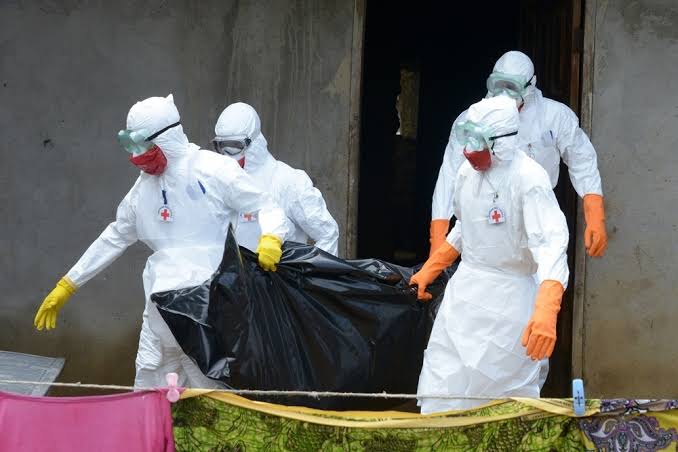
Aid workers responding to the crisis have faced not only the immense logistical challenge of operating in a conflict-affected zone but also deep community mistrust. Michon confirmed that Red Cross and Red Crescent teams engaged in community outreach and the safe burial of Ebola victims have encountered verbal abuse, threats, and physical attacks in recent days. The hostile reception is a significant obstacle in the fight against the disease, as safe burial practices are one of the most critical tools for breaking the chain of Ebola transmission. “Building trust takes time. It requires honesty, patience, and humility, but in this outbreak it is not optional; it is life-saving,” Michon said.
The uncertainty surrounding the true scale of the outbreak is compounded by severe testing deficiencies. Kate White, emergency medical coordinator for Doctors Without Borders known by its French initials MSF, stated on Monday that “no one knows the true scale or exactly where the disease is spreading in DR Congo.” An MSF statement described testing as one of the most significant weaknesses in the entire response, painting a worrying picture of an outbreak whose contours remain unclear and dangerous.
A senior Congolese public health official, speaking anonymously to reporters, highlighted additional systemic complications. Data flowing in from laboratories, hospitals, treatment centres, and epidemiological surveillance teams are extremely difficult to harmonize, the official explained, leading to inaccuracies and distortions in the reported figures. Some patients may be counted more than once when they cross between health zones and undergo repeated testing, while others are dying in remote communities without ever coming to the attention of health authorities at all. The official suggested that the virus may have actually begun circulating as far back as February, weeks before authorities formally declared the outbreak.

The warnings from the Red Cross and MSF paint a stark picture of an Ebola response that is struggling to keep pace with a rapidly evolving crisis. With the true scope of the outbreak still unknown, community trust fragile, and testing infrastructure inadequate, health officials and aid organizations face an uphill battle in the weeks and months ahead. The international community has been urged to scale up support and resources as health authorities work against time to prevent the epidemic from entrenching itself further in one of the world’s most vulnerable regions.