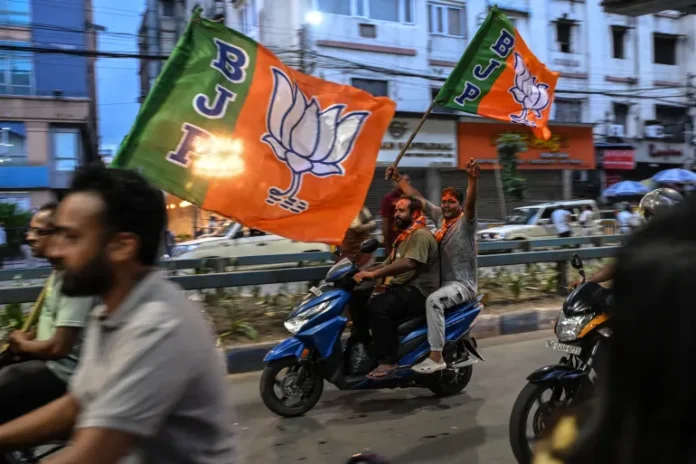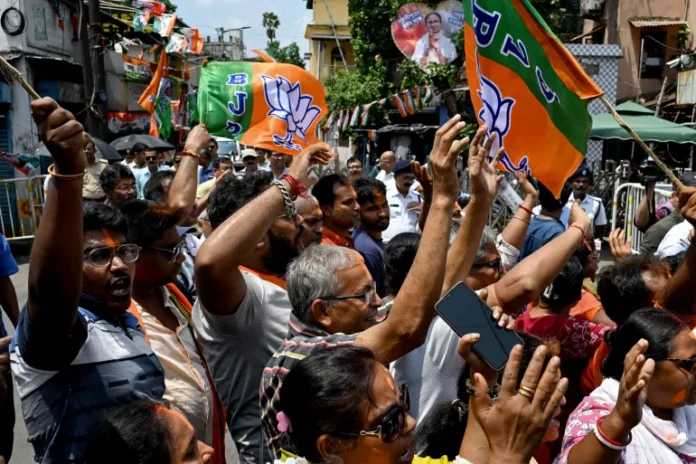
NEW DELHI — Indian Prime Minister Narendra Modi and his ruling Bharatiya Janata Party (BJP) appeared set for major victories in crucial state elections, strengthening the party’s political dominance midway through Modi’s third term in office.
Vote counting trends showed the BJP on course to retain power in Assam while also heading toward a historic breakthrough in West Bengal, a state long governed by rivals of Modi’s Hindu nationalist movement.
In West Bengal, the BJP was projected to win more than 200 seats in the 294-member assembly, potentially ending the long rule of Chief Minister Mamata Banerjee and her Trinamool Congress party. The result would mark the BJP’s first-ever victory in the eastern state.
The elections were widely viewed as a key test of Modi’s popularity ahead of the 2029 national election and a measure of the opposition’s ability to challenge the BJP’s growing influence across India.
Analysts said the strong performance reflected the BJP’s mix of welfare programs, infrastructure spending and appeals to Hindu nationalist sentiment. The gains could also make it easier for the party to push forward contentious policies such as a Uniform Civil Code and large-scale infrastructure reforms in BJP-governed states.
The results exposed deeper political and religious polarization in India, with reports indicating Muslim voters largely backing opposition parties while Hindu voters strongly favored the BJP in several states.
Opposition leaders raised concerns over alleged voter roll revisions and accusations of electoral irregularities, claims the BJP and election authorities denied. The controversies added to already heightened political tensions surrounding the polls.
Beyond West Bengal and Assam, the elections also reshaped politics in southern India. In Tamil Nadu, actor-turned-politician C. Joseph Vijay emerged as a major force, while in Kerala the Congress-led alliance returned to power.
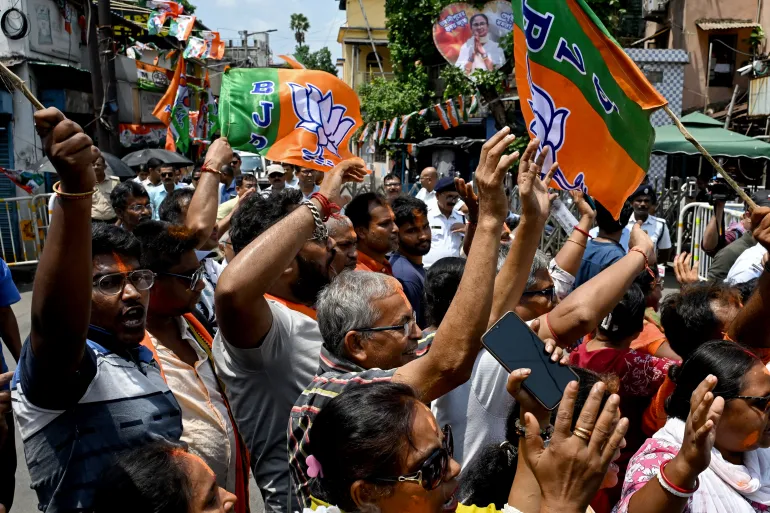 A strong BJP showing would extend the party’s influence to most Indian states, further consolidating Modi’s position as the country’s dominant political figure more than a decade after first taking office.