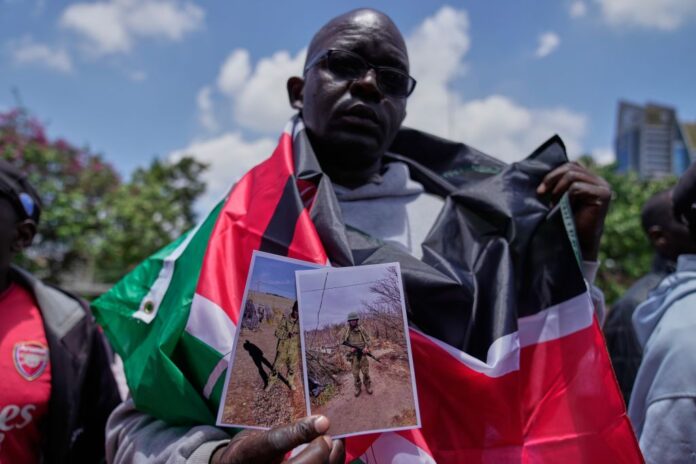
At least 19 Kenyan nationals have died in Ukraine while fighting for Russia, according to Musalia Mudavadi, amid growing concerns that recruits are being lured into military service under false promises of employment.
Mudavadi disclosed the figures during a senate committee session on Thursday, saying that two Kenyans are currently being held in Ukrainian captivity while another 32 remain missing.
In a statement posted on social media the same day, the Kenyan foreign minister said authorities had documented 291 cases of what he described as “irregular military recruitment” linked to Russia, adding that 53 Kenyan citizens had so far been repatriated.
Kenyan intelligence assessments have reportedly estimated that more than 1,000 Kenyan citizens may have been recruited into the Russian military through deceptive job offers promising high salaries and overseas work opportunities.
Allegations of Deceptive Recruitment
Russia has faced repeated accusations of recruiting foreign nationals as its war in Ukraine continues into another prolonged phase marked by heavy battlefield losses and mounting troop demands.
According to reports from international media and human rights groups, recruitment campaigns targeting vulnerable populations in Africa, Latin America and parts of Asia have increasingly appeared on social media platforms and messaging apps. Many of the advertisements reportedly offer jobs in security, construction or logistics, only for recruits to discover upon arrival that they are expected to join military operations.
Unsuspecting recruits are alleged to have signed contracts with Russian affiliated companies that offered to pay for visas, travel and accommodation expenses. Once in Russia, however, some recruits reportedly faced pressure or coercion to sign military service agreements.
Analysts say economic hardship and unemployment in several countries have made young people particularly vulnerable to such schemes. For many recruits, the promise of stable income abroad appears attractive despite limited information about the risks involved.
The issue has increasingly become a diplomatic concern for governments whose citizens have ended up fighting in Ukraine. Some countries have sought explanations from Moscow, while others have stepped up warnings to citizens against accepting suspicious overseas job offers linked to Russia.
Harsh Battlefield Conditions
Foreign recruits fighting for Russia are believed to face extremely dangerous conditions on the front lines in Ukraine. Ukrainian officials and diplomats have repeatedly warned that foreign nationals are often deployed to some of the most intense combat zones with limited preparation or support.
Last year, Ukraine’s embassy in Jordan said foreigners serving in Russian forces faced “a grim and often fatal fate.” The embassy claimed many recruits were sent into so called “meat assaults,” a term widely used to describe high casualty infantry attacks where soldiers are exposed to overwhelming enemy fire.
The embassy further alleged that foreign recruits were treated as expendable because their deaths generated little accountability inside Russia.
“Knowing that there is virtually no accountability for the death of a foreigner, the Russian command treats them as expendable,” the embassy said, adding that many recruits reportedly did not survive beyond their first month on the battlefield.
While Russia has not publicly detailed the scale of foreign recruitment into its armed forces, reports from multiple countries suggest the practice has expanded as the conflict drags on.
Kenya Responds to Growing Concern
The Kenyan government has increasingly voiced concern over the number of citizens believed to be involved in the conflict. Mudavadi’s latest comments represent one of the clearest official acknowledgements yet of the scale of the issue.
Officials say efforts are ongoing to identify missing nationals, assist families seeking information and facilitate the return of Kenyans who manage to leave Russia or are released from military service.
 The revelations are likely to intensify scrutiny over online recruitment networks and the role of intermediaries allegedly involved in transporting recruits abroad.
As the war in Ukraine continues, experts warn that financially vulnerable individuals from developing countries may remain targets for deceptive recruitment operations promising employment opportunities that ultimately place them in one of the world’s deadliest active conflict zones.