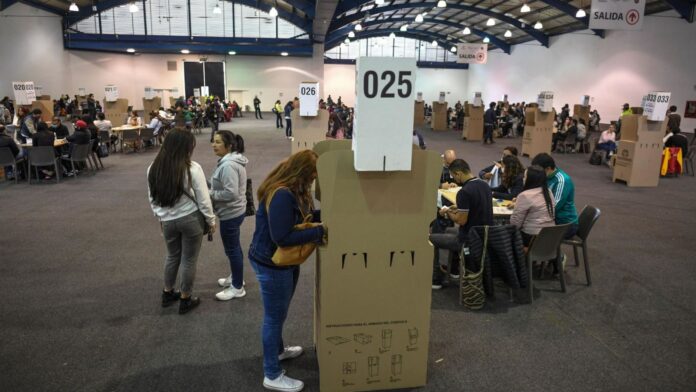
BOGOTÁ — Colombia’s presidential election moved into a dramatic runoff after voters delivered a surprise first round result that set up a contest between leftist frontrunner Gustavo Petro and anti-establishment businessman Rodolfo Hernández, a candidate often compared by critics and supporters to former US president Donald Trump.
Petro, a former mayor of Bogotá and ex-member of the M-19 guerrilla movement, topped the first round as expected with about 40 percent of the vote.
But the major shock of the night was Hernández’s surge into second place, overtaking conservative candidate Federico Gutiérrez, who had been widely expected by polls to advance.
The two remaining candidates were set to face each other in a decisive second round on June 19.
Petro Seeks Historic First Left-Wing Presidency
If elected, Petro would become the first openly left-wing president in Colombia’s history, a remarkable shift in a country where decades of internal conflict made many voters deeply skeptical of leftist national leadership.
Petro campaigned on promises to tackle entrenched inequality, expand social welfare, reform the tax system, and reduce Colombia’s economic dependence on oil and coal by investing in clean technology.
His campaign gained traction after years of street protests over unemployment, police abuses, poor services, and rising living costs.
Many supporters saw Petro as the clearest break from Colombia’s traditional political elite.
As news spread that he had secured first place, supporters gathered in central Bogotá to celebrate.
“People are showing they are tired of the same thing, that they want a change,” voter Cristian Riano told Reuters.
Petro’s running mate, Francia Márquez, also made history as a prominent Afro-Colombian environmental activist seeking to become the country’s first Black vice president.
Hernández Emerges as Surprise Challenger
The stronger than expected finish by Hernández upended Colombia’s political map.
At 77, the construction magnate ran as a blunt speaking outsider who relied heavily on social media and anti corruption messaging rather than a traditional party machine.
He positioned himself as an enemy of the political class, promising to slash wasteful spending and govern with business efficiency.
His confrontational style and populist rhetoric led many commentators to compare him with Donald Trump.
Yet his candidacy was not without controversy. Hernández campaigned while under investigation over allegations that he favored a company his son had lobbied for. He denied wrongdoing.
Still, many Colombians frustrated with established politicians viewed him as a vehicle for protest.
With nearly all ballots counted, Hernández had roughly 28 percent, comfortably ahead of Gutiérrez on just under 24 percent.
Traditional Right Suffers Major Defeat
The elimination of Gutiérrez represented a serious setback for Colombia’s mainstream conservative forces.
He had been widely seen as the ideological heir to outgoing president Iván Duque, whose administration ended under low approval ratings amid social unrest and economic pressure.
Duque was barred from seeking another term because Colombia’s constitution limits presidents to a single term.
Accepting defeat, Gutiérrez quickly endorsed Hernández and urged his supporters to rally behind him in the runoff, an attempt to consolidate anti Petro forces.
That endorsement suggested the second round would become a polarized battle between voters seeking change through the left and those preferring an outsider from the right leaning protest camp.
Nation Grapples With Deep Problems
Whoever won the June runoff was set to inherit serious national challenges.
Colombia was facing rising inflation, widening inequality, public anger over corruption, and lingering insecurity in regions where armed groups and drug trafficking networks remained active.
 The 2016 peace accord with former Farc rebels had reduced some violence, but many Colombians felt the promise of peace had not fully materialized.
Rural killings, coca cultivation, and criminal control of remote territories continued to trouble the country.
Economic frustration also shaped the election. Higher food and fuel prices were squeezing households, while many younger voters felt excluded from opportunity.
A Defining Runoff Ahead
The runoff promised to be one of the most consequential elections in modern Colombian history.
A Petro victory would signal a profound ideological realignment and place Colombia alongside a broader Latin American trend of left leaning governments.
A Hernández victory would instead reflect global patterns of outsider populism, anti elite anger, and distrust of institutions.
Either way, voters had already delivered one clear message in the first round: they wanted something different from the political order that had governed Colombia for decades.