The standoff over the Strait of Hormuz escalated sharply on Saturday as Iran reversed its earlier decision to reopen the crucial shipping lane and instead fired on vessels attempting to pass. The move came in direct retaliation after the United States pressed ahead with its blockade of Iranian ports, intensifying a confrontation that now threatens global energy supplies and regional stability.
Iran’s Revolutionary Guard navy announced late Saturday that the strait would remain closed until the U.S. blockade is lifted. In a stark warning, it declared that no vessel should move from anchorage in the Persian Gulf or the Sea of Oman, adding that any attempt to approach the strait would be considered cooperation with the enemy and would be targeted.
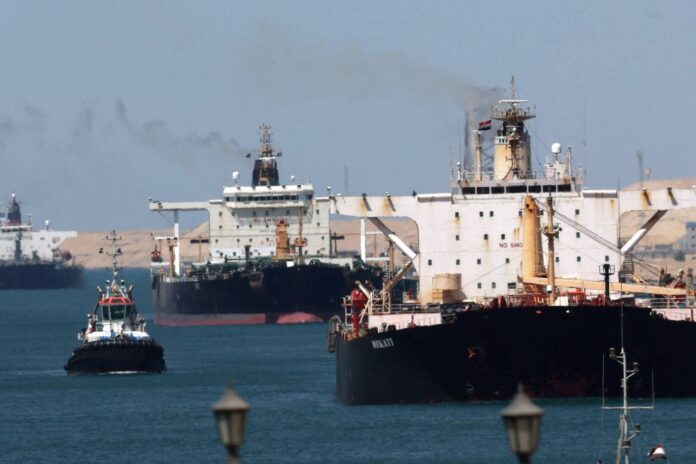
The renewed attacks targeted one of the world’s most critical maritime chokepoints. Roughly one fifth of global oil supply normally passes through the strait, making any disruption immediately significant for international markets. The latest developments risk deepening an already unfolding energy crisis while pushing the United States and Iran closer to renewed large scale conflict as the war entered its eighth week.
A fragile ceasefire is set to expire by Wednesday, adding urgency to diplomatic efforts. Iranian officials said they had received new proposals from Washington, while Pakistani mediators continued working to arrange another round of direct negotiations.
Naval confrontation and global fallout
Earlier in the day, Iran’s joint military command stated that control of the Strait of Hormuz had returned to its previous state under strict management by the armed forces. That assertion was quickly followed by direct action on the water.
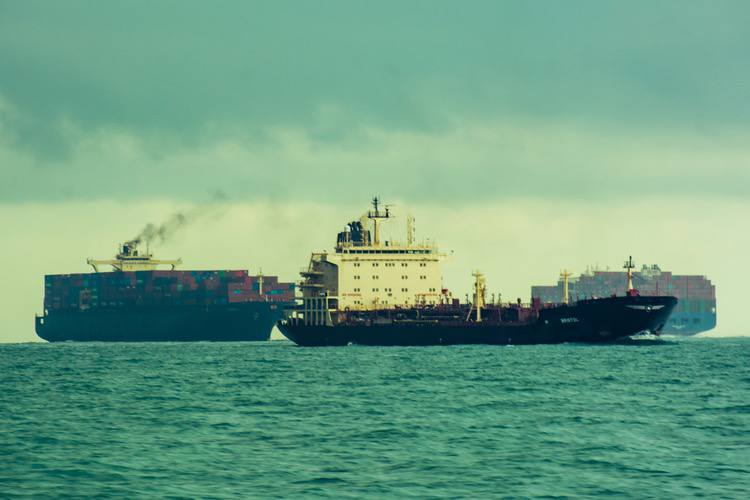
According to the United Kingdom Maritime Trade Operations center, Iranian Revolutionary Guard gunboats opened fire on a tanker, while an unidentified projectile struck a container ship, damaging several containers. The incidents raised immediate alarm among international shipping operators.
India reacted swiftly, with its foreign ministry summoning Iran’s ambassador over what it described as a serious incident involving two India flagged merchant vessels. The move was particularly notable because Iran had earlier allowed several India bound ships to pass through the strait, suggesting a sudden shift in enforcement.
For Tehran, the closure of the strait remains one of its most powerful strategic tools. First imposed after the United States and Israel launched the war on February 28 during negotiations over Iran’s nuclear program, the shutdown carries global economic consequences and places political pressure on Donald Trump. For Washington, the naval blockade is designed to maintain pressure on Iran’s already strained economy, potentially limiting its ability to sustain prolonged conflict.
Leadership signals defiance as diplomacy falters
Iran’s new supreme leader, Mojtaba Khamenei, issued a defiant message on Saturday, declaring that Iran’s navy stands ready to inflict bitter defeats on its enemies. He has not appeared in public since assuming leadership following the death of his father during Israel’s initial strikes, but his statement underscored a hardened stance at the top of Iran’s leadership.
Just a day earlier, Iran had announced the reopening of the strait to commercial traffic following a 10 day truce between Israel and the Iran backed Hezbollah movement in Lebanon. That reopening briefly eased global concerns and caused oil prices to fall. However, the decision was quickly reversed after Washington confirmed that its blockade would remain fully in place.
Trump said the blockade of Iranian ports would continue until Tehran agreed to a deal with the United States. The measure had been imposed after a round of unprecedented face to face talks in Pakistan ended without agreement.
The United States has actively enforced the blockade, with United States Central Command reporting that 23 ships had been turned back from Iranian waters since Monday. Trump’s stance triggered strong criticism from Iranian officials.
Saeed Khatibzadeh, Iran’s deputy foreign minister, warned that Washington’s actions risked wider consequences. Speaking to The Associated Press, he said Americans were risking the international community and the global economy through what he described as miscalculations, adding that the United States was jeopardizing the entire ceasefire framework.
Competing strategies over control of the strait
Iran’s Supreme National Security Council of Iran issued a statement calling the U.S. blockade a violation of the ceasefire and made clear that Tehran would not accept any limited or conditional reopening of the strait. The council, which has increasingly functioned as Iran’s central decision making authority during the conflict, emphasized that the country would maintain strict oversight of maritime traffic.
According to the council, this oversight would include designated shipping routes, payment of transit fees, and the issuance of certificates for vessels seeking passage. However, the Revolutionary Guard’s subsequent statement suggested an even stricter approach, effectively warning that no transit would be permitted at all under current conditions.
Iran also highlighted the strategic importance of the strait for U.S. military logistics. Since many supplies to American bases in the Gulf region pass through this route, controlling it provides Tehran with leverage beyond commercial shipping.
Pakistan mediation and uncertain diplomatic path
The escalation unfolded as Ishaq Dar said Pakistan was actively working to bridge differences between Washington and Tehran. Islamabad is expected to host a second round of negotiations early next week, continuing its role as a key intermediary.
Iran’s Supreme National Security Council confirmed that new U.S. proposals had been delivered during a recent visit by Pakistan’s army chief and were under review. However, Iranian officials signaled skepticism about immediate progress.
Khatibzadeh said Iran was not yet ready for another round of direct talks, arguing that the United States had not moved away from what he described as a maximalist position. He also ruled out one of Washington’s key demands, stating that Iran would not hand over its stockpile of enriched uranium, estimated at 970 pounds or 440 kilograms, calling the idea a nonstarter.
Trump, however, struck a more optimistic tone publicly, saying that conversations were going well despite recent tensions. He suggested that further developments could emerge soon, while also warning that Iran could not pressure the United States through its actions.
Regional tensions and widening conflict risks
Beyond the maritime confrontation, the broader regional picture remains volatile. Emmanuel Macron said a French soldier was killed and three others wounded in an attack on United Nations peacekeepers in southern Lebanon. He indicated that evidence pointed to Hezbollah, though the group denied involvement.
The United Nations Interim Force in Lebanon also attributed the attack to Hezbollah, adding another layer of tension to an already fragile ceasefire in Lebanon. Pakistan’s foreign minister noted that fighting between Israel and Hezbollah had been a major sticking point in U.S. Iran negotiations, and that a ceasefire there could support broader diplomatic efforts.
However, uncertainty remains about whether Hezbollah will fully adhere to a truce it did not directly negotiate, especially with Israeli forces still present in parts of southern Lebanon. In Beirut, displaced families have already begun returning to their homes despite official warnings, reflecting both hope for stability and the risk of renewed violence.
Mounting human and economic costs
The human toll of the conflict continues to rise. The war has killed at least 3,000 people in Iran, more than 2,290 in Lebanon, 23 in Israel and more than a dozen in Gulf Arab states. Thirteen U.S. service members have also been killed.
At the same time, the economic consequences are becoming increasingly severe. Disruptions in the Strait of Hormuz threaten global energy supplies, while ongoing military actions and blockades are placing additional strain on regional economies.
 As the ceasefire deadline approaches, the situation remains finely balanced between escalation and diplomacy. Iran’s decision to close the strait again, combined with U.S. insistence on maintaining its blockade, underscores how quickly tentative progress can unravel.
With negotiations expected to resume in Pakistan and both sides reviewing new proposals, the coming days will be critical. Whether diplomacy can regain momentum or whether the region moves closer to wider conflict will likely depend on decisions made in the immediate future.