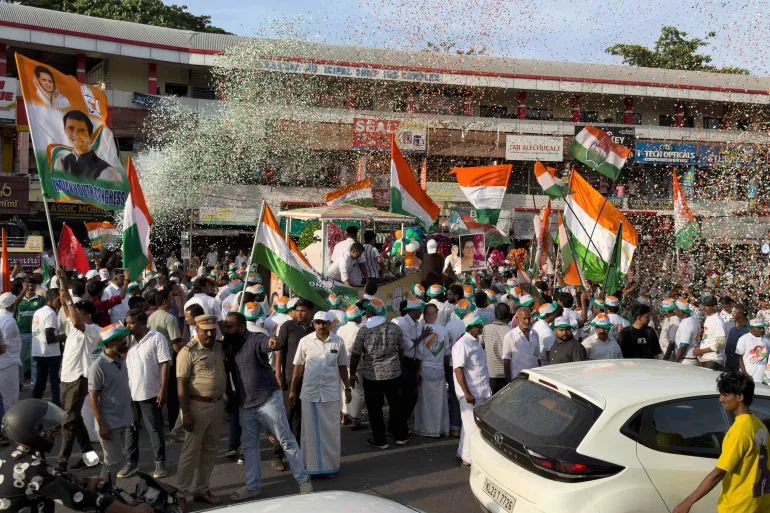
![Congress Party-led United Democratic Front supporters gather for a campaign event ahead of Thursday's election in Kochi, Kerala, India, April 7, 2026 [R S Iyer/AP Photo]](https://www.mapleepoch.com/wp-content/uploads/2026/05/India-Elections-696x464.webp "India Elections")
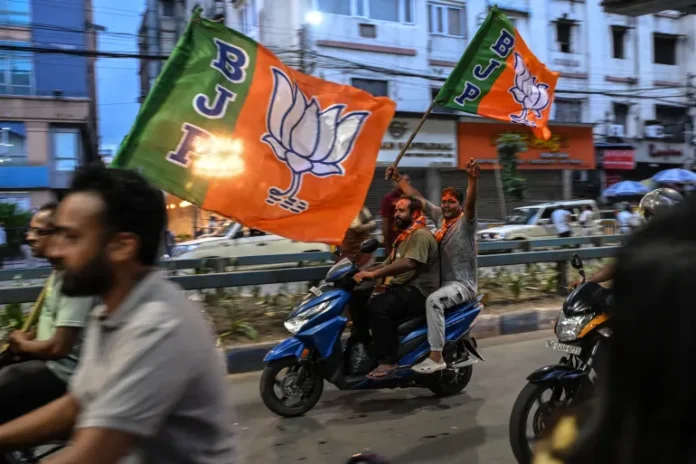
Voters in the Indian states of Assam and Kerala cast ballots in legislative assembly elections seen as an important political test for Prime Minister Narendra Modi’s ruling Bharatiya Janata Party (BJP) and the country’s fragmented opposition.
Polling took place amid tight security, with millions of eligible voters participating in the contests that could reshape regional politics and offer clues about national political trends ahead of future parliamentary elections.
In Assam, the BJP sought to retain power in the strategically important northeastern state after campaigning on development, infrastructure projects and welfare programs. Opposition parties, led by the Congress alliance, attempted to challenge the BJP by raising concerns over unemployment, inflation and ethnic tensions.
The Assam election also revived debate over immigration and identity politics, issues that have long shaped the state’s political landscape. The BJP defended its citizenship and border policies as necessary for national security, while critics accused the party of deepening social divisions.
In Kerala, the contest centered on the state’s traditional rivalry between the Left Democratic Front (LDF), led by the Communist Party of India (Marxist), and the opposition Congress-led United Democratic Front (UDF). The BJP has historically struggled to gain a foothold in the southern state but hoped to improve its presence through an aggressive campaign.
Kerala voters focused heavily on economic issues, rising living costs, unemployment and governance, while campaign rhetoric also touched on religion, secularism and federal relations with New Delhi.
Election officials deployed large numbers of security personnel and electronic voting machines across both states to ensure smooth voting. Authorities urged peaceful participation after isolated reports of political clashes during campaigning.