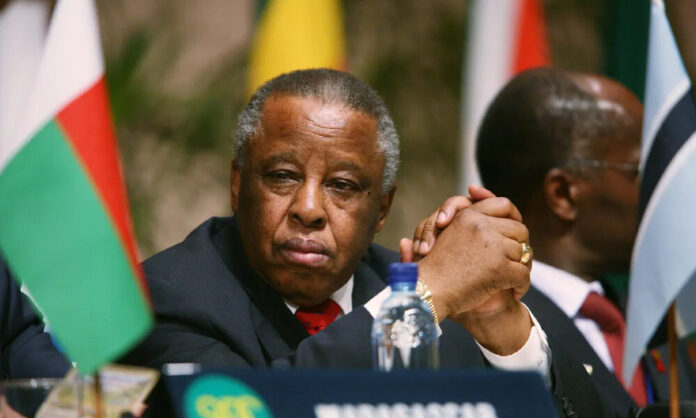
Festus Mogae, the former president of Botswana who earned international recognition for leading the country’s response to the HIV/AIDS crisis, has died at the age of 86, the government announced on Friday.
No cause of death was disclosed.
Current President Duma Boko confirmed Mogae’s death in a televised national address, describing him as a distinguished statesman who served Botswana with “dignity, finesse and amazing humility.” Boko announced three days of national mourning in honour of the former leader.
“Today Botswana mourns a distinguished statesman, a patriot whose life was devoted to the service of his country,” Boko said.
Mogae served as Botswana’s president from 1998 to 2008, overseeing a period marked by economic stability, democratic governance and an aggressive campaign against HIV/AIDS at a time when the epidemic threatened the country’s future.
Leadership During the HIV/AIDS Crisis
Widely credited with transforming Botswana’s public health response, Mogae made combating HIV/AIDS a national priority as infection rates soared in the late 1990s and early 2000s. At one point, nearly 40 percent of Botswana’s adult population was believed to be living with HIV, among the highest infection rates in the world.
Warning that the nation was “threatened with extinction,” Mogae’s administration launched one of Africa’s most ambitious treatment programmes. In 2002, Botswana became the first African country to provide free antiretroviral treatment through public health facilities, supported in part by the United States President’s Emergency Plan for AIDS Relief, known as PEPFAR.
The programme dramatically improved access to lifesaving medication and helped reduce HIV/AIDS related deaths across the country. By 2021, health authorities reported that nearly all HIV positive people in Botswana receiving treatment had achieved viral suppression.
Mogae was widely praised internationally for confronting the epidemic openly at a time when stigma surrounding HIV/AIDS remained widespread across much of Africa.
Economist Turned President
Born on August 21, 1939, in the central Botswana town of Serowe, Festus Gontebanye Mogae was the son of cattle farmers. His father served as a village headman.
An economist by training, Mogae studied at the University of Oxford and the University of Sussex in the United Kingdom before joining Botswana’s civil service shortly after the country gained independence from Britain in 1966.
Over the course of his career, he worked for the International Monetary Fund and later became governor of the Bank of Botswana. He also served as finance minister from 1989 to 1998 and vice president from 1991 until assuming the presidency in 1998.
During his decade in office, Botswana maintained a reputation for political stability and prudent economic management, supported largely by its diamond industry. The southern African nation remains the world’s leading producer of diamonds by value and one of the largest producers by volume.
Diamonds account for roughly 80 percent of Botswana’s exports and about a quarter of its gross domestic product, according to International Monetary Fund estimates.
International Recognition and Legacy
Mogae’s leadership earned widespread international respect for promoting democratic governance and respecting constitutional term limits. In 2008, after stepping down voluntarily at the end of his second term, he received the prestigious Ibrahim Prize for Achievement in African Leadership, awarded to former African heads of state recognized for good governance and democratic leadership.
Following his presidency, Mogae remained active internationally, serving as a United Nations special envoy on climate change and participating on several nonprofit and corporate boards.
Last month, Mogae’s office announced that he had been hospitalized in Gaborone, though it later said he had returned home and was recovering.
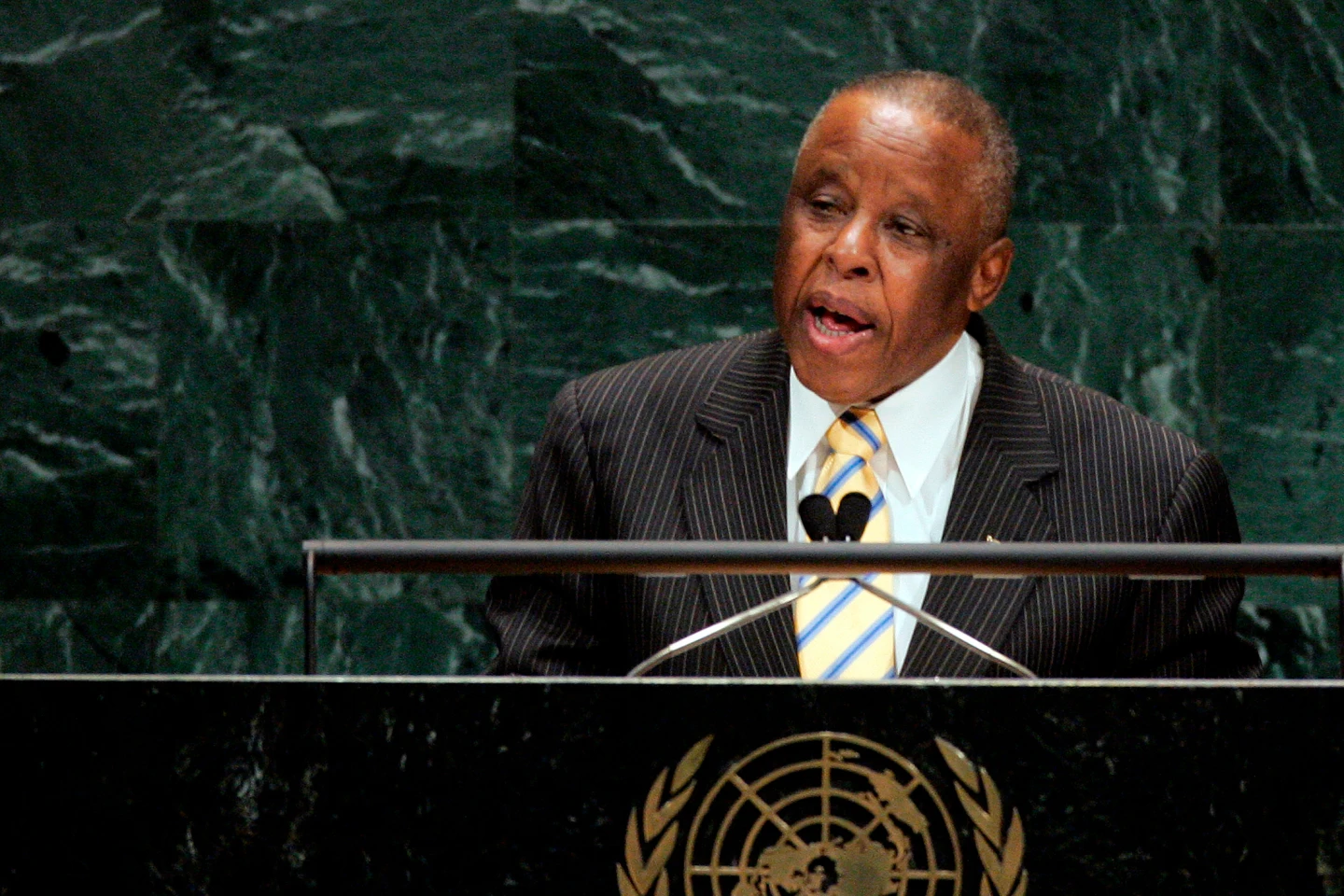 He is survived by his wife, Barbara Modise, whom he married in 1967, and their three daughters, Nametso, Chedza and Boikaego.
Tributes have continued pouring in from across Africa and beyond, with many leaders remembering Mogae as a calm reformer who guided Botswana through one of the most difficult public health crises in its history while preserving economic stability and democratic institutions.