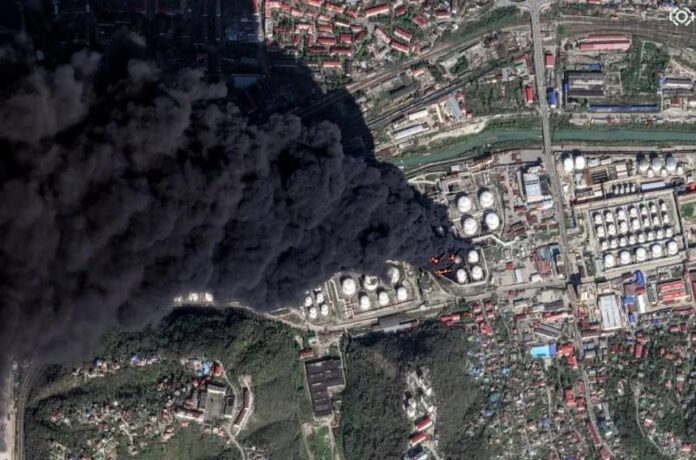
Ukraine has sharply intensified its long-range drone campaign against Russia’s oil industry in recent months, striking ports, pipelines, refineries, and storage facilities in what officials in Kyiv describe as an effort to weaken Moscow’s war economy and disrupt energy revenues that help fund its invasion.
The campaign represents one of the most sustained phases of Ukraine’s strategic strikes since the start of the war, with a growing number of drones and increasingly frequent attacks reaching deeper into Russian territory and coastal infrastructure.
From the early months of the war, Ukraine has targeted Russian energy infrastructure, viewing oil and gas revenues as central to the Kremlin’s military financing.
Russia remains heavily dependent on hydrocarbon exports, and despite international sanctions, energy sales continue to generate substantial income through global markets.
Ukraine’s strategic logic has remained consistent: reducing Russia’s ability to export oil directly undermines its capacity to fund battlefield operations, weapons production, and broader wartime spending.
What has changed in recent months is scale and reach. Ukraine’s domestically produced long-range drone fleet has matured, enabling repeated strikes on infrastructure hundreds of miles inside Russia, including coastal export facilities once considered relatively secure.
Ports on the Baltic and Black Sea Under Pressure
Ukrainian drone operations have increasingly focused on Russian oil infrastructure connected to the Baltic Sea and Black Sea export routes.
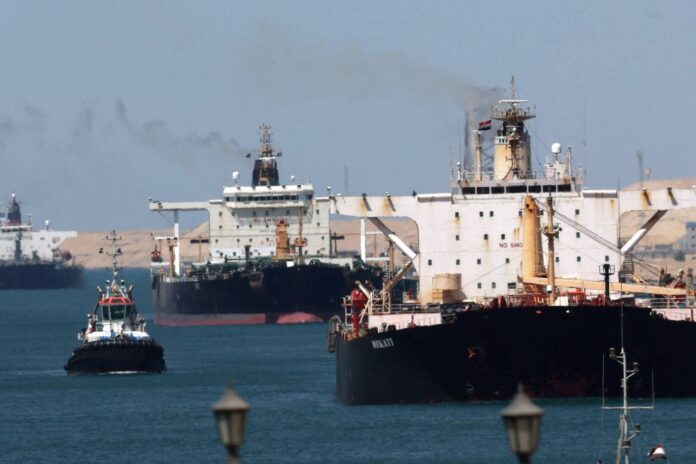
These maritime hubs play a key role in loading crude oil and petroleum products onto tankers bound for international markets, including Asia and the Middle East.
Disruptions at these facilities can have cascading effects beyond physical damage, including delays in shipping schedules, insurance disruptions, and bottlenecks in storage and logistics.
Kyiv appears to be prioritizing these nodes as part of a strategy aimed at maximum economic disruption using relatively low-cost unmanned systems.
Energy Markets and Strategic Timing
The renewed campaign comes during a period of volatility in global energy markets linked to wider geopolitical tensions, including conflicts involving Iran and the Middle East.
Higher oil prices can benefit Russia by increasing export revenues, partially offsetting the impact of sanctions and military expenditures.
Prior to the latest price surge, Russia’s economy was widely viewed by analysts as under pressure from sustained defense spending, inflation, labor shortages, and declining energy income.
Ukrainian officials have argued that allowing Russia to benefit from higher global prices would strengthen its war effort, making disruption of export capacity a strategic necessity.
Independent verification of damage levels remains difficult due to wartime restrictions and conflicting claims from both sides.
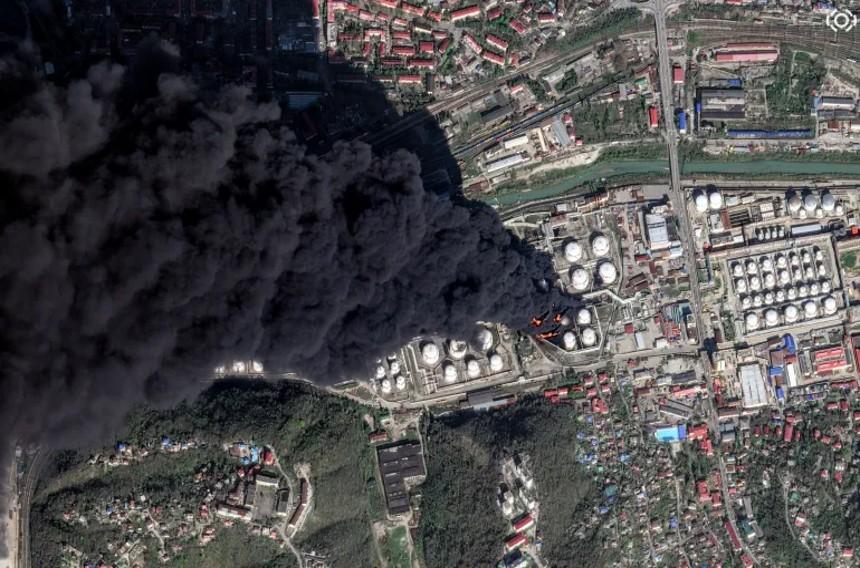
However, industry reporting and satellite analysis cited by international media suggest that Ukrainian strikes have temporarily disrupted operations at several Russian export facilities.
Russia has responded by accelerating repairs, rerouting shipments, and reinforcing air defenses around key infrastructure, though repeated strikes indicate ongoing vulnerabilities.
Western Concerns Over Market Stability
Some Western governments have reportedly expressed concern about the broader impact of Ukrainian strikes on global energy prices and supply stability.
Ukrainian President Volodymyr Zelenskyy and senior intelligence officials have acknowledged receiving diplomatic signals urging restraint in targeting export infrastructure.
Kyiv, however, has maintained that Russian energy revenues directly support missile production, troop funding, and continued military operations, making these facilities legitimate targets within its broader defense strategy.
Economic Warfare
The campaign reflects a broader evolution of the war into a contest of economic endurance and industrial disruption.
Unable to match Russia in conventional missile stockpiles or manpower, Ukraine has increasingly relied on asymmetric tools including long-range drones, cyber operations, and strikes on logistics and industrial infrastructure.
Targeting oil facilities allows Ukraine to impose costs far from the front lines while forcing Russia to divert resources toward homeland defense and infrastructure protection.
Pressure on Russia’s Defense System
For Moscow, the strikes create a complex defensive challenge.
Russia must protect an extensive network of energy infrastructure spread across vast territory while continuing military operations in Ukraine.
Each attack forces the deployment of air defense systems, radar coverage, and personnel that could otherwise support front-line operations.
Even when damage is limited, repeated disruptions can increase operational costs and strain logistics.
Drone Warfare
Ukraine has significantly expanded domestic weapons production since the start of the full-scale invasion, including a growing portfolio of unmanned systems.
Officials in Kyiv say domestic defense output has increased dramatically since 2022, with dozens of drone types now produced locally.
This industrial expansion has reduced Ukraine’s dependence on Western-supplied strike systems for certain operations and enabled more flexible targeting of Russian territory.
Russian officials, meanwhile, have warned that European military cooperation with Ukraine could further escalate the conflict, though these statements are part of broader wartime rhetoric and have not been independently substantiated.
Reports of damage to Russian oil infrastructure vary widely depending on source and methodology, and independent verification is limited.
While satellite imagery and geolocated footage have confirmed strikes on multiple facilities, estimates of long-term export losses or percentage reductions in capacity remain disputed.
Analysts generally agree, however, that Ukrainian strikes have created intermittent disruptions, forced operational adjustments, and increased security costs for Russian energy infrastructure.
War Fought Through Infrastructure
Ukraine’s deep strike campaign highlights a broader shift in modern warfare, where economic infrastructure has become a key battleground alongside conventional military fronts.
Oil refineries, pipelines, and export terminals are now part of the strategic contest, reflecting efforts to weaken an adversary not only militarily, but economically and industrially.
As the war continues, Ukraine’s drone campaign against Russia’s energy sector is likely to remain a central element of its broader strategy to sustain pressure on Moscow beyond the front lines.