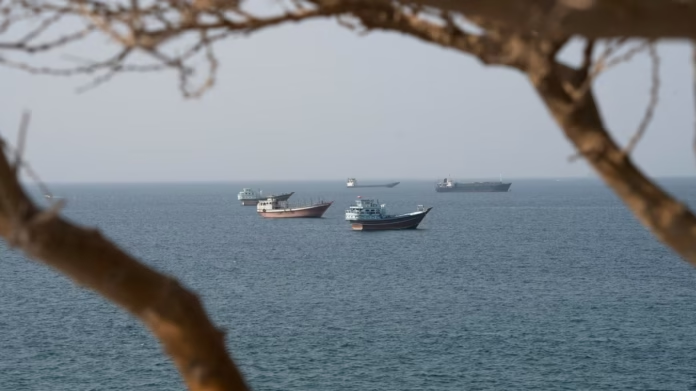
The Strait of Hormuz has become one of the most important flashpoints in the Iran war, with control of the strategic waterway increasingly contested between Iran and the United States.
For weeks, both sides have claimed they hold the advantage, creating uncertainty over how much shipping is actually moving through the strait. Recent shipping data, however, suggests that Iran’s ability to control traffic has weakened significantly.
More than 80% of vessel movements through the Strait of Hormuz during the past two weeks have reportedly used a shipping route along Oman’s northern coast. The route is recognized under international arrangements but has been strongly opposed by Iran.
Many vessels have continued using the route despite threats and attacks, relying on protection from US naval forces operating in the area.
Strait of Hormuz Sees Major Shift in Shipping
The change represents a significant difference from conditions just a month earlier.
At that time, shipping activity through the Omani route had fallen almost completely, as vessels largely avoided the area because of the security risks.
Iran has previously attempted to exert control over shipping through the Strait of Hormuz, including efforts to impose tolls on vessels using the waterway. The reduction in traffic along routes favored by Tehran has made those efforts increasingly difficult.
An agreement between the United States and Iran expired this week, theoretically allowing Iran to resume collecting transit fees. However, available shipping data indicates that most operators have been unwilling to comply with those demands.
For shipping companies, the Omani route offers a way to continue moving cargo while benefiting from the presence of US naval forces.
Strait of Hormuz Remains a Dangerous Passage
The waterway remains far from normal. Iran has attacked numerous vessels attempting to travel through areas it opposes, forcing shipping companies and oil producers to adopt increasingly complicated strategies.
Countries including Kuwait, Saudi Arabia and the United Arab Emirates have reportedly used some of the world’s largest oil tankers to transport crude through the strait before transferring the cargo to other vessels farther away in the Gulf of Oman.
Some of these ships have switched off their tracking systems for extended periods to reduce the risk of being targeted. This creates what is known as “dark traffic,” making it considerably harder for commercial tracking services to determine the full scale of maritime activity.
As a result, estimates of the amount of oil moving through the region can vary significantly depending on the source and technology being used.
US officials have reported substantially higher shipping volumes than some conventional tracking estimates. US Energy Secretary Chris Wright said recently that oil shipments through the strait, combined with supplies rerouted around the waterway, amounted to roughly 15 million barrels per day over a seven-day period.
That remains below the prewar average of approximately 20 million barrels per day, but it suggests that considerably more oil is still reaching international markets than some earlier estimates indicated.
Strait of Hormuz Control Remains Unclear
The available evidence makes it difficult to support claims that either side has complete control of the Strait of Hormuz.
President Donald Trump has repeatedly claimed that the United States has “total control” of the waterway. However, continued Iranian attacks and oil flows that remain below normal levels indicate that Washington has not achieved absolute control.
At the same time, Iran appears to have lost some of the influence it exercised over maritime traffic earlier in the conflict.
The key measure may therefore not be whether either country has complete control, but whether Iran can still effectively prevent ships from using routes it opposes.
The increasing number of vessels traveling through the Omani route suggests its ability to do so has diminished.
Oman and Iran Seek a Possible Maritime Solution
Another factor could further complicate the situation.
Oman and Iran are holding discussions aimed at restoring freedom of navigation through the Strait of Hormuz without direct US involvement. The talks could eventually influence how commercial vessels move through the waterway and how the competing claims over control are resolved.
For global energy markets, the stakes are enormous. The Strait of Hormuz is a crucial route for oil shipments from the Persian Gulf, meaning prolonged disruption can affect supplies, transportation costs and prices far beyond the Middle East.
For now, the picture is one of partial control rather than outright dominance. Iran still has the ability to threaten vessels and disrupt traffic, while the United States has expanded its naval presence and helped more ships navigate routes Tehran opposes.
The balance is therefore shifting, but the Strait of Hormuz remains a dangerous and strategically contested waterway. How the conflict develops, and whether diplomatic efforts between Oman and Iran succeed, could determine whether shipping continues to recover or faces another major disruption.
This article was produced by the Maple Epoch Editorial Team. See our editorial standards and AI-use disclosure and editorial policy.