The last remaining passengers from the cruise ship at the center of a deadly hantavirus outbreak have now disembarked and begun returning to their home countries, as global health authorities move to contain one of the most unusual maritime disease events in recent years.
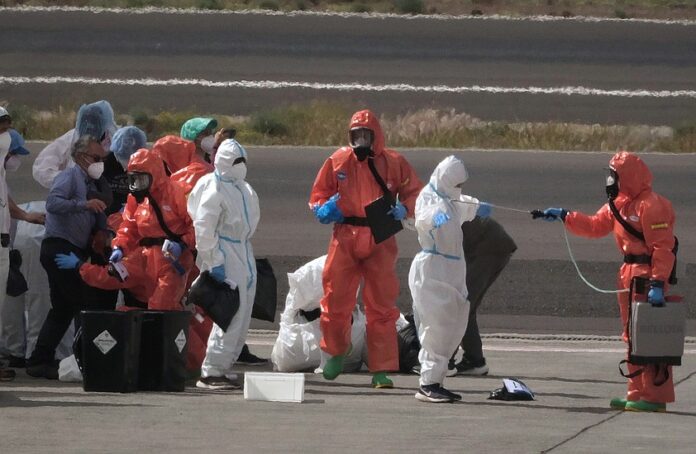
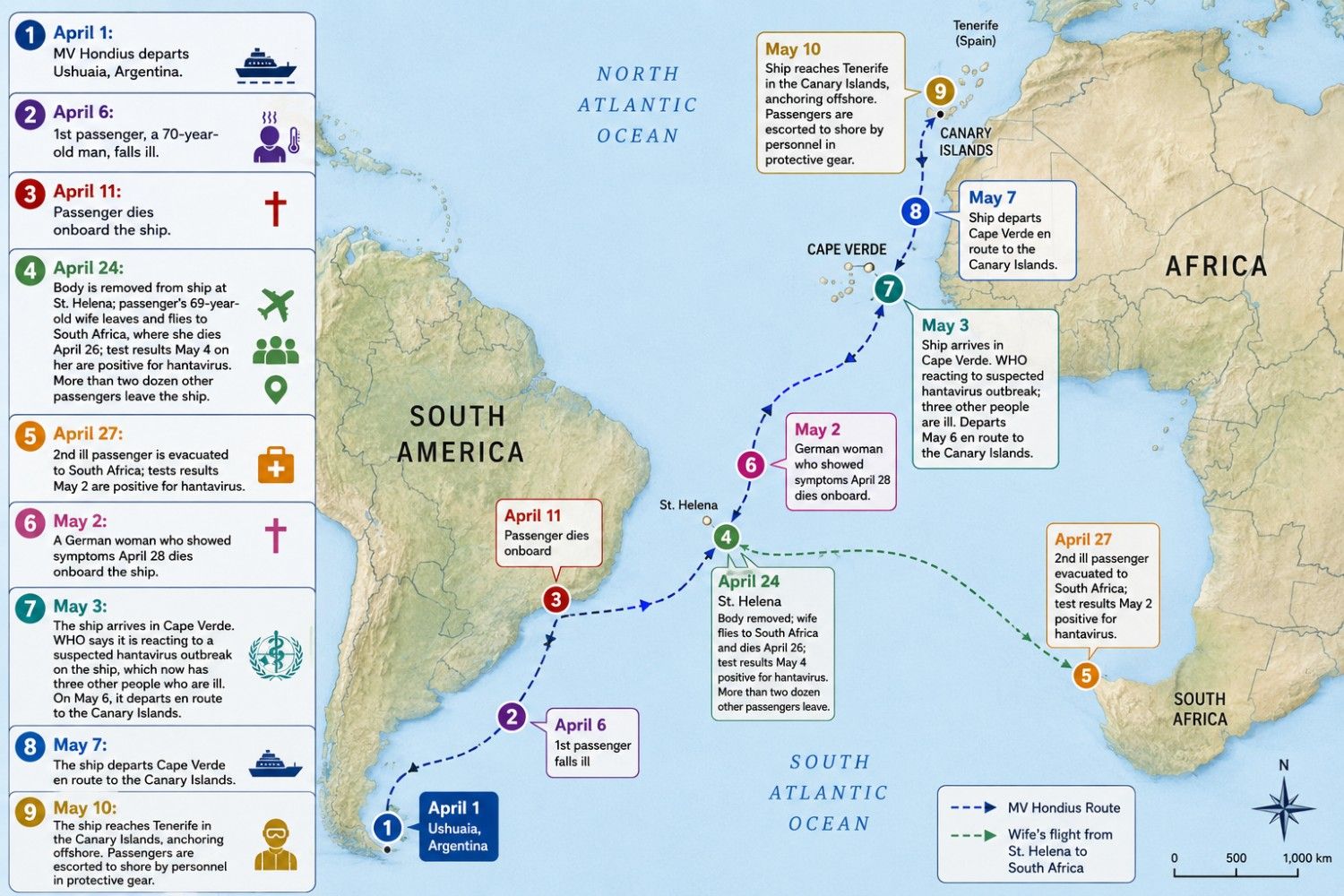
The ship, the MV Hondius, anchored in the Canary Islands where passengers were transferred under strict biosecurity measures before boarding government and military evacuation flights. Travelers were escorted ashore in Tenerife by medical teams wearing full protective suits and respirators, marking the end of a complex evacuation operation involving coordination across multiple countries.
Passengers have since flown to more than 20 countries, where they are expected to undergo quarantine and further medical monitoring.
Deaths And Infections Raise global Concern
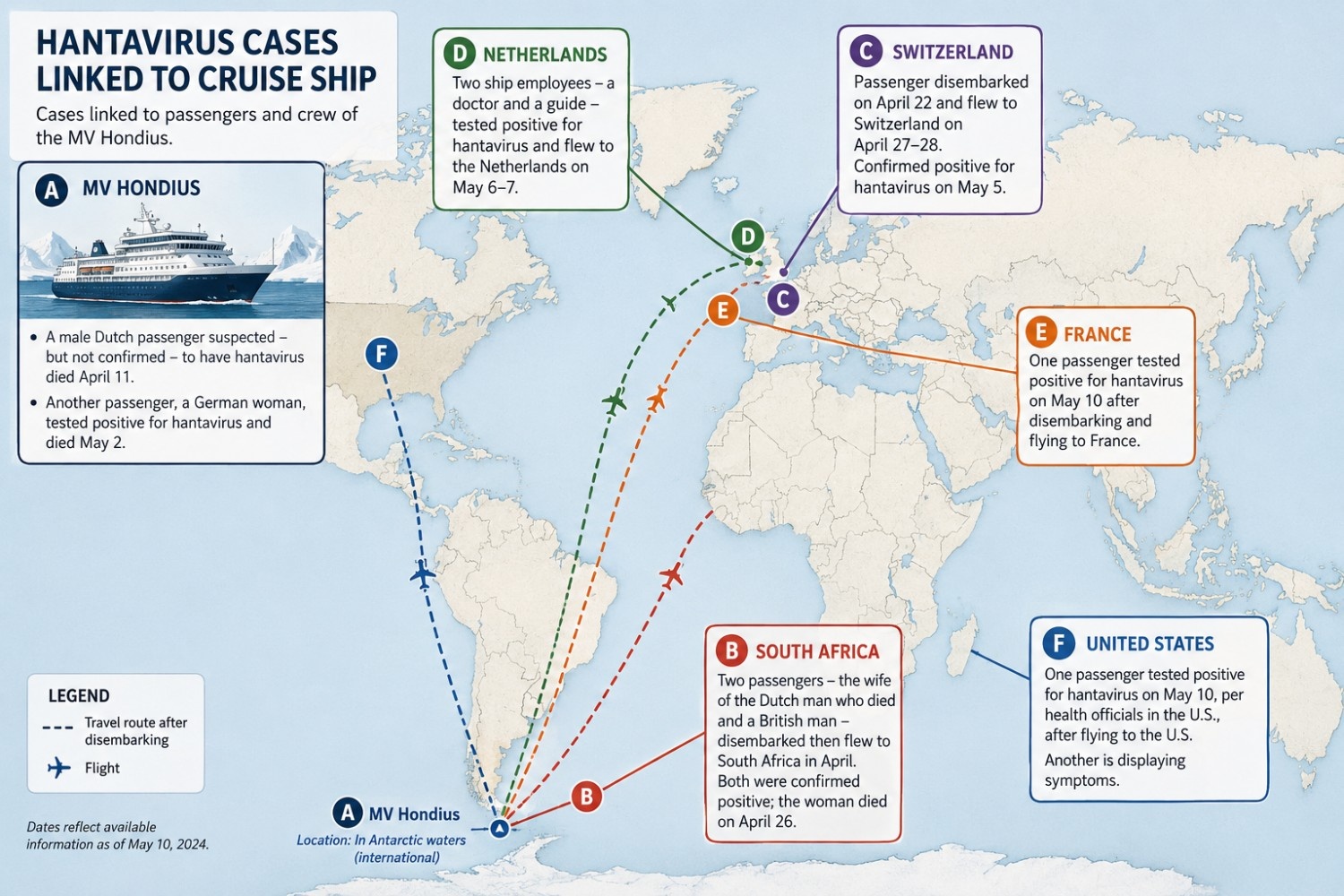
According to the World Health Organization, three passengers have died and at least six confirmed or suspected cases of hantavirus infection have been identified among those linked to the ship. One American passenger tested positive during initial screening, though results were described as inconclusive in follow up assessments.
A French passenger is also confirmed to be infected and is being treated in intensive care at a hospital in Paris, where officials say she remains in stable condition. Four other French passengers who returned home tested negative but remain under isolation as a precaution.
Among 18 evacuated passengers flown to the United States, one individual tested positive for hantavirus and is being treated in a high security biocontainment unit at the University of Nebraska Medical Center in Omaha. Medical officials say the patient is not currently showing symptoms and is in stable condition, while others are being closely monitored in quarantine facilities.
Two additional American passengers were admitted to Emory University Hospital in Atlanta, where at least one is experiencing mild symptoms and is awaiting further testing.
Health Officials Describe Unprecedented Outbreak
Public health authorities have described the situation as the first known hantavirus outbreak aboard a cruise ship, raising concerns about how the infection may have spread during the voyage.
Hantavirus is typically transmitted through contact with rodent droppings, urine, or saliva, and is not usually spread between humans. However, experts say the strain linked to this outbreak, Andes virus, has in rare cases shown potential for limited human to human transmission.
The World Health Organization has urged countries receiving passengers to enforce strict quarantine protocols, recommending a 42 day monitoring period due to the virus’ long incubation window.
WHO Director General Tedros Adhanom Ghebreyesus stressed that while the situation is serious, the overall risk to the public remains low.
“If they stayed longer on the ship, the situation could have been difficult,” he said, adding that returning passengers should not be seen as a wider threat to public health.
He also emphasized that the outbreak should not be compared to COVID 19, noting that hantavirus behaves very differently and does not spread in the same way.
Ship Evacuation And Investigation
The evacuation of the MV Hondius began after passengers were flown out on military and government aircraft, following reports of illness spreading among those onboard. The ship had earlier been operating in waters off West Africa after departing from Ushuaia in Argentina in early April.
The vessel, operated by Oceanwide Expeditions, continued sailing with a reduced crew of 25 staff members and two medical professionals while passengers were evacuated and international health agencies coordinated response efforts.
The ship is now en route to Rotterdam, where it is expected to arrive later this week for inspection and decontamination.
 Passenger Accounts And Ongoing Monitoring
Ship officials have praised passengers and crew for their cooperation during the crisis, with the captain of the MV Hondius calling their response “courageous” under difficult circumstances.
Public health authorities across multiple countries are now tracking returning passengers, many of whom are being housed in specialized quarantine facilities or monitored at home under strict medical supervision.
In the United States, some passengers have been placed in federally funded isolation units designed to handle highly infectious diseases, while others are being observed for potential symptoms over the coming weeks.
Health experts say that early detection and supportive care remain critical to improving outcomes, as there is currently no specific cure or vaccine for hantavirus infections.
Questions Over Response And Timeline
The outbreak has also prompted scrutiny over the speed of the global response. Some public health experts have questioned whether earlier intervention could have limited the spread among passengers.
 However, officials in the United States have defended their handling of the situation. U.S. Health Secretary Robert F. Kennedy Jr. said authorities “have this under control” and dismissed concerns about preparedness.
Despite reassurances, the unusual nature of the outbreak on a cruise ship and its international spread has led to heightened monitoring by health agencies worldwide.
As investigations continue, officials are working to determine how the virus was introduced on board and whether environmental or wildlife exposure during the voyage played a role in triggering the outbreak.