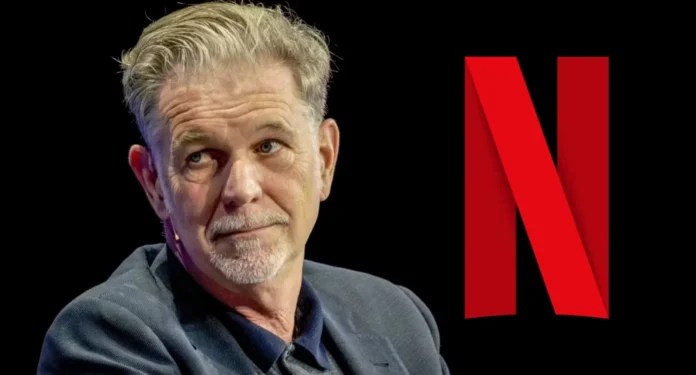
Reed Hastings, chairman of Netflix, is leaving the streaming service he cofounded nearly three decades ago, marking the end of an era for a company that reshaped how the world watches television and film.
In a letter to investors released on Thursday, Netflix said Hastings will not stand for re election at its annual meeting in June and plans to focus on philanthropy and other pursuits. His exit comes at a sensitive moment, as the company works to stabilize its position following a high profile strategic setback.
Netflix recently lost a $72bn deal involving Warner Bros. Discovery to Paramount Skydance, a development that analysts say could have significantly expanded its content pipeline and competitive edge. While the company had long described such an acquisition as optional, the loss still raised questions about its future growth strategy.
The company’s stock plunged about 8 percent following news of Hastings’s departure, reflecting investor unease about leadership continuity at a time of industry transition. Hastings is widely credited with helping to revolutionise how movies and television shows are delivered in homes, upending traditional Hollywood distribution models and accelerating the shift toward streaming.
“Netflix is growing revenues double digits, expanding margins in 2026 and gushing free cash flow,” said Richard Greenfield of LightShed Partners. “While the Q1 was uneventful financially, the departure of Reed Hastings has spooked investors.”
Strong numbers, lingering uncertainty
Despite the market reaction, Netflix’s latest financial results paint a picture of a company regaining momentum. In a 14 page shareholder letter, the company reaffirmed that its mission remains “ambitious and unchanged” and centered on entertaining a global audience across cultures and languages.
Revenue rose to $12.25bn in the first quarter, an increase of 16 percent from the year ago period, modestly exceeding analyst forecasts of $12.18bn. Earnings per share climbed to $1.23, up from 66 cents in the same quarter last year, signaling improved profitability after a period of cost discipline and strategic recalibration.
The company’s full year outlook remained unchanged, suggesting confidence among executives that current growth trends can be sustained. Analysts across major financial outlets have noted that Netflix’s ability to increase both revenue and margins simultaneously reflects a maturing business model that is less dependent on aggressive subscriber growth alone.
Still, unanswered questions remain. Netflix did not say how it plans to spend the $2.8bn termination fee it received after losing the Warner Bros movie studio and HBO assets. Industry observers say that capital could be redirected into original content, technology upgrades, or potential partnerships, though the lack of clarity has contributed to investor caution.
Betting on new formats and revenue streams
Even without the Warner Bros assets, Netflix is emphasizing its expansion into new forms of entertainment as a key driver of future growth. The company highlighted investments in video podcasts and live programming, areas that have traditionally been outside its core focus.
Recent initiatives include live events such as the World Baseball Classic in Japan, which the company says are helping to boost engagement and diversify its offerings. Industry analysts note that live content, in particular, has become a battleground among streaming platforms seeking to replicate the real time appeal of traditional television.
Technology is also central to Netflix’s strategy. The company plans to continue refining its recommendation algorithms, user interface, and overall viewing experience in an effort to keep audiences engaged for longer periods. Improvements in personalization and content discovery are seen as critical in an increasingly crowded streaming landscape.
Advertising, once resisted by the company, is now emerging as a significant revenue stream. Netflix said its ad supported tier remains on track to generate $3bn in revenue in 2026, roughly double the level from a year earlier. That growth reflects a broader industry shift, as streaming platforms balance subscription models with ad based offerings to reach more price sensitive consumers.
Hastings’s departure comes at a time when the streaming industry he helped create is entering a more complex phase. Competition has intensified, with traditional media companies and tech giants alike investing heavily in their own platforms. At the same time, rising production costs and shifting consumer habits have forced companies to rethink strategies that once prioritized rapid expansion over profitability.
Under Hastings’s leadership, Netflix evolved from a DVD by mail service into a global entertainment powerhouse, pioneering binge watching and original streaming content. Shows and films produced by Netflix have gone on to win major awards and attract audiences in nearly every market.
His exit signals not just a leadership transition, but a broader generational shift within the company. While Netflix insists its direction remains unchanged, the absence of its cofounder removes a figure long associated with bold, sometimes unconventional decision making.
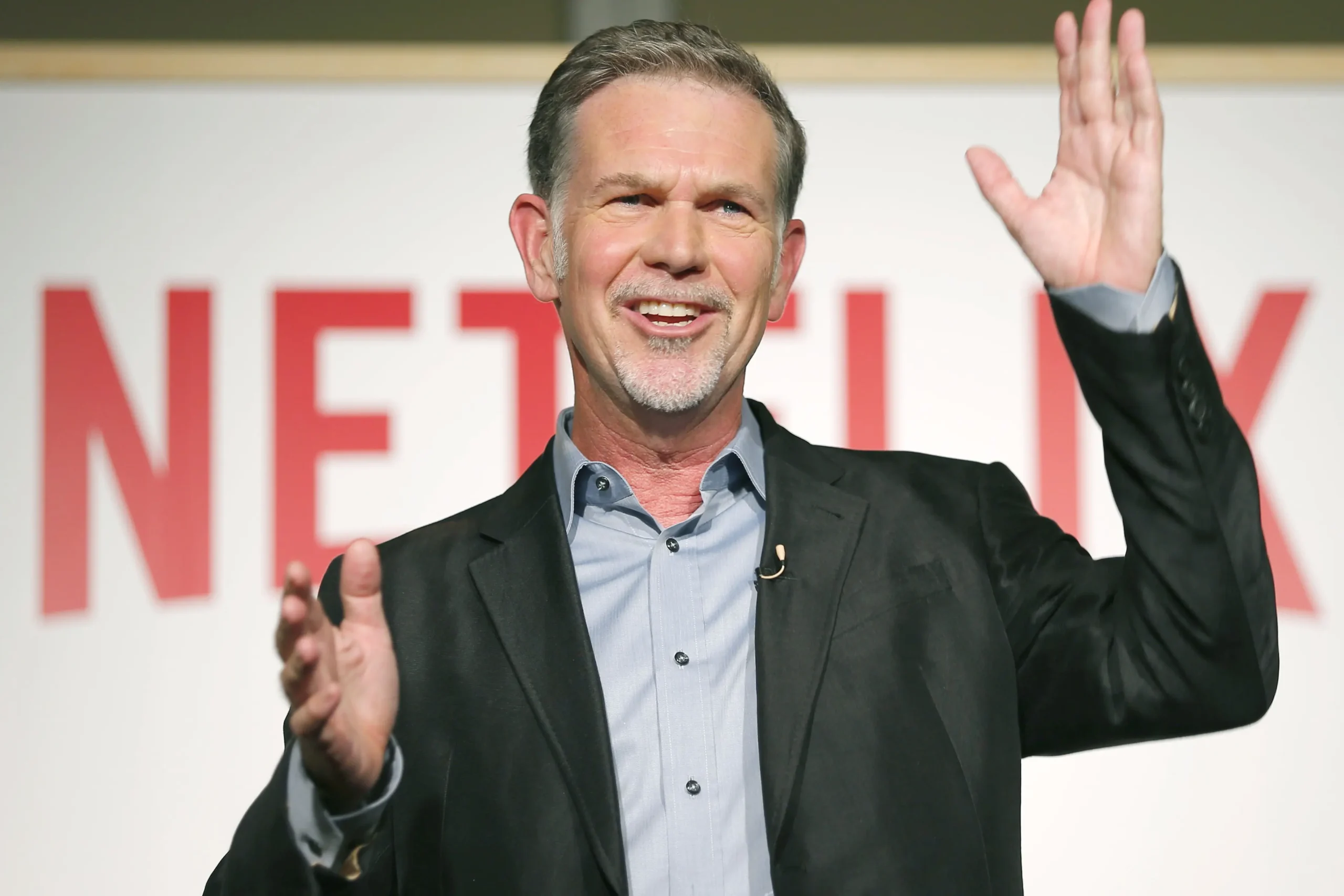

What comes next for Netflix will likely depend on how effectively it can build on its current momentum while adapting to a streaming landscape that is no longer new, but fiercely competitive and constantly evolving.