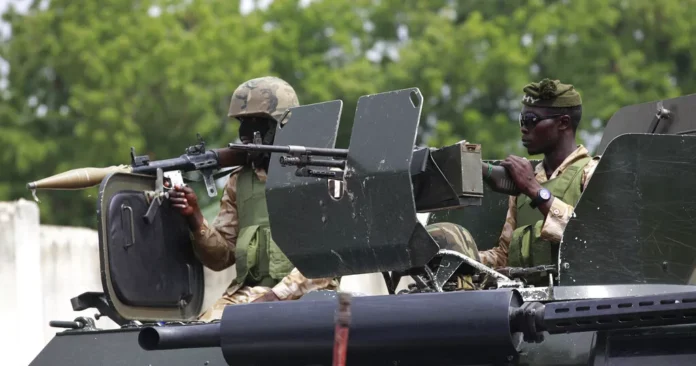
Civilians are feared to have been killed after reports that Nigerian military jets struck a village market in the northeast of Nigeria, in an incident that reflects both the intensity and the complexity of the country’s long running conflict with Islamist insurgents.
The reported strike took place near the border between Yobe and Borno states, an area that has been at the center of military operations against extremist groups for more than a decade. According to local accounts, the aircraft was engaged in an operation targeting militants when the market was hit.
The Nigerian Air Force said it had carried out what it described as mop up air strikes on “identified terrorist locations” within the Jilli axis of Borno State on Saturday. However, it has not confirmed that the market itself was struck, nor has it provided an official casualty figure.
Conflicting casualty reports
As with many incidents in remote conflict areas, the number of casualties remains unclear, with widely differing accounts emerging from officials, witnesses, and media organizations.
Residents, and a humanitarian official, reported that at least 200 people may have been killed. Lawan Zanna Nur Geidam, a councillor in Yobe’s Geidam district, described the incident as devastating and said the injured had been taken to hospitals in both Yobe and Borno states.
“It’s a very devastating incident,” he said.
Other Nigerian media outlets reported significantly lower figures. The Sun and Punch cited sources saying that around 10 people had been killed, while several others were injured. The Daily Trust reported that an eyewitness estimated at least 56 people had died, with 14 others hospitalized.
The variation in figures highlights the difficulty of verifying information in areas where communication is limited and access for independent observers is restricted.
Government and emergency response
Officials in Yobe state acknowledged that residents from their communities were among those affected. Brigadier General Dahiru Abdulsalam said that people from Geidam local government area who had traveled to the market were caught up in the incident.
The Yobe State Emergency Management Agency said it had received preliminary reports of casualties at Jilli Market in Gubio local government area of Borno State. In a statement, the agency said emergency response mechanisms had been activated and assessment teams deployed, but emphasized that details about the incident and casualty numbers remained unverified.
Authorities said injured victims had been transported to medical facilities across the region, though the scale of the response has not been fully detailed.
Eyewitness accounts
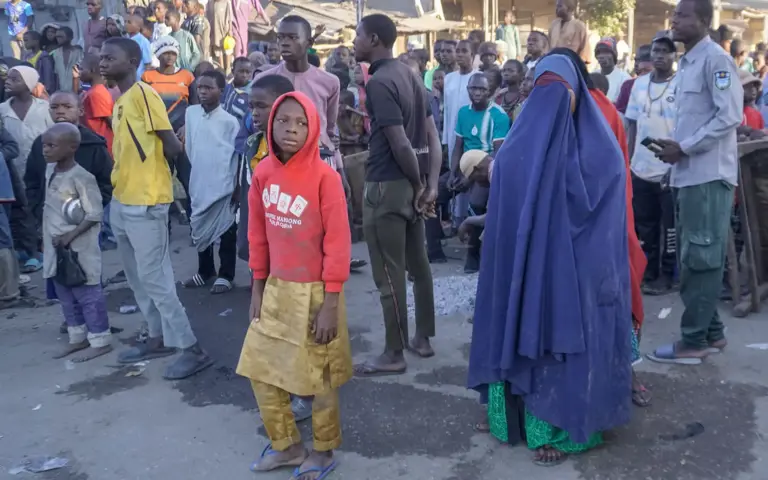
Survivors described scenes of panic as people attempted to flee the area when the strike occurred. Ahmed Ali, a 43 year old trader at the market, told Reuters that he was injured in the blast.
“I became so scared and attempted to run away, but a friend dragged me and we all lay on the ground,” he said.

Military operations and insurgency
The area where the strike occurred lies within a region heavily affected by the insurgency led by Boko Haram and its splinter factions. The conflict, which began more than a decade ago, has resulted in widespread destruction, mass displacement, and significant loss of life.
More than two million people have been forced to flee their homes due to violence in northeastern Nigeria, according to international agencies. Military operations in the region frequently involve air strikes targeting militant hideouts in remote or forested areas.
The Nigerian Air Force said its follow on strikes were aimed at “fleeing remnants and regrouping cells seeking to exploit the difficult terrain,” indicating that the operation was part of ongoing efforts to prevent militants from reorganizing.
However, the use of air power in populated areas has been controversial, with previous incidents raising concerns about civilian casualties.
Rights groups and criticism
Amnesty International’s Nigeria branch condemned the reported strike, saying that more than 100 people had been killed and criticizing the use of air raids in such contexts.
“Launching air raids is not a legitimate law enforcement method by anyone’s standard,” the group said in a statement posted on social media.
“Such reckless use of deadly force is unlawful, outrageous and lays bare the Nigerian military’s shocking disregard for the lives of those it supposedly exists to protect.”
Human rights organizations have repeatedly called for greater transparency and accountability in military operations, particularly when allegations of civilian harm arise.
Pattern of accidental strikes
The reported incident is part of a broader pattern in northeastern Nigeria, where military air operations targeting insurgents have at times mistakenly hit civilian locations.
Previous incidents have involved strikes on villages, camps for displaced people, and other populated areas, often with significant casualties. These events have drawn criticism from humanitarian groups and prompted calls for improved targeting procedures and independent investigations.
Analysts note that the challenges of distinguishing between militants and civilians in conflict zones, combined with limited intelligence and difficult terrain, increase the risk of such errors.
As of now, key details about the incident remain unconfirmed, including whether the market was directly targeted or struck unintentionally, and the exact number of casualties.

The Nigerian authorities have not issued a definitive account, and investigations are likely to continue as more information becomes available.
For communities in the region, the incident adds to a long history of violence and uncertainty. Even as military operations aim to weaken insurgent groups, the risk to civilians remains a central concern in one of Africa’s most protracted conflicts.