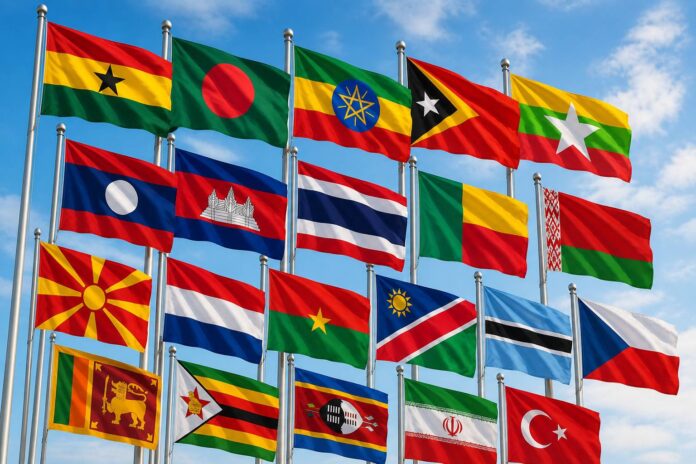
Around the world, country names are constantly evolving. Far from being simple labels, they reflect struggles for independence, cultural pride, political change, and even diplomatic compromise. From Africa to Asia and Europe, nations have rewritten their identities sometimes more than once.
A country’s name is more than a geographic label, it is a declaration of identity. Whether it is Ghana reconnecting with ancient history, Namibia stepping out of colonial shadow, or Czechia simplifying its global presence, each change reflects a deeper story.
Throwing Off Colonial Names
Many of the most significant name changes came as countries gained independence and rejected colonial-era identities.
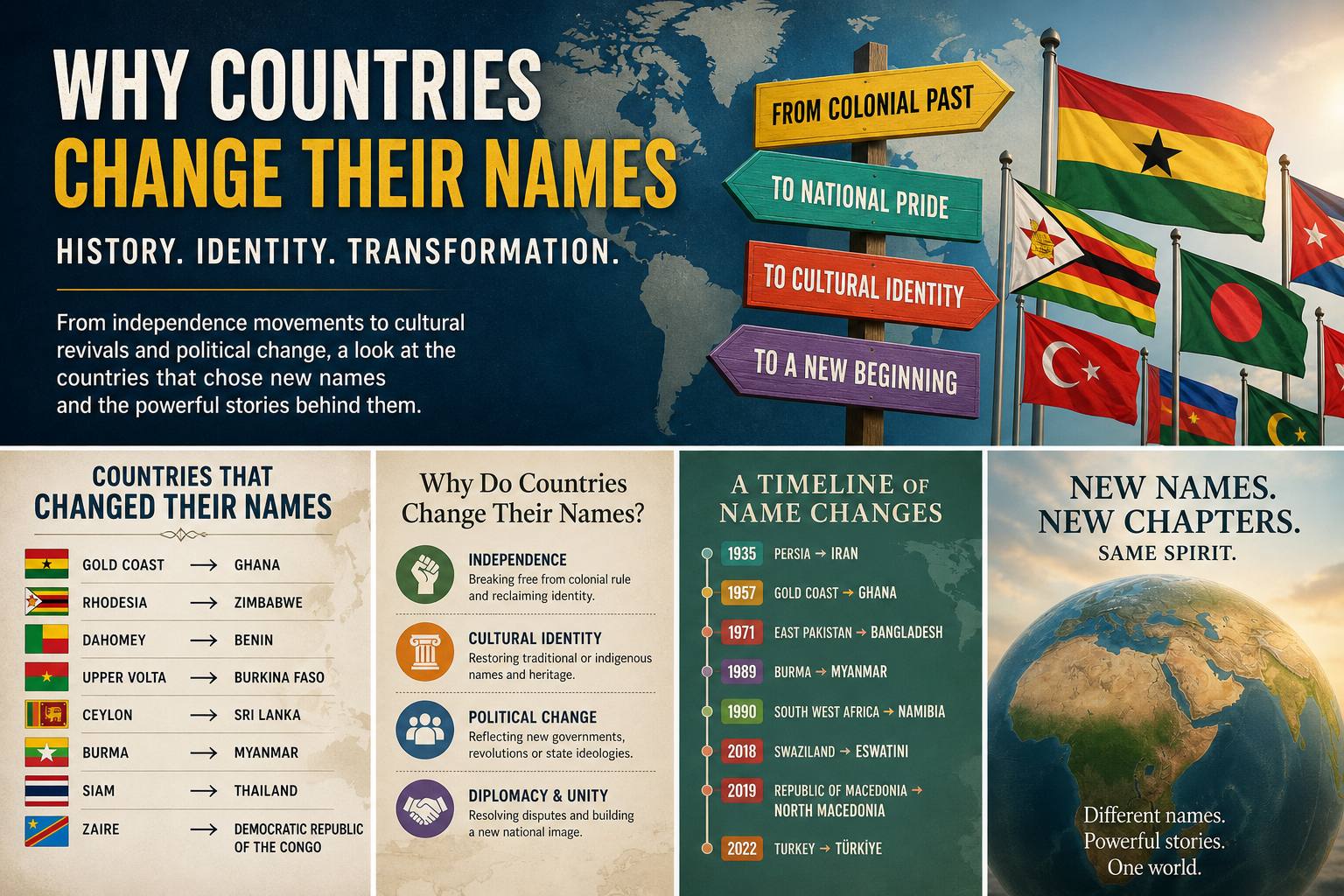
In West Africa, Ghana became the first sub-Saharan African nation to break from colonial naming in 1957, replacing Gold Coast, a name tied to resource exploitation with one rooted in African history.
A similar transformation took place in Benin, which dropped Dahomey in 1975 to adopt a more inclusive name that would not favor one ethnic group over others.
In southern Africa, Zimbabwe replaced Rhodesia in 1980, shedding a name linked to British colonial rule. Likewise, Botswana moved away from Bechuanaland in 1966 upon independence.
Meanwhile, Namibia, once known as South West Africa, adopted its current name in 1990 after gaining independence from South African control.
In West Africa again, Burkina Faso replaced Upper Volta in 1984. The new name, meaning “Land of Honest People,” symbolized a fresh national vision.
Reclaiming Indigenous and Cultural Identity
Some countries changed their names not just for independence, but to reconnect with their linguistic or cultural roots.
Ethiopia, historically referred to as Abyssinia in European records, gradually asserted its indigenous name in international use to reflect its own heritage.
In Asia, Thailand replaced Siam to emphasize unity and independence, while Iran asked the world to stop using Persia in 1935, aligning global usage with local language.
More recently, Eswatini abandoned Swaziland in 2018, restoring a traditional name and reinforcing national identity.
Political Change and Regime Shifts
In several cases, name changes followed political upheaval or shifts in government.
Cambodia is a clear example. Over decades of conflict, it cycled through names including Khmer Republic and Democratic Kampuchea, before stabilizing again as Cambodia in the 1990s.
🇱🇦 Laos: From Kingdom to People’s Republic
The modern name Laos has been used for a long time, but its official state name and identity have changed significantly over the years.
Earlier form: Kingdom of Laos | Colonial period: Part of French Indochina
Modern official name: Lao People’s Democratic Republic (since 1975)
In 1975, after the end of the monarchy and the rise of a communist government, Laos redefined itself politically. While the short name “Laos” remained in global use, the official name change reflected a complete shift in ideology from monarchy to socialist republic.
This makes Laos slightly different from countries like Ghana or Zimbabwe, which changed their actual country names. In Laos’ case, the transformation is more about state identity and governance rather than the core name itself.
Similarly, Myanmar replaced Burma in 1989 under military rule, a move still debated internationally.
In Africa, Democratic Republic of the Congo reverted from Zaire in 1997 after the fall of a long-standing regime, marking a political reset.
Independence and New National Identity
Some nations changed names as part of entirely new state formations.
Bangladesh emerged from East Pakistan in 1971 after a war of independence, choosing a name rooted in language and culture.
In Southeast Asia, Timor-Leste replaced East Timor following independence in 2002, using its Portuguese-influenced official name internationally.
Post-Soviet and European Identity Shifts
The fall of the Soviet Union triggered subtle but important renaming efforts.
Belarus moved away from Byelorussia, while Kyrgyzstan replaced the Russian-influenced Kirghizia with a name closer to its native pronunciation.
Moldova also standardized its name after independence, distancing itself from Soviet-era terminology.
In Europe, Czechia was adopted as the official short name of the Czech Republic in 2016 to simplify international usage.
Meanwhile, the Netherlands has discouraged the informal use of “Holland,” promoting its correct national name for accuracy and branding.
 Diplomatic and Modern Rebranding
Some name changes are driven by diplomacy or global perception.
North Macedonia adopted its new name in 2019 to resolve a long dispute with Greece, unlocking international partnerships.
Türkiye followed in 2022 by requesting the use of its native spelling globally, reflecting a broader trend toward linguistic authenticity.
Together, these transformations show how nations continue to redefine themselves not just politically, but culturally and historically on the world stage.