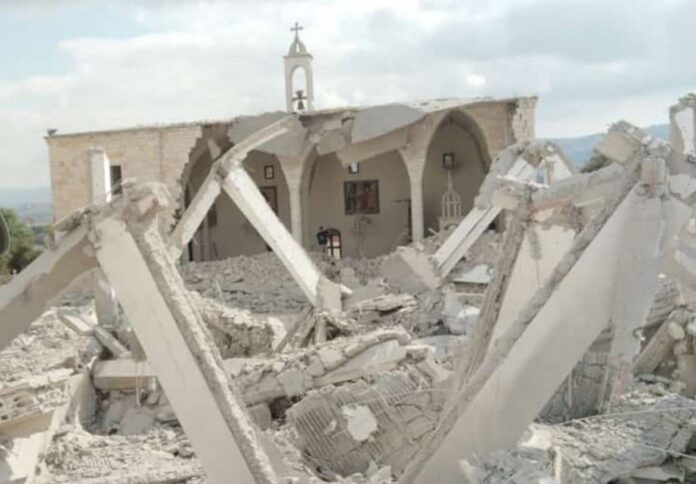
Lebanon — At least eight people were killed when an airstrike struck a church complex sheltering displaced civilians in southern Lebanon, according to local church sources, in an incident that underscores the growing toll of regional violence on civilians and religious sites.
The strike took place on the night of October 9 in the town of Derdghaya, in the country’s south, an area that has seen repeated exchanges of fire amid escalating tensions along the border with Israel. The church, which had been serving as a refuge for displaced families, was hit during the attack, leading to multiple fatalities.
Sources speaking to the Catholic charity Aid to the Church in Need said the church building and two adjoining halls collapsed after being struck. The complex belonged to the Melkite Greek Catholic Eparchy of Tyre and had been used in recent weeks to house civilians fleeing violence in nearby areas.
They added that a second missile struck a priest’s residence and a nearby three storey building used for parish offices, destroying both structures completely.
Church used as refuge struck
According to the sources, the victims were among displaced people who had sought shelter within the church compound, believing it to be a relatively safe location. Southern Lebanon has seen waves of displacement as cross border exchanges intensified, forcing many families to abandon their homes.
Humanitarian organizations and church networks have played a significant role in providing shelter, food, and medical assistance in areas where access to aid is limited. Churches, monasteries, and parish buildings have often been opened to civilians, particularly in predominantly Christian communities.
Aid to the Church in Need said it has been supporting around 200 projects across Lebanon and remains in close contact with dioceses and religious congregations to assess needs following the latest strike. In recent months, its assistance has included distributing food parcels to thousands of families and providing medical support to more than 1,200 people who have remained in southern Lebanon despite the risks.
The destruction of the church compound highlights the vulnerability of such improvised shelters, which are not always protected from the effects of nearby or direct strikes.
Broader pattern of strikes in southern Lebanon
The attack in Derdghaya comes amid a broader pattern of airstrikes and artillery exchanges in southern Lebanon, where Israeli forces and the Iran backed group Hezbollah have been engaged in near daily hostilities.
International media outlets have reported repeated incidents in which civilian infrastructure, including homes, schools, and religious buildings, has been damaged or destroyed in the crossfire. While Israel has said it targets militant positions and infrastructure, the proximity of such sites to civilian areas has contributed to mounting casualties and displacement.
Southern Lebanon’s geography, marked by densely populated villages and mixed use areas, increases the likelihood that strikes can affect civilian structures. Human rights organizations have called for greater protection of non military sites and adherence to international humanitarian law.
The incident also reflects a pattern observed in other conflict zones in the region, where religious buildings have been used as shelters due to their central location and relative structural resilience. However, as fighting intensifies, these sites are increasingly exposed to danger.
Regional escalation and humanitarian impact
The violence in southern Lebanon is part of a wider escalation linked to ongoing conflict dynamics in the Middle East. Since the outbreak of war in Gaza, tensions along the Israel Lebanon border have risen sharply, drawing in armed groups and increasing the risk of a broader confrontation.
Hezbollah has launched rockets and other projectiles into northern Israel, saying its actions are in support of Palestinians. Israel has responded with airstrikes targeting what it describes as militant positions in Lebanon.
This cycle of attacks has led to significant displacement on both sides of the border. In Lebanon, thousands of residents from southern areas have moved northward or sought refuge in churches, schools, and public buildings. In Israel, communities near the border have also faced evacuations due to security concerns.
The humanitarian situation has been further complicated by Lebanon’s ongoing economic crisis, which has strained public services and limited the government’s capacity to respond effectively. Aid groups have warned that continued escalation could deepen an already fragile situation.
Religious and cultural sites under threat
The strike on the church in Derdghaya is one of several incidents in which religious sites have been affected by the conflict. Observers note that such sites, while not typically military targets, can become vulnerable due to their use as shelters or their proximity to areas of military activity.
Lebanon is home to a diverse religious landscape, with Christian, Muslim, and other communities living in close proximity. Churches in particular have long served not only as places of worship but also as community centers and, in times of crisis, sanctuaries.
Damage to these sites carries both human and symbolic consequences, affecting communities already coping with displacement and loss.
Aid efforts and ongoing needs
Aid to the Church in Need said it is continuing to coordinate with local partners to provide assistance in the aftermath of the strike. The organization emphasized the urgent need for food, shelter, and medical care as displacement increases.
Church leaders and humanitarian workers have called for increased international attention to the situation in southern Lebanon, warning that civilians remain at risk as long as hostilities continue.
Efforts to deliver aid are complicated by security conditions, with access to some affected areas limited by ongoing military activity. Despite these challenges, local networks continue to play a crucial role in supporting displaced families.
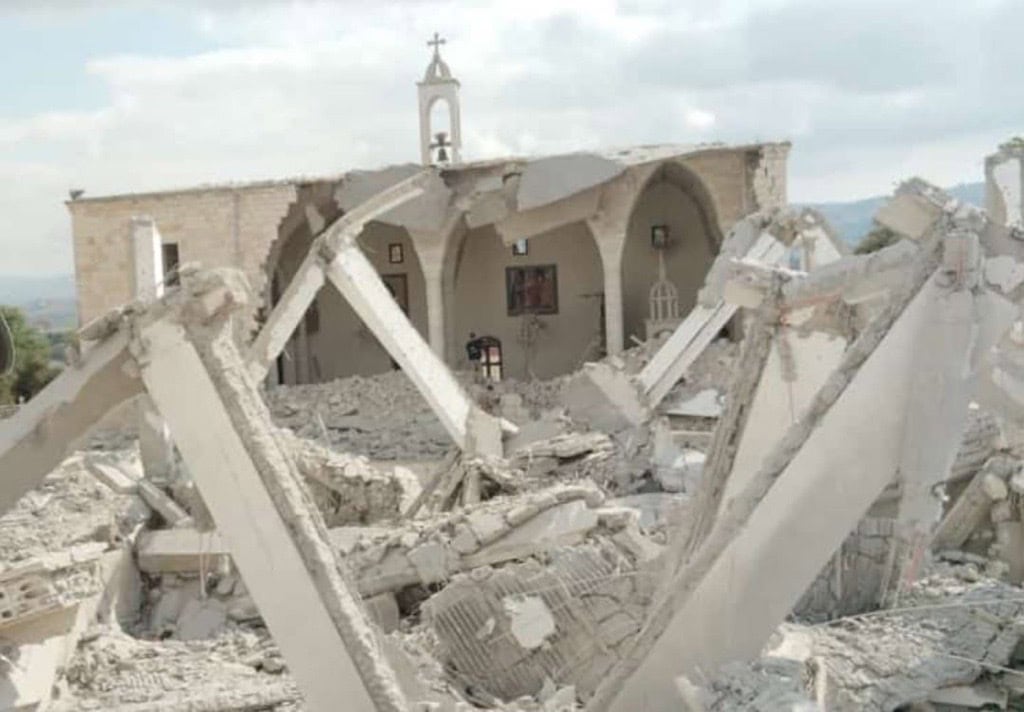 The full extent of the damage in Derdghaya and the number of casualties may become clearer as more information emerges. For now, the reported deaths of at least eight people mark another tragic episode in a conflict that continues to spread beyond its initial fronts.
As violence persists along the border and diplomatic efforts struggle to reduce tensions, incidents like the strike on the church underscore the human cost of the crisis and the risks faced by civilians seeking safety in places that have traditionally offered refuge.