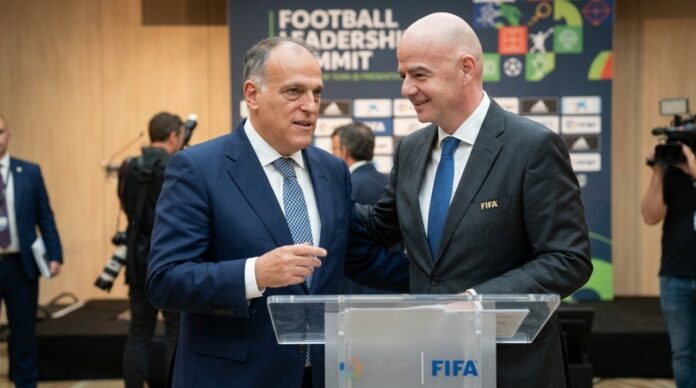
Javier Tebas, president of Spain’s La Liga, has launched a scathing attack on FIFA, accusing the world football governing body of sacrificing the broader game to feed an ever-expanding World Cup. In an interview with the Italian sports daily La Gazzetta dello Sport, Tebas said FIFA president Gianni Infantino’s decade in charge had run its course and that the organisation’s electoral system was “rotten at its core.”
Tebas’s frustration centres on reports that FIFA and South American football’s governing body, CONMEBOL, are pushing to expand the 2030 World Cup from 48 teams to 64. The tournament, marking the competition’s centenary, is already set to be the most sprawling edition in history, co-hosted primarily by Spain, Portugal and Morocco, with Paraguay, Uruguay and Argentina also staging matches.
“The football industry is not just about the World Cup, however important it may be,” Tebas said, adding that domestic leagues, not international tournaments, are what sustain the sport at every level. He argued that expanding the World Cup further would come at the expense of jobs and competitions that operate year-round, warning that FIFA is “destroying” an industry that employs tens of thousands of people for the sake of a tournament lasting barely 40 days and involving only a fraction of the world’s professional players.
The La Liga chief also took aim at decisions made during the recently concluded World Cup in the United States, Canada and Mexico, which Spain won by beating Argentina in the final. He criticised the introduction of mid-half hydration breaks, officially framed as a response to summer heat, and an extended 27-minute half-time interval rather than the usual 15. Tebas dismissed the hydration stoppages as a marketing exercise rather than a genuine player-welfare measure, noting that several World Cup venues were air-conditioned and questioning why breaks were needed at all.
On Infantino himself, Tebas was blunt, saying he believes the FIFA president’s time is up but doubting that meaningful change will follow. He said Infantino retains the backing of national federations and the wider football “system,” leaving no credible challenger willing to contest the presidency. Infantino confirmed earlier this year that he intends to seek a fourth term, with the vote for the 2027-2031 term due to be held in Morocco next March.
Tebas is not alone in voicing concern about the direction football has taken since this year’s World Cup. Football Supporters Europe, the fan body recognised by UEFA, published a statement describing the tournament as a missed opportunity, arguing FIFA had prioritised spectacle and commercial interests over the experience of supporters. The group pointed to high ticket prices, steep travel costs and confusion around rules as evidence that trust in FIFA’s leadership had been badly damaged, concluding that the governing body was unfit to oversee the global game.
FIFA has not responded publicly to Tebas’s remarks. But the criticism adds to a growing chorus of unease from leagues, clubs and supporter groups over how football’s calendar and flagship competitions are being reshaped. With the next World Cup already expanding in scope and Infantino seeking another term in charge, the debate over who football’s biggest tournament ultimately serves looks set to continue well beyond this year’s showpiece final in New Jersey.
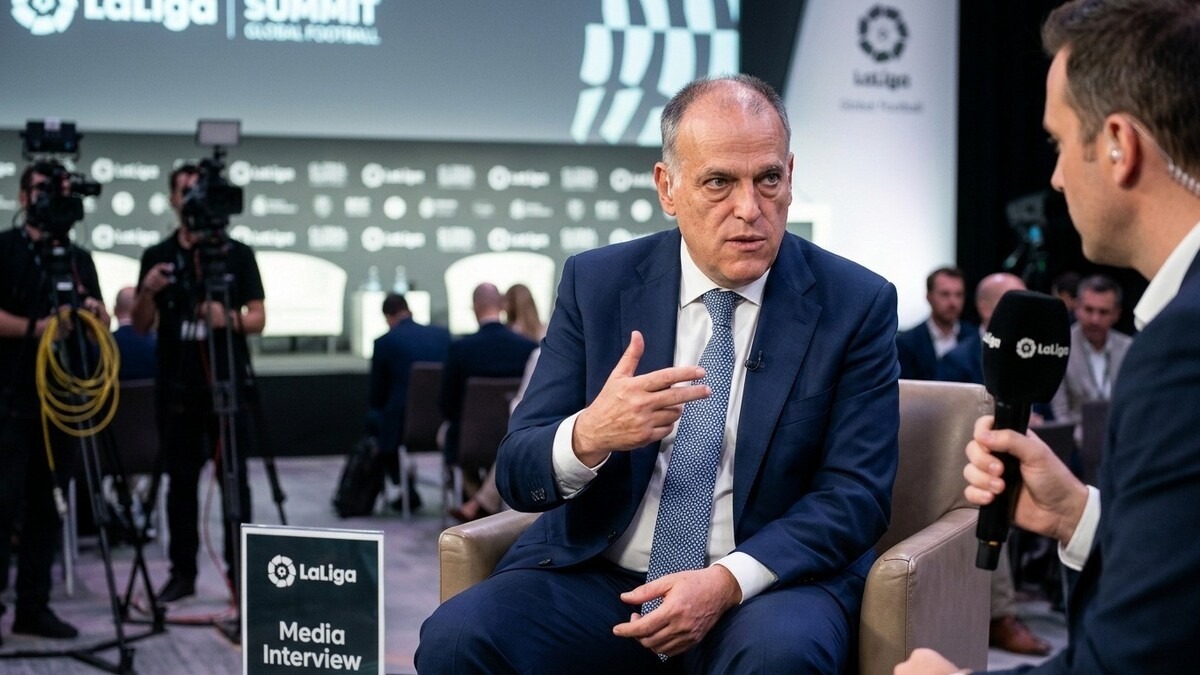
For Tebas, the underlying message is simple: domestic football sustains the sport day to day, while the World Cup, however spectacular, remains a once-every-four-years event that should not be allowed to dictate the future of the entire game.