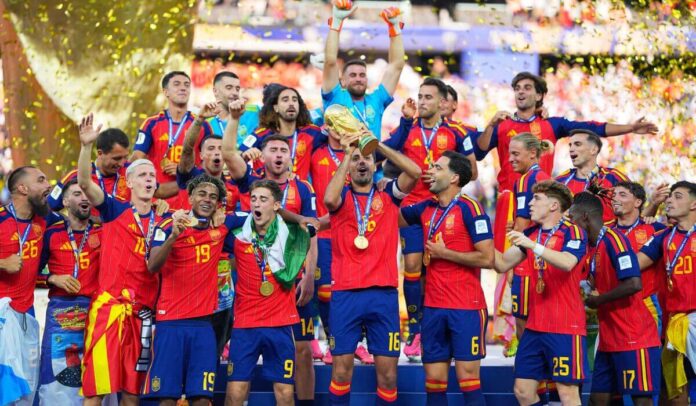
Spain won the World Cup for the second time in its history on Sunday, edging Argentina 1-0 in extra time in a tense and physical final that closed out North America’s first men’s World Cup in more than three decades.
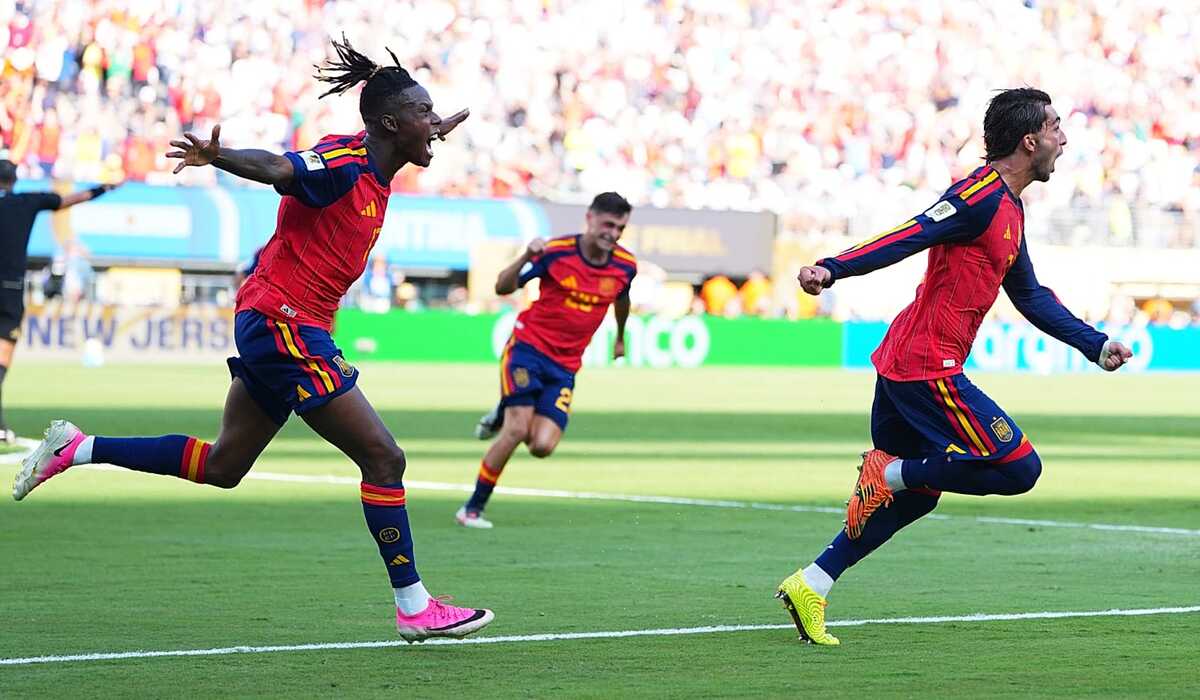
Ferran Torres settled the World Cup final in the 106th minute, latching onto a header from substitute Nico Williams and rifling the ball past Argentina goalkeeper Emiliano Martínez to send the Spanish bench into celebration. It was the only goal of a cagey, low-event World Cup final that went scoreless through ninety minutes of regulation before Spain finally broke through in extra time.
The victory gives Spain its second World Cup title, following its breakthrough triumph in 2010, and comes on top of the European Championship crown La Roja won in 2024. It also extends an extraordinary unbeaten run making it Spain’s 38th consecutive match without a defeat, a streak that stretches back years and now includes the biggest prize in international football. Spain became the first World Cup champion in tournament history to concede only a single goal across an entire winning campaign, a defensive record made even more remarkable by the fact this Spain squad had to win eight matches under the World Cup’s newly expanded format, one more than champions have historically needed.
For Argentina, the World Cup final defeat ends a bid to win back-to-back titles for the first time since Brazil managed the feat in the early 1960s. Lionel Messi, 39, was unable to lead his country to a second consecutive World Cup crown after lifting the trophy in Qatar in 2022. Messi managed just 15 touches in the final, well below the 26 recorded by his Spanish counterpart across the pitch, Lamine Yamal, and Argentina failed to register a single shot in the first half. Messi’s clearest opening came in the fifth minute, when Julián Álvarez sent him through with only goalkeeper Unai Simón to beat, but Simón reached the ball first to snuff out the chance.
Argentina’s night was made harder in extra time when midfielder Enzo Fernández picked up two yellow cards in quick succession, leaving his side to play a man down for the closing stretch of the World Cup final. Spain capitalized soon after through Torres’ decisive strike.
Nineteen-year-old Yamal, who battled back from injury to feature in the World Cup final, was widely seen as symbolically passing into the sport’s next generation alongside Messi, even though he contributed just one goal across the tournament. Spain coach Luis de la Fuente had used Yamal in a more disciplined, team-first role than his usual position at Barcelona, prioritizing possession and defensive solidity throughout the World Cup run. Rodri, the 2024 Ballon d’Or winner, and Mikel Merino, who scored crucial late goals earlier in the tournament, were also central to Spain’s title run, alongside a defense that conceded almost nothing across eight matches.
President Donald Trump attended the World Cup final at New York New Jersey Stadium and took part in the trophy presentation to Spain’s winning squad afterward. The match capped a tournament staged jointly across the United States, Mexico and Canada, and closed with a halftime show featuring Shakira, Coldplay’s Chris Martin, BTS and Justin Bieber.
With the World Cup and European Championship titles both in hand, Spain’s golden generation now looks positioned for a prolonged run at the top of the international game. As for Argentina, questions linger over whether this marks the end of the Messi era in the team.