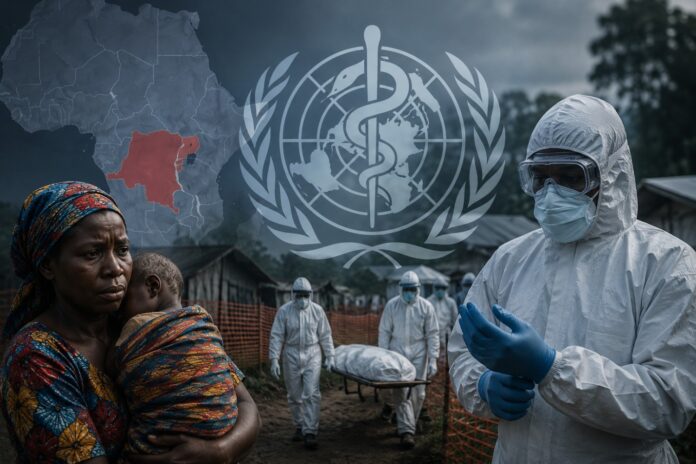
The World Health Organization has revealed that the Ebola outbreak currently ravaging the Democratic Republic of Congo actually began in February, roughly three months before it was officially declared on May 15. The disclosure, made this week by WHO officials, has raised fresh concerns about how quickly deadly outbreaks can spread undetected in vulnerable regions before health authorities catch up.
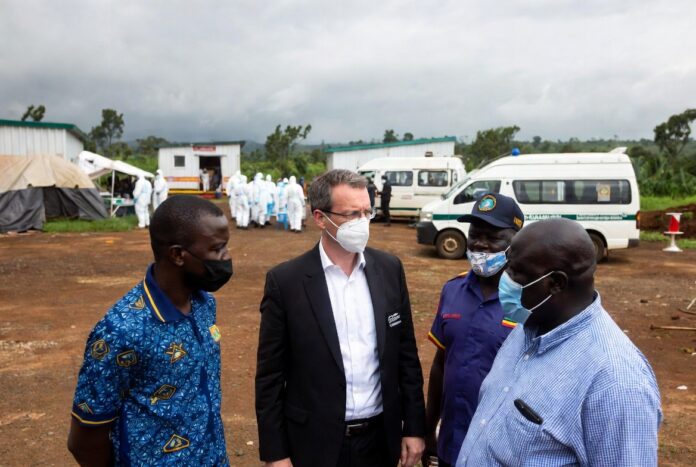
Speaking at a news conference in Bunia, the city at the center of the crisis, Dr. Mohamed Janabi, the WHO’s regional director for Africa, said that genomic sequencing of the virus pointed to a start date months earlier than previously understood. Early cases of Ebola, he explained, were misdiagnosed as malaria or typhoid, allowing the virus to circulate quietly in communities before it was correctly identified.
“We are chasing the virus, the virus is ahead of us,” Janabi told reporters, capturing the sense of urgency now driving the international response. His comments underscore a recurring pattern in outbreaks of this kind: by the time health workers recognize an unfamiliar illness for what it truly is, the disease has often already gained a dangerous head start.
According to the Democratic Republic of Congo’s health ministry, the outbreak has now infected more than 4,290 people and killed at least 1,960 of them, figures that make this the second-deadliest Ebola outbreak on record. Only the catastrophic 2014-2016 West Africa outbreak, which killed more than 11,300 people, has claimed more lives. Health officials note that this current wave is spreading faster than any previous outbreak, with case numbers doubling in some hotspots within a matter of weeks.
Unlike many earlier outbreaks, this one involves the rare Bundibugyo strain of the virus rather than the more familiar Zaire strain, for which vaccines and treatments already exist. No approved vaccine or therapeutic drug currently targets the Bundibugyo strain, leaving responders with far fewer tools to slow transmission. On Friday, the WHO recommended launching full-scale human trials of the Ervebo vaccine, the only licensed vaccine, after early data suggested it might offer some protection against Bundibugyo even though it was developed for the Zaire strain. Two dedicated Bundibugyo vaccine candidates are also in early clinical trials, with a third still in development.
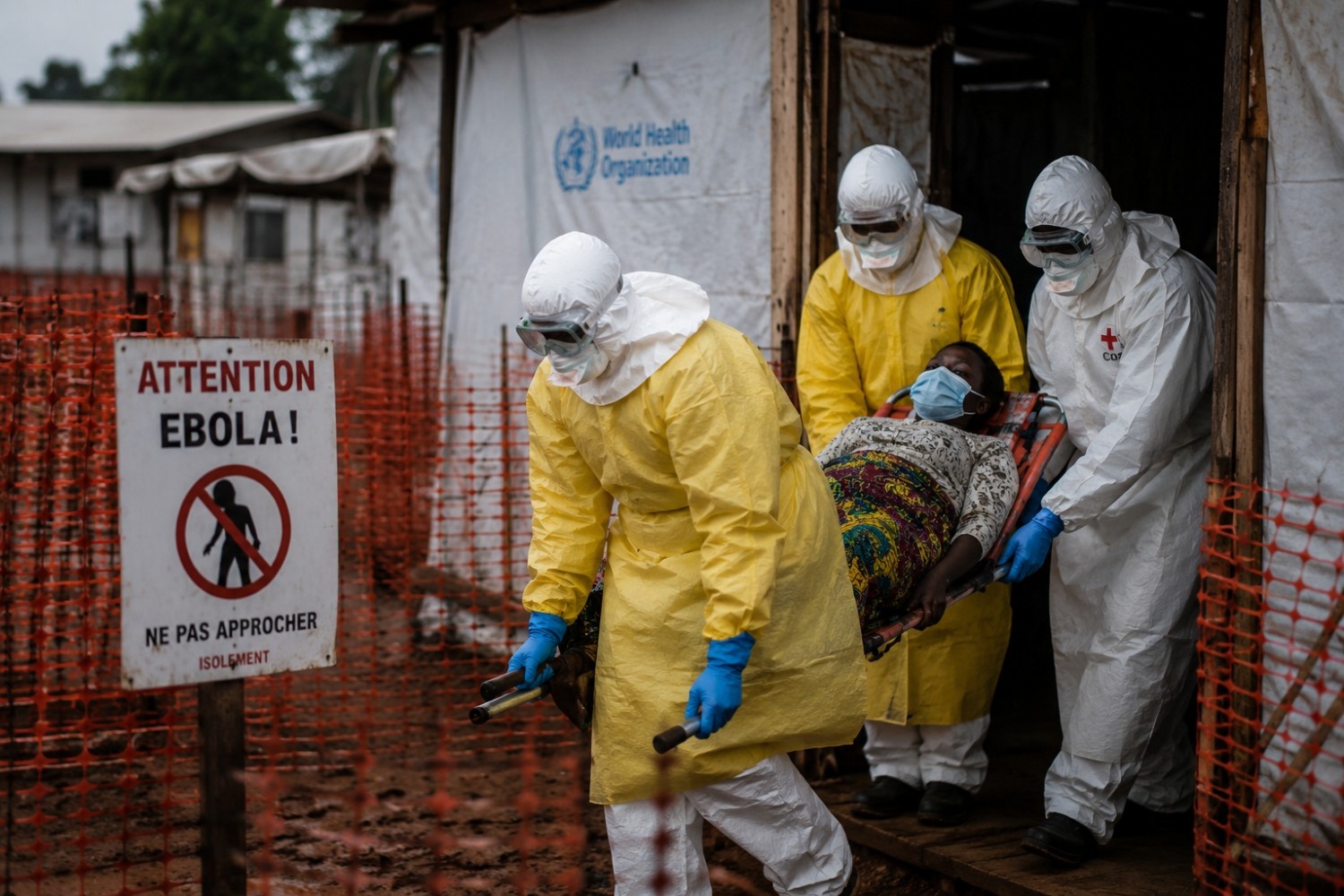
The response effort has been complicated by a combination of insecurity, poverty and mistrust in eastern Congo, one of the country’s most remote and conflict-affected regions. Armed groups have threatened aid workers, unpaved roads have slowed the delivery of protective equipment, and displaced communities often lack reliable access to clean water for basic hygiene. Janabi said that, partly because of the instability, health teams are currently reaching only about 30 percent of cases, meaning the majority of patients are dying at home without ever being formally counted or treated.
Compounding the challenge, misinformation has spread alongside the virus itself, with some residents openly denying that the disease is real. Traditional burial practices, which often involve mourners physically touching the body of the deceased, have also contributed to new chains of infection, since Ebola spreads through contact with bodily fluids and contaminated surfaces such as bedding and clothing.
Adding further strain, healthcare workers in the region have staged strikes in recent weeks over unpaid wages, temporarily disrupting treatment efforts even as the death toll continued to climb. WHO Director-General Tedros Adhanom Ghebreyesus said last week that the outbreak was spreading faster than the world’s efforts to contain it, following meetings with officials in Kinshasa, the Congolese capital.
Health officials point out that delayed declarations are not new to Ebola outbreaks. The 2014-2016 West Africa outbreak, for instance, was formally declared in March 2014, even though the first known human case was later traced back to December 2013. Experts say such delays highlight the ongoing difficulty of distinguishing early Ebola symptoms from more common illnesses in regions with limited diagnostic capacity, a gap that continues to give the virus a critical early advantage before the world even knows it is there.