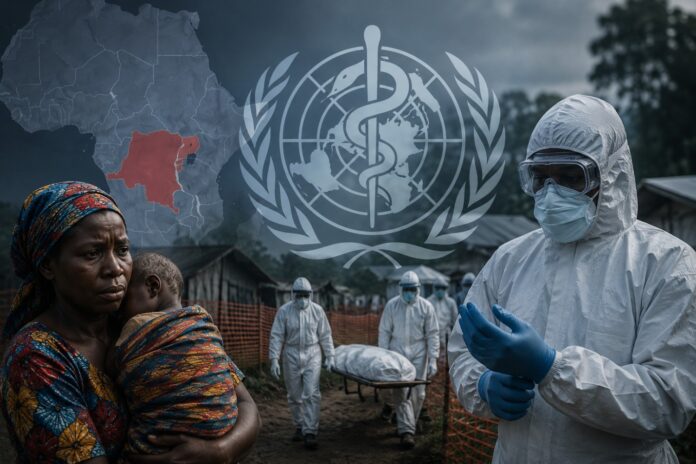
The Democratic Republic of the Congo is now grappling with the second largest Ebola outbreak ever recorded, after confirmed Ebola infections climbed past 3,500 in just a few months, according to figures released Friday by the country’s Ministry of Public Health. Health officials say the speed at which the Ebola virus has torn through communities in the eastern part of the country has stunned even seasoned outbreak responders, many of whom fought earlier Ebola epidemics in the same region.
Confirmed cases have reached 3,532, surpassing the roughly 3,470 infections recorded during the country’s tenth outbreak, which stretched from August 2018 to June 2020. Only the catastrophic 2014-2016 epidemic in West Africa, which killed more than 11,000 people across Guinea, Liberia and Sierra Leone, remains larger in scale. Officials warn that if the current trajectory continues, this outbreak could soon challenge that grim record as well.
“It’s the fastest spreading Ebola epidemic that we have ever seen,” said Carl Skau, acting head of the United Nations World Food Programme, in comments to reporters this week. “The world needs to pay much more attention.” His warning echoes growing alarm among aid groups who say international attention and funding have not kept pace with the Ebola outbreak’s rapid spread.
The human toll has been severe. More than 1,550 people have died since the outbreak began less than three months ago, pushing the case fatality rate above 44 percent. Roughly 800 patients remain in isolation wards or hospitals, while just over 600 have recovered. Africa’s top public health agency says the disease has killed five times as many people at this stage as previous outbreaks typically had by comparable points in their timelines.
Compounding the crisis is the strain of Ebola responsible for the outbreak. Unlike the more familiar Zaire strain that has driven most past Ebola epidemics, this outbreak is caused by the rarer Bundibugyo strain, for which no approved vaccine or treatment currently exists. That gap has left responders relying largely on supportive care, contact tracing and isolation measures rather than the vaccination campaigns that helped curb previous flare-ups.
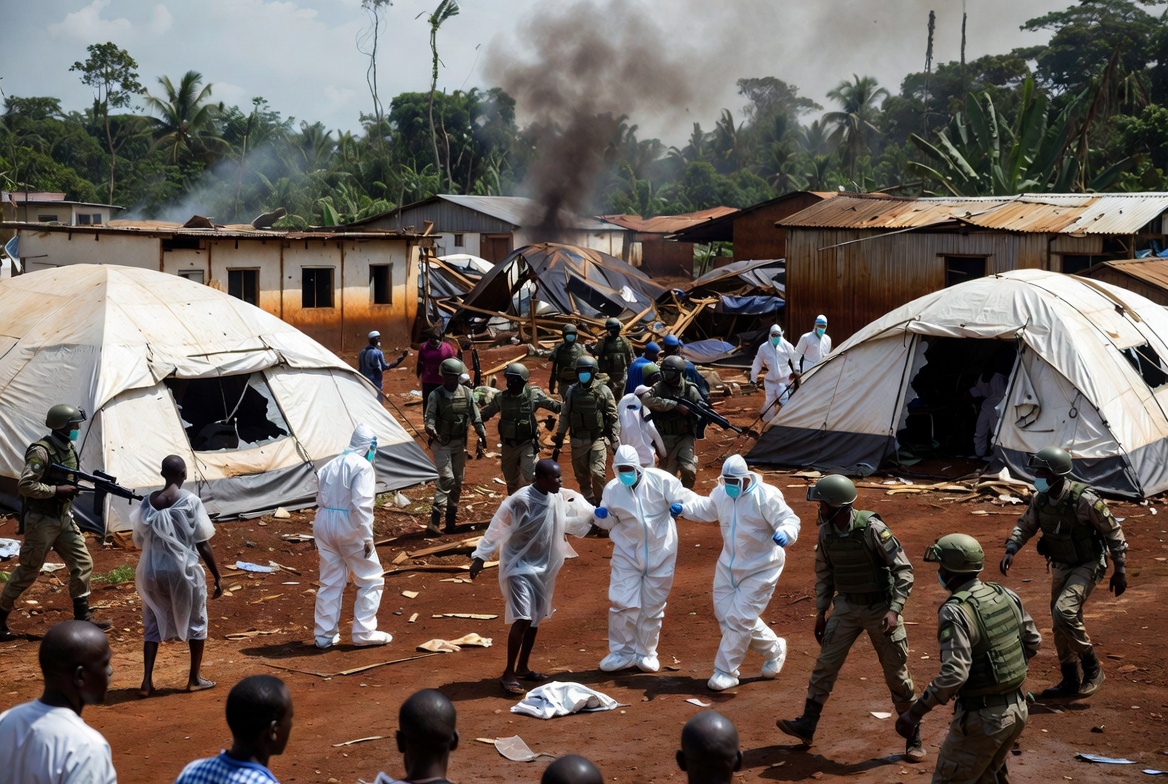
Health workers are also battling conditions on the ground that have made containment far harder. Dozens of armed groups operate across the eastern provinces where the virus is spreading, and attacks on health facilities have repeatedly disrupted response efforts. At the same time, deep cuts to international aid budgets have stretched already limited resources even thinner, leaving front-line teams overworked and underequipped.
Distrust of authorities and limited public health education have further complicated efforts to stop transmission. Angele Gapio, who heads emergency response for the charity Caritas in the northeastern city of Bunia, said awareness campaigns have struggled to gain traction. “The disease has now settled in the community,” she said. “People continue to seek treatment from traditional healers, and the chain of transmission continues.”
The World Health Organization cautioned this month that the true scale of the outbreak could be as much as four times higher than official figures suggest, given gaps in surveillance and reporting in remote, conflict-affected areas. Meanwhile, the Africa Centres for Disease Control and Prevention said in June that containing the outbreak would require roughly $1.4 billion, three times its earlier funding estimate, underscoring how quickly the response has outgrown initial projections.
The virus has now been confirmed across five provinces: Haut-Uele, Ituri, North Kivu, South Kivu and Tshopo, a geographic spread that has made coordination between local and national health authorities increasingly difficult. Officials say the coming weeks will be critical in determining whether the outbreak can be brought under control or whether it will continue to accelerate.
For now, international health bodies are urging governments and donors to scale up support quickly. With the outbreak already ranked as the second worst on record, responders warn that further delays in funding, vaccine development and security support could allow the epidemic to spiral further, deepening a crisis that has already reshaped daily life across a swath of eastern Congo.