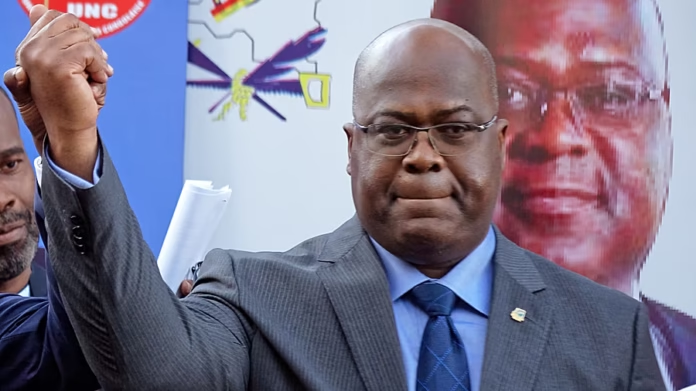
President Félix Tshisekedi is facing growing pressure to abandon plans for a DR Congo constitutional referendum, with 65 civil society organisations warning that the proposal comes at a difficult time for the country.
The organisations delivered a memorandum to Tshisekedi and several of the country’s major institutions on Monday, arguing that a referendum should not be a priority while the Democratic Republic of Congo is struggling with armed conflict, displacement and worsening economic conditions.
The groups say public resources should instead be directed toward addressing the country’s immediate challenges, particularly the continuing conflict in eastern DR Congo and the humanitarian crisis affecting millions of people.
The organisations involved in the campaign include No to Constitutional Change, Civil Bridge, Génération Z RDC, LUCHA-RDC and Filimbi. They argue that moving ahead with the proposed legal framework for a referendum could fuel political tensions at a time when the country is already facing significant instability.
The groups are also concerned that the initiative could be interpreted as the beginning of a broader effort to modify the Constitution. They fear such a move could create further uncertainty over the country’s political future and deepen existing divisions.
Their message to the president is that constitutional reform should not take precedence over the urgent problems confronting ordinary Congolese citizens. They want the government to focus its attention and resources on security, humanitarian assistance and improving living conditions.
However, Tshisekedi’s political party, the Union for Democracy and Social Progress, known as UDPS, has defended the proposed legal framework.
The party argues that establishing clear rules for a referendum is necessary because there is currently a legal gap surrounding the process. According to the UDPS, the framework would provide clear rules governing how citizens can exercise their right to popular sovereignty.
The disagreement therefore goes beyond the question of whether a referendum should take place. It also concerns how the country’s constitutional system should handle any future vote on major constitutional issues.
For Tshisekedi’s supporters, establishing a legal framework does not necessarily mean that constitutional changes are imminent. For his opponents, however, the timing of the initiative raises concerns about where the process could eventually lead.
The debate is unfolding as DR Congo continues to face serious challenges, particularly in the east of the country. Years of armed conflict have displaced large numbers of people and placed additional pressure on communities already struggling with poverty and limited access to essential services.
Against this backdrop, the civil society organisations believe the government should concentrate on the country’s security and humanitarian emergencies rather than pursuing a constitutional referendum.
The proposed referendum has consequently become another source of political tension in a country already dealing with war, displacement and economic hardship. Any constitutional initiative is likely to attract close scrutiny because of the sensitivity surrounding political reforms and presidential power in DR Congo.
The disagreement between civil society groups and Tshisekedi’s political camp is expected to keep the proposed referendum at the centre of political debate. While opponents are calling for the plan to be abandoned, the president’s supporters maintain that a proper legal framework is needed to regulate any future exercise of popular sovereignty.
As the debate continues, the government is likely to face increasing pressure to explain the purpose and scope of the proposed framework and reassure citizens that any constitutional process will respect the country’s political and legal institutions.
The controversy ultimately highlights a difficult choice for DR Congo’s leadership: whether to pursue long-term constitutional reforms now or concentrate entirely on the immediate security, humanitarian and economic problems facing millions of citizens. For the 65 civil society organisations opposing the initiative, the priority is clear: the country’s urgent crises should come before a constitutional referendum.