Uganda’s Ministry of Health on Tuesday declared the official end of its latest Ebola outbreak, marking a moment of relief for a country that has repeatedly found itself on the frontline of the deadly viral disease.
Health Minister Chris Baryomunsi told reporters in Kampala that Uganda is now Ebola-free, following the completion of a mandatory 42-day monitoring period required by the World Health Organization before any Ebola outbreak can be formally declared over.
“The Ministry of Health is pleased to announce that Uganda has officially declared the end of the 2026 Ebola Disease outbreak. Uganda is Ebola-free,” Baryomunsi said, adding that intensive surveillance had continued nationwide throughout the monitoring window and that no new cases of the virus had been detected since the last patient was discharged.
The outbreak, which was first declared in mid-May, ultimately infected 20 people and claimed two lives. Of those confirmed cases, 18 patients recovered and were discharged from isolation facilities, while the two fatalities were both Congolese nationals who had crossed into Uganda already carrying the infection. The last patient tied to the outbreak, a locally transmitted case, was discharged from care on June 16, setting in motion the 42-day countdown that public health officials used to confirm the virus had been contained.
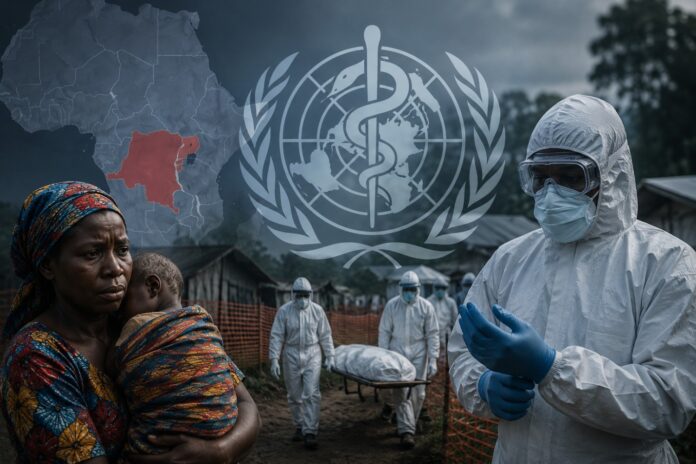
Uganda’s latest brush with Ebola was closely linked to the much larger and more devastating epidemic unfolding across the border in the Democratic Republic of Congo, which remains the epicenter of the crisis with more than 3,000 confirmed cases recorded there. Officials say that the majority of Uganda’s cases originated from cross-border transmission from eastern Congo, underscoring how the porous frontier between the two nations continues to pose a persistent threat of imported infections.
The World Health Organization had designated the regional Ebola outbreak a Public Health Emergency of International Concern back in May, reflecting the seriousness with which international health authorities viewed the disease’s spread through the Great Lakes region. The strain responsible for this round of infections was identified as the Bundibugyo strain, first discovered in Uganda in 2007, for which there is currently no approved vaccine or specific antiviral treatment.
This is far from Uganda’s first encounter with the disease. The country recorded its first Ebola epidemic in 2000 and has since weathered numerous smaller flare-ups, giving its health system decades of accumulated experience in outbreak response. Officials say that hard-won expertise allowed them to move quickly this time, isolating patients, tracing contacts and containing community transmission before the virus could spread more widely, even as neighboring Congo continued to struggle with a much larger caseload.
Health authorities have pointed to Uganda’s dense tropical forests, home to large populations of fruit bats believed to be natural reservoirs of the virus, as a reason the country remains especially vulnerable to recurring outbreaks. Ebola spreads through direct contact with the bodily fluids of infected people or animals, including blood, vomit and other contaminated materials, and typically produces severe symptoms such as fever, intense weakness, muscle pain, vomiting and, in the most serious cases, internal and external bleeding.
In the weeks leading up to Tuesday’s announcement, Africa’s top health official had appealed to the United States to lift Ebola-related travel restrictions imposed on Uganda during the outbreak, arguing that such measures placed an unfair economic burden on the country even as it worked to bring the disease under control. With the outbreak now formally over, Ugandan officials are expected to renew calls for those restrictions to be eased.

For many Ugandans, the declaration brings a measure of relief after months of anxiety over the virus’s potential to spread further, particularly given the scale of the ongoing crisis in neighboring Congo. Public health experts caution, however, that the underlying risk factors that have made Uganda susceptible to previous Ebola outbreaks have not disappeared, and that continued vigilance, quick detection systems and cross-border cooperation with Congo will remain essential to preventing the virus from resurfacing in the months ahead.