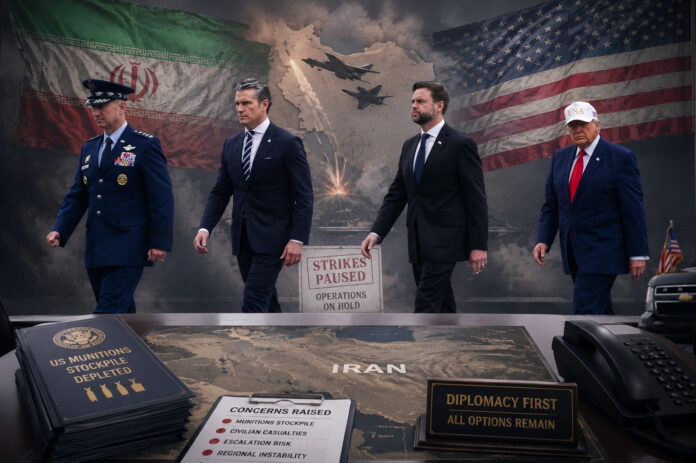
The US Iran Conflict reached another critical point after President Donald Trump temporarily halted a series of military strikes against Iran while his administration reviewed the risks of further escalation. The decision followed discussions with senior military and national security officials who reportedly warned about shrinking weapons stockpiles, humanitarian concerns, and the long term consequences of expanding the conflict.
Although military action remains an option, the pause reflects a broader debate within Washington over whether additional strikes would strengthen US interests or create even greater security challenges.
Why the US Iran Conflict Entered a New Phase
During a high level White House meeting, Vice President JD Vance and Chairman of the Joint Chiefs of Staff General Dan Caine reportedly raised concerns about expanding military operations against Iran.
General Caine is said to have assured President Trump that the US military has the capability to carry out any approved mission successfully. However, he also warned that a wider military campaign could have significant military, political, and humanitarian consequences.
Officials reportedly discussed several major concerns, including pressure on US weapons stockpiles, the possibility of a prolonged regional conflict, increased civilian casualties inside Iran, and the broader impact on international stability.
Following nearly two weeks of continuous air operations, US military strikes were reportedly placed on hold. While officials have not identified one specific reason for the pause, military readiness, ongoing diplomatic efforts, humanitarian concerns, and regional stability were all considered during the discussions.
The condition of America’s weapons stockpile also became a major factor. Years of military support for allies, including assistance to Ukraine and operations against Houthi forces, have placed additional pressure on available munitions. Although Pentagon officials insist the United States remains fully prepared to defend its interests, rebuilding critical inventories has become an important priority.
Officials also expressed concern that broader attacks on civilian infrastructure such as roads, bridges, and power facilities could result in significant civilian casualties and worsen humanitarian conditions. Such actions could also increase international criticism and complicate diplomatic efforts aimed at reducing tensions.
Diplomacy and Military Readiness Continue Side by Side
Despite maintaining military options, President Trump has continued to pursue diplomatic engagement with Iran. Administration officials say negotiations have remained active even as military planning continues, reflecting an effort to balance pressure with diplomacy.
The White House has maintained that diplomacy remains the preferred path if Iran avoids actions that threaten international shipping routes or US allies. At the same time, officials have emphasized that all military options remain available if negotiations fail.
Several Gulf nations have also encouraged restraint, warning that a wider conflict could threaten regional stability, energy markets, and civilian populations across the Middle East.
Meanwhile, the evolving US Iran Conflict has sparked political debate in Washington. Some lawmakers argue that prolonged military involvement could further strain US military resources and increase the risk of another extended conflict in the region. Others believe maintaining military pressure is necessary to deter future attacks and protect American personnel and allies.
Pentagon officials continue to insist that the US military remains fully capable of carrying out any mission authorized by the President while also working to strengthen weapons inventories and maintain long term operational readiness.
The future of the US Iran Conflict remains uncertain. Military operations have slowed for now, but negotiations continue alongside ongoing military planning. The coming weeks are expected to determine whether diplomacy succeeds or whether tensions rise once again.
The temporary pause in military operations highlights the difficult choices facing US leaders as they balance national security, military readiness, humanitarian concerns, and diplomatic opportunities. The decisions made in the near future could have lasting effects on both regional stability and global security.