Global oil markets are entering one of their most uncertain periods in years as escalating tensions in the Middle East threaten to disrupt critical energy supplies. While the energy sector has managed to withstand months of conflict without triggering an extreme price shock, analysts now warn that the situation is becoming increasingly fragile.
Oil prices have already climbed above $100 per barrel for the first time in months, while fuel prices continue to rise in many countries. The latest developments suggest that the global market is losing many of the safeguards that previously kept prices under control, raising concerns about inflation, transportation costs and economic growth.
Experts believe the combination of supply disruptions, shrinking inventories, shipping challenges and growing geopolitical tensions could push oil prices significantly higher if the conflict continues to escalate.
Why Oil Prices Are Rising
For much of the conflict, the global energy industry adapted by rerouting shipments and finding alternative supply chains whenever traditional routes became unsafe. Those temporary solutions helped prevent the severe shortages many economists initially feared.
However, those alternatives are now coming under pressure.
Energy analysts say the conflict has entered a more dangerous phase where several of the backup routes that previously supported oil exports are no longer guaranteed. As a result, the balance between supply and demand is becoming increasingly fragile.
Consumers are already feeling the effects.
Fuel prices continue to rise, diesel costs have increased sharply, and financial markets are beginning to price in a greater risk of inflation.
Strait of Hormuz Disruptions Threaten Oil Prices
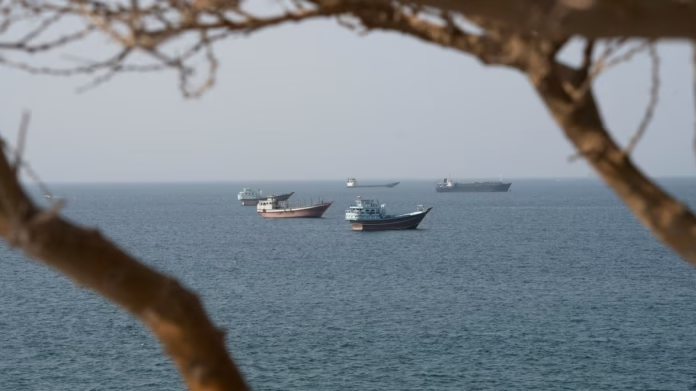
One of the biggest threats to oil prices remains the Strait of Hormuz, one of the world’s most important energy corridors.
A large percentage of global crude oil normally passes through this narrow waterway every day. Recent attacks on oil tankers and growing security concerns have significantly reduced traffic through the route.
To compensate, millions of barrels of oil have been redirected through alternative pipelines toward the Red Sea. But those alternatives now face new security risks of their own.
At the same time, attacks and blockades affecting another strategic shipping route near the Bab al Mandeb Strait have complicated transportation even further.
Although Saudi Arabia can redirect some shipments through other channels, larger oil tankers face operational limitations that increase both delivery times and transportation costs.
These logistical challenges reduce supply efficiency and place additional upward pressure on oil prices.
Insurance Costs Add More Pressure to Oil Prices
Shipping companies are facing another major obstacle beyond physical security.
Marine insurers are becoming increasingly cautious about providing coverage for vessels operating in high risk areas.
Reports indicate that Iran plans to impose transit tolls on ships passing through the Strait of Hormuz. However, paying such fees could violate existing US sanctions, creating legal and financial risks for shipping companies.
Insurance providers have warned that vessels making such payments could lose coverage entirely.
Without adequate insurance protection, many operators may decide not to enter the region at all, further restricting global oil movement and tightening supplies.
Russia Adds Another Layer to the Energy Crisis
The Middle East is no longer the only region affecting oil prices.
Ukraine’s continued attacks on Russian energy infrastructure have created additional disruptions across global fuel markets.
Damage to refineries has contributed to fuel shortages inside Russia, prompting the country to suspend diesel exports.
Before the restrictions, Russia supplied roughly 12 percent of global diesel exports, making the reduction particularly significant for international markets.
Meanwhile, attacks affecting export infrastructure around the Black Sea have threatened additional crude oil supplies at a time when markets are already under considerable strain.
With multiple producing regions experiencing disruptions simultaneously, the global energy market has become increasingly vulnerable.
Low Global Inventories Leave Little Room for Error
Perhaps the biggest concern for analysts is the sharp decline in global oil inventories.
Unlike the beginning of the conflict, when storage facilities held comfortable reserves, worldwide stockpiles have fallen substantially after months of heavy demand and supply interruptions.
The United States Strategic Petroleum Reserve has also declined significantly compared with previous years, limiting the government’s ability to release emergency supplies if prices continue to surge.
Commercial inventories are approaching operational minimum levels, reducing the flexibility available to respond quickly to further disruptions.
With fewer emergency reserves available, any additional supply shock could have a much larger impact on oil prices than earlier in the conflict.
China May Soon Return to the Market
Another important factor influencing oil prices is China.
Over recent months, China relied heavily on previously accumulated oil reserves instead of increasing imports during periods of elevated prices.
That strategy helped reduce pressure on global demand.
However, analysts believe those stockpiles cannot sustain consumption indefinitely.
If China begins rebuilding its inventories later this year, global demand could increase sharply, placing even greater pressure on already constrained supplies.
Combined with current geopolitical tensions, stronger Chinese demand could accelerate further increases in oil prices.
Energy experts remain divided over exactly how high oil prices could climb, but most agree that risks are increasing rapidly.
Some forecasts suggest crude oil could exceed $120 per barrel if current disruptions continue. More pessimistic projections indicate prices could approach or even surpass historical record levels should the conflict expand into a broader regional war.
Much will depend on whether shipping routes remain open, diplomatic efforts succeed in easing tensions and major producers are able to maintain stable exports.
For now, the global energy market remains highly sensitive to every new development.
The resilience shown by global oil markets throughout the Iran conflict is being tested like never before. Supply routes are becoming increasingly constrained, insurance risks are growing, inventories are shrinking and geopolitical uncertainty continues to intensify.
While the world has so far avoided the type of energy crisis seen during previous oil shocks, the margin for error is becoming much smaller. Unless stability returns to key shipping corridors and energy infrastructure, oil prices are likely to remain under upward pressure, affecting businesses, governments and consumers across the globe.
This article was produced by the Maple Epoch Editorial Team. See our editorial standards and AI-use disclosure and editorial policy.