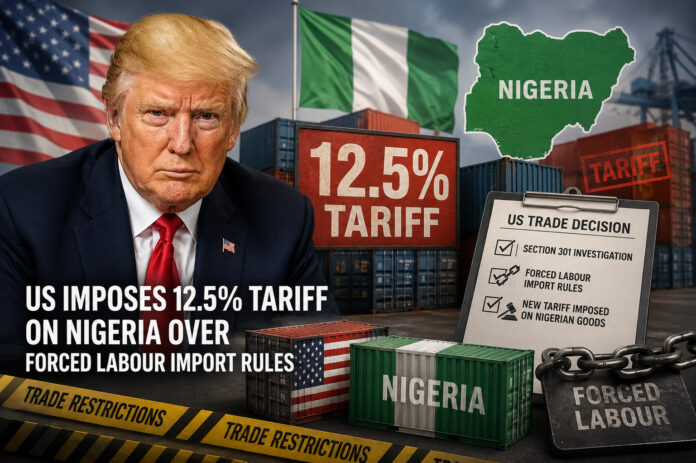
The United States has announced new US tariffs on Nigeria, imposing an additional 12.5% duty on most Nigerian goods entering the American market. The decision follows an investigation by the Office of the United States Trade Representative (USTR), which concluded that Nigeria has not established or effectively enforced a ban on imports produced with forced labour.
The new measure is expected to affect trade between both countries and could have significant implications for Nigerian exporters seeking access to the US market. The tariffs officially take effect at 12:01 a.m. Eastern Time on July 24, 2026, although goods already in transit will be allowed a limited grace period before the new duties apply.
Why the US Tariffs on Nigeria Were Imposed
The US tariffs on Nigeria stem from a Section 301 investigation launched in March 2026 under the Trade Act of 1974. The investigation examined whether 60 economies had laws preventing the importation of goods produced wholly or partly through forced labour and whether those laws were actively enforced.
Following months of review, the USTR determined that 54 economies, including Nigeria, failed to meet the required standards. According to the findings, Nigeria does not currently maintain or effectively implement a comprehensive prohibition on importing products linked to forced labour.
As a result, Nigerian exports entering the United States will now attract an additional 12.5% tariff unless they qualify for specific exemptions outlined by US authorities.
Countries that already enforce forced labour import bans, introduced such laws during the investigation, or committed to implementing them through an Agreement on Reciprocal Trade received a lower tariff rate of 10%.
Nigeria was instead placed in the higher tariff category alongside several other countries that US officials believe have not taken sufficient action to address forced labour concerns within their import systems.
The USTR noted that its decision followed an extensive consultation process involving more than 1,600 public submissions and testimony from over 100 witnesses. Participants included government representatives, manufacturers, industry associations, labour groups, and non governmental organizations.
What the US Tariffs on Nigeria Mean for Trade
The introduction of the US tariffs on Nigeria could affect the competitiveness of Nigerian products in one of the country’s largest export markets. Higher import duties generally increase the cost of goods for American buyers, potentially reducing demand for affected products.
However, not every product will be impacted. The USTR announced several exemptions covering categories where additional duties could negatively affect US supply chains or fail to address the concerns surrounding forced labour.
Among the exempted items are informational materials, charitable donations, accompanied personal baggage, products already covered by Section 232 tariffs, and selected goods identified in the official annexes accompanying the order.
Several countries managed to avoid the higher tariff category by introducing stronger forced labour regulations during the investigation. Cambodia, Guatemala, Honduras, India, Sri Lanka, and Trinidad and Tobago all implemented new import restrictions related to forced labour before the investigation concluded. Jordan also secured a lower tariff rate after committing to similar measures through an Agreement on Reciprocal Trade with the United States.
The latest decision highlights the growing importance the US places on labour standards in international trade policy. American trade officials have increasingly linked market access to compliance with labour rights and supply chain transparency, making forced labour enforcement a key factor in future trade relationships.
For Nigeria, the new tariffs could encourage policymakers to review existing import regulations and strengthen enforcement mechanisms to align more closely with international expectations. Such reforms could help improve future trade negotiations and potentially reduce tariff barriers over time.
While the immediate impact on export volumes remains uncertain, businesses that rely heavily on the US market may need to reassess pricing strategies, supply chains, and compliance requirements to remain competitive.
The introduction of the US tariffs on Nigeria marks another example of how international trade policies are increasingly influenced by labour standards rather than traditional economic considerations alone.
As global supply chains face greater scrutiny, countries seeking stronger trade relationships with the United States may need to adopt stricter regulations and enforcement measures against forced labour.
For Nigerian exporters, the coming months will be critical in adapting to the new trading environment while policymakers consider possible responses to protect the country’s long term export competitiveness.