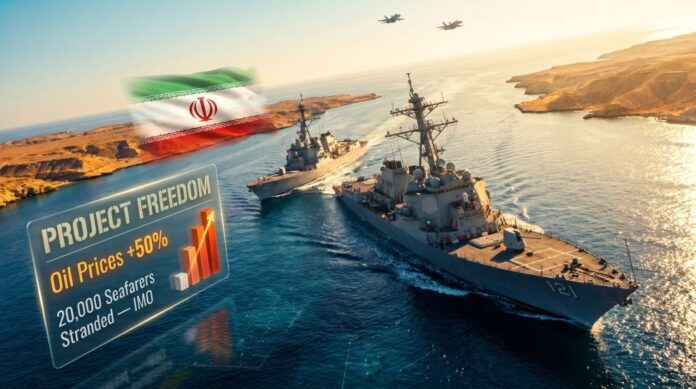
U.S. Navy destroyers have conducted multiple high-risk escort missions through the Strait of Hormuz in recent weeks despite Iranian maritime barriers, drone activity, and repeated threats, according to U.S. officials, shipping reports, and regional monitoring groups.
The operations, carried out during a fragile ceasefire and ongoing diplomatic negotiations, have enabled limited commercial shipping through one of the world’s most strategically important waterways.
As of May 7, 2026, the United States has demonstrated it can maintain restricted access through the strait, though risks of escalation remain high and overall commercial traffic is still far below normal levels.
The Strait of Hormuz, only 21 miles wide at its narrowest point, handles a major share of global oil shipments. Iran intensified maritime restrictions after February strikes by deploying naval mines, fast-attack boats, drones, and coastal missile systems across key transit routes.
In response, the U.S. Navy expanded escort and mine-countermeasure operations under the paused but adaptable Project Freedom framework. Several destroyers assigned to the Fifth Fleet have led the missions, escorting merchant vessels while conducting surveillance and threat interception operations.
Iranian Threat Network and U.S. Countermeasures
Iranian forces established what U.S. defense officials describe as a layered maritime threat network across parts of the strait.
Naval mines, including older contact mines and more advanced influence-triggered systems, were placed along shipping corridors.
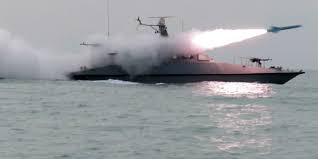
Small boats operated by the Islamic Revolutionary Guard Corps Navy conducted repeated harassment maneuvers near commercial and military vessels. Iran also deployed unmanned aerial and surface drones capable of carrying explosives, while coastal anti-ship missile batteries provided long-range strike coverage from shore positions.
U.S. intelligence assessments estimate Iran deployed hundreds of mines and continues rotating dozens of armed fast boats through operational areas. Analysts say the strategy is designed to increase insurance costs, disrupt confidence in shipping routes, and deter commercial traffic without triggering a direct full-scale naval conflict.
Iranian authorities also announced new transit rules requiring inspections and fees for passing vessels, measures that most international shipping operators have rejected.
American responses have included mine-clearing operations, electronic warfare measures, armed destroyer escorts, and expanded aerial surveillance.
Destroyers including the USS John Paul Jones and USS Stethem have conducted repeated passages through the waterway, using Aegis combat systems to monitor missile and drone threats while helicopters and unmanned systems search for mines and suspicious vessels.
“The U.S. Navy has shown it can force limited access, but each transit consumes significant resources and carries escalation risk,” said Vice Admiral (ret.) James Foggo, former commander of U.S. Naval Forces Europe-Africa and Allied Joint Force Command Naples. “Iranian barriers are not impenetrable, yet they create a dangerous new normal.”
Escort Missions, Incidents and Operational Pressure
Several escort operations in recent weeks have highlighted both the effectiveness and the risks of the missions.
In mid-April, a U.S.-escorted convoy carrying three merchant vessels completed a northbound transit through the strait under heavy naval protection. Destroyers reportedly provided layered defenses against drone activity during the passage, with one drone intercepted by ship-launched missiles.
A separate operation on April 28 involved a U.S. destroyer firing its 5-inch gun to disable a fast boat that approached escort vessels at close range, according to regional security reports.
Operations in May have proceeded more cautiously. During a limited southbound transit on May 3, crews detected multiple mine-like objects in transit lanes, forcing evasive maneuvers and slowing movement through the corridor.
No major damage to U.S. warships has been publicly confirmed, though several commercial vessels have reported near-misses and security incidents. One tanker sustained minor hull damage from debris during recent operations.
The escort missions are being conducted under rules of engagement that permit defensive action while avoiding broader strikes during ongoing negotiations. The United States continues to maintain a substantial naval presence in the Gulf, including carrier strike groups positioned nearby for rapid escalation response if required.
Arleigh Burke-class destroyers continue to serve as the backbone of the escort operations. Their advanced radar systems provide long-range threat detection, while vertical launch systems carry Standard missiles for air defense missions. Close-in weapon systems and electronic warfare suites have been used extensively against drone and small-boat threats.
Additional support has come from P-8 Poseidon surveillance aircraft, MH-60 helicopters, and unmanned underwater vehicles used for mine detection. British and French naval vessels have also participated in some missions, expanding multinational coordination efforts in the region.
Military officials say the operational environment remains difficult because of shallow waters, confined maneuvering space, and persistent uncertainty over mine placement. Repeated high-alert deployments have also increased fatigue among naval crews assigned to escort operations.
“Modern destroyers excel in multi-domain defense, but the strait turns traditional naval advantages into a test of persistence and precision,” said Dr. Sidharth Kaushal, a seapower analyst at the Royal United Services Institute. “Every passage requires perfect coordination.”
Diplomatic Stakes and Economic Impact
The naval operations continue alongside broader diplomatic efforts aimed at securing a sustainable ceasefire and restoring full commercial access through the strait.
The United States has paused larger escort expansions while negotiations mediated by Pakistan and other regional actors continue. American officials view the limited success of current escort operations as strengthening Washington’s position in talks over future maritime security arrangements.
Iran, meanwhile, maintains that it can disrupt shipping traffic whenever necessary and has used the maritime pressure campaign to push for sanctions relief and broader security guarantees.
Global energy markets continue to react sharply to developments in the Gulf. Even modest increases in escorted oil shipments have helped stabilize prices compared with the height of the disruption, though volatility remains elevated. Asian energy importers, among the hardest hit by supply shortages and shipping delays, have continued urging faster diplomatic progress.
The sustained U.S. naval presence has also reassured Gulf allies including Saudi Arabia and the UAE, both of which have increased patrol operations and intelligence-sharing activities in coordination with Western forces.
At the same time, military analysts warn that the risk of miscalculation remains significant. A serious incident involving a U.S. destroyer, Iranian forces, or a commercial tanker could rapidly derail ongoing negotiations and trigger a broader regional confrontation.
The operational burden on personnel has also grown steadily as deployments lengthen.
Sailors assigned to repeated escort missions continue operating in high-threat conditions that demand constant readiness. Refueling, maintenance, and logistical support operations have increasingly been conducted at sea or through regional partner ports to sustain the tempo of operations.
Commercial shipping crews face similar pressures. Many escorted vessels operate under flags of convenience and carry multinational crews working under elevated insurance costs and significant security risks.
While successful destroyer escorts have helped restore a limited flow of commerce through the Strait of Hormuz, military officials and shipping analysts say the situation remains unstable and heavily dependent on both continued naval protection and uncertain diplomatic negotiations.