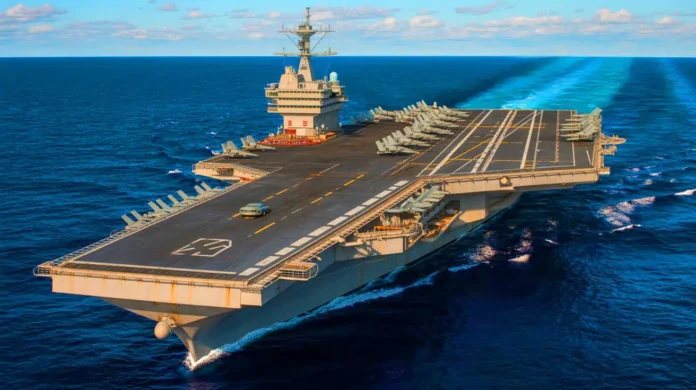
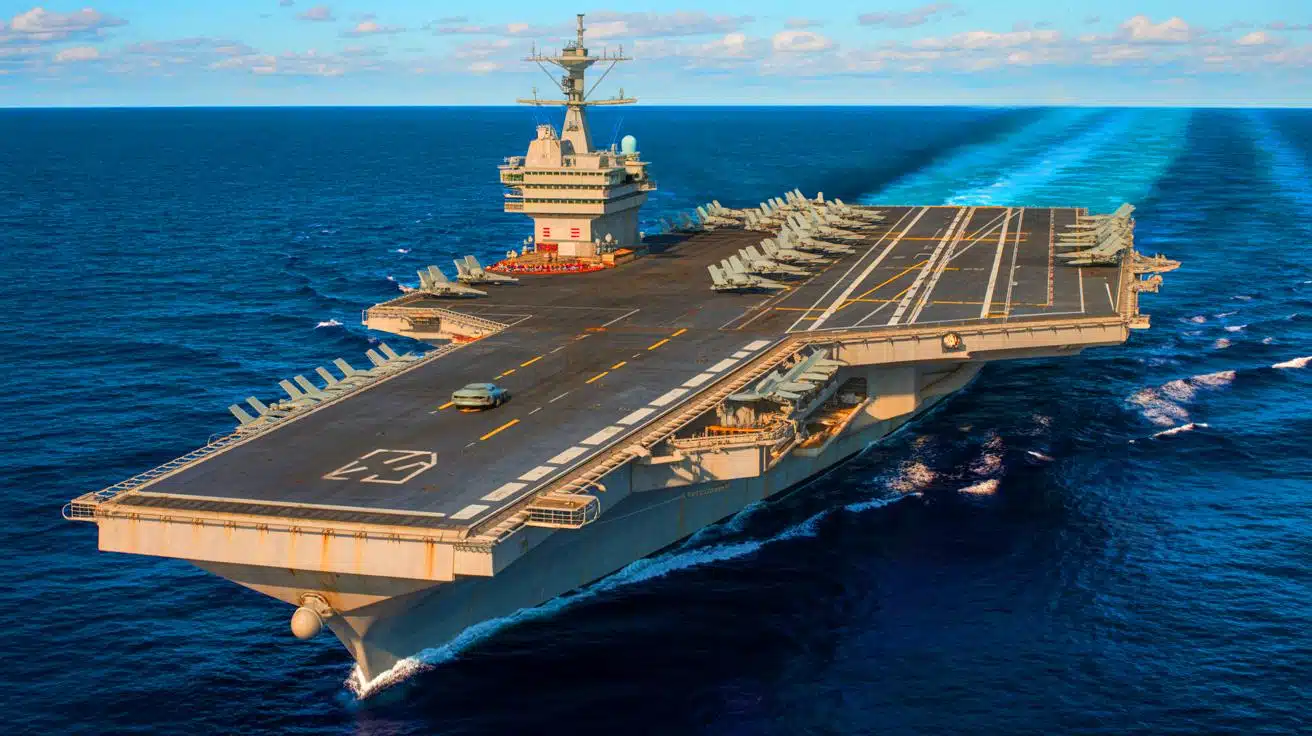
The world’s largest aircraft carrier, the USS Gerald R. Ford, will deploy to the Middle East to join another carrier already operating in the region, according to reporting by the Associated Press, which cited a source familiar with military planning. The move was first reported by The New York Times and later confirmed by other major outlets, including CNN.
In a statement to WORLD, U.S. Southern Command spokesman Col. Emanuel L. Ortiz did not directly address the deployment of the Ford but said forces under United States Southern Command remain prepared to project power, defend themselves, and protect U.S. interests. He added that SOUTHCOM would continue operations aimed at countering illicit activity and destabilizing actors in its area of responsibility.
The planned deployment marks a reversal for the carrier, which had been operating in the Caribbean Sea in late 2025. That earlier mission came ahead of a U.S. operation that resulted in the custody of Venezuelan leader Nicolás Maduro. The reassignment underscores the flexibility of U.S. naval forces, which are often redirected in response to shifting geopolitical priorities.
A second carrier in a tense region
The USS Gerald R. Ford is expected to join the USS Abraham Lincoln and its strike group, which are already operating in waters connected to the Middle East, including the Arabian Sea. A dual carrier presence in the region is relatively uncommon and is typically associated with periods of heightened tension or preparation for possible military contingencies.
Reports from multiple outlets indicate that the United States has been building up its military presence across the broader Middle East in recent months. Naval assets have been positioned in key waterways such as the Strait of Hormuz and the Red Sea, while additional aircraft and support systems have been deployed to bases in allied countries.
The deployment of the Ford itself had already been set in motion earlier this year. In February, U.S. officials confirmed that the carrier was being sent toward the Middle East as part of a broader effort to signal that military options remained available amid tensions with Iran.
The ship had transited the Atlantic and entered the Mediterranean through the Strait of Gibraltar before continuing eastward, reflecting a significant logistical undertaking for a vessel of its size and capability.
Pressure on Iran and nuclear talks
The carrier movement comes as the United States increases pressure on Iran over its nuclear program. Donald Trump said earlier in the week that Washington would continue negotiations aimed at securing a new agreement to limit Iran’s nuclear activities.
Indirect talks between U.S. and Iranian officials began recently in Oman, a country that has often served as a mediator between the two sides. While discussions are ongoing, no definitive agreement has been reached.
At the same time, Trump has repeatedly indicated that military action remains a possibility if diplomacy fails. Previous U.S. operations targeting Iranian nuclear facilities have shaped the current strategic environment, and analysts note that the visible deployment of major naval assets is often intended to reinforce diplomatic leverage.
The USS Abraham Lincoln has already been involved in regional operations. The White House said earlier this month that the carrier shot down an Iranian drone as it moved toward the Middle East, highlighting the potential for direct encounters between U.S. and Iranian forces.
Strain and scale of the deployment
The deployment of the USS Gerald R. Ford comes after an extended period at sea. Lawmakers in Washington have raised concerns about the strain on the carrier and its crew, noting that the strike group has been operating for many months with limited downtime.
The Ford is the newest and most advanced aircraft carrier in the U.S. Navy, capable of carrying more than 70 aircraft and thousands of personnel. Its presence significantly expands the range of military options available to U.S. commanders, from airstrikes to surveillance and deterrence operations.
Recent reporting has also highlighted the scale of U.S. military activity tied to tensions with Iran. Operations in the region have involved tens of thousands of personnel and extensive logistical support, reflecting the complexity of maintaining a sustained military posture far from U.S. shores.
 Despite these challenges, U.S. officials continue to frame the deployment as part of a broader strategy aimed at maintaining stability and deterring escalation. The addition of a second carrier group increases flexibility for commanders while signaling to allies and adversaries alike that the United States is prepared to respond to developments in the region.
As the USS Gerald R. Ford moves toward the Middle East, its arrival is expected to further concentrate American naval power in a region already marked by geopolitical uncertainty, ongoing negotiations, and the persistent risk of confrontation.