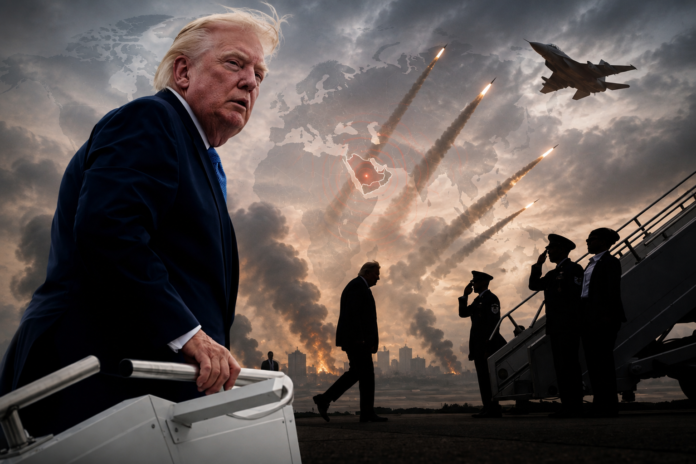
The Trump Iran Strategy has reached a decisive moment as diplomatic efforts continue to stall and military tensions remain high across the Middle East. While President Donald Trump has so far avoided launching a broader military campaign against Iran, analysts say every available option now carries significant political, military, and economic risks.
Despite repeated warnings to Tehran and periods of intensified military pressure, the conflict remains unresolved. The White House must now decide whether to continue its current approach, escalate military operations, or seek an exit from the crisis without achieving all of its objectives.
Trump Iran Strategy Faces Difficult Choices
The ongoing confrontation has left the United States confronting several difficult paths, none of which offer an easy solution.
One option would involve maintaining the current pattern of limited military operations while continuing diplomatic outreach. However, this approach risks creating a prolonged conflict with no clear conclusion.
A second possibility would involve expanding military action by targeting additional Iranian infrastructure or strategic assets. Security experts warn such a move could trigger stronger retaliation across the region and significantly increase the chances of a wider war.
The final option would be to reduce military involvement and prioritize negotiations, even if key American goals remain unmet. While this could reduce immediate risks, it may also be viewed by critics as an incomplete resolution to the crisis.
Recent reports indicate that military planners continue evaluating alternative strategies while senior officials assess both battlefield developments and diplomatic opportunities.
Regional Allies and Military Concerns Shape Trump Iran Strategy
The Trump Iran Strategy has also been influenced by concerns raised by key Middle Eastern partners.
Reports indicate that regional allies expressed fears that any major expansion of military operations could provoke retaliatory attacks against energy facilities, shipping routes, and critical infrastructure throughout the Gulf region.
Those concerns reportedly contributed to Trump’s recent decision to delay planned military strikes while allowing additional time for diplomatic efforts.
Although the president has continued issuing warnings to Iranian leaders, he has also left room for negotiations if meaningful progress can be achieved.
At the same time, American military planners remain aware that any escalation could require greater commitments of personnel, equipment, and resources over an extended period.
Historical Lessons Continue to Influence Military Decisions
History provides several examples of conflicts that gradually expanded after leaders chose military escalation over negotiated settlements.
The Vietnam War remains one of the most significant examples, where increased troop deployments and sustained bombing campaigns failed to produce a decisive outcome despite years of fighting.
Decades later, the wars in Iraq and Afghanistan presented similar challenges. Multiple administrations expanded military operations hoping to improve conditions before eventually reducing American involvement.
These experiences continue to influence strategic discussions inside Washington, where policymakers recognize how difficult it can become to end military campaigns once they expand beyond their original objectives.
Military analysts often point to several recurring risks:
- Escalating conflicts become increasingly expensive.
- Civilian and military casualties typically rise over time.
- Domestic political pressure often grows as wars continue.
- Exiting prolonged conflicts becomes more complicated after additional resources have been committed.
These historical examples remain central to ongoing debates surrounding the Trump Iran Strategy.
Trump Balances Military Pressure With Diplomatic Openings
Throughout his political career, Trump has frequently criticized prolonged overseas military interventions, arguing that endless wars drain American resources without delivering lasting results.
That position helped shape much of his foreign policy messaging, yet the current Iran crisis presents a far more complex challenge than campaign rhetoric.
While the administration continues to maintain military readiness, officials have also emphasized that diplomacy remains available if Iran chooses renewed negotiations.
Whether those diplomatic efforts succeed may determine whether the conflict stabilizes or enters a more dangerous phase involving broader regional confrontation.
For now, the administration appears focused on maintaining military pressure while avoiding decisions that could rapidly expand the conflict beyond its current scope.
The Trump Iran Strategy now stands at one of its most significant turning points. With diplomacy producing limited progress and military escalation carrying substantial risks, every decision made in the coming weeks could shape not only the outcome of the Iran conflict but also America’s broader role in the Middle East.
As regional allies, military commanders, and international observers closely monitor developments, the administration faces the difficult task of balancing national security objectives with the growing dangers of a prolonged war.