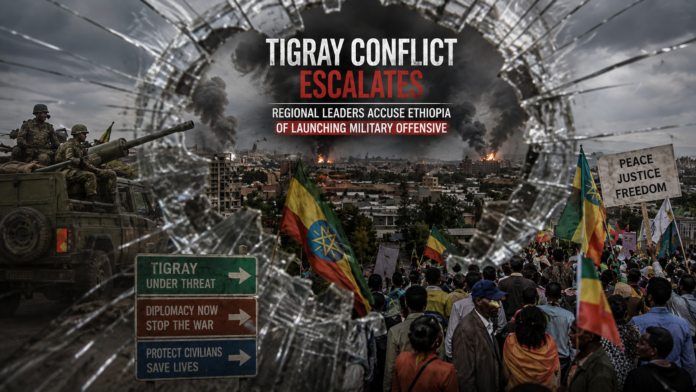
The Tigray People’s Liberation Front (TPLF), which governs much of the region, said the latest military action represents a major escalation in tensions that have steadily grown over recent months.
According to the group, the alleged artillery strikes followed what it described as months of pressure that included blockades, sieges, drone attacks and the use of allied proxy forces. The organization argued that these actions have now evolved into what it called an open military campaign against Tigray.
The renewed accusations have heightened concerns that the fragile peace established under the Pretoria Agreement may be collapsing. That agreement was widely viewed as a breakthrough after bringing an end to one of Africa‘s deadliest recent conflicts, but many unresolved political and territorial disputes have continued to fuel distrust between both sides.
Analysts have repeatedly warned that without sustained dialogue and full implementation of the peace deal, isolated tensions could easily develop into another large scale confrontation.
International Concern Grows Over the Tigray Conflict
Regional authorities are now urging the international community to become more actively involved before the situation deteriorates further. They warned that continued fighting could destabilize not only northern Ethiopia but also neighboring countries if violence spreads across borders.
The TPLF also appealed to residents, regional security personnel, civil society organizations and religious institutions to prepare for what it described as a struggle for the survival of the region. The statement reflects growing concern among local leaders that diplomatic efforts alone may no longer be enough to prevent another prolonged conflict.
Western Tigray remains one of the most disputed territories in Ethiopia. Control of the area has remained a sensitive issue since the end of the previous war, with competing claims continuing to complicate efforts toward lasting peace.
The latest developments also come at a time when humanitarian organizations have continued to monitor conditions in the region. Although the Pretoria Agreement significantly reduced large scale fighting, many communities have continued to face economic hardship, displacement and limited access to essential services.
Political observers believe the coming days will be crucial in determining whether both sides choose renewed dialogue or further military escalation. Any sustained fighting would threaten the progress made since the peace agreement and could deepen humanitarian challenges across northern Ethiopia.
For now, uncertainty remains high as the federal government has yet to respond publicly to the allegations, leaving the international community closely watching for signs of either de escalation or a broader return to conflict.
The renewed accusations underscore how fragile Ethiopia’s post war recovery remains. Unless meaningful dialogue resumes and outstanding disputes are addressed, the Tigray conflict could once again become one of the region’s most serious security crises.
The latest accusations from Tigray authorities have renewed fears that Ethiopia’s hard won peace may be under serious threat. While federal officials have not commented on the claims, the reports of military action have intensified calls for international engagement and urgent diplomatic efforts.
Preventing another full scale conflict will likely depend on both sides recommitting to dialogue and honoring the commitments made under the 2022 peace agreement.