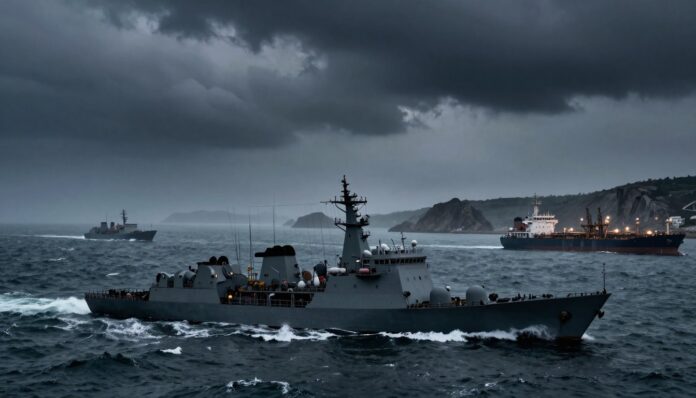
Recent military tensions in the Middle East have caught everyone’s eye. We are at a pivotal moment for international energy security as the situation gets more unstable.

This narrow waterway is a vital artery for oil exports. Any problem here quickly raises global oil prices. This affects markets all over the world.
The Strait of Hormuz Crisis shows how fragile our energy supply chains are. We need to understand how these events risk the flow of vital resources to buyers everywhere. Knowing these risks helps us deal with market ups and downs and protect our economy.
Overview of the Strait of Hormuz
The Strait of Hormuz is a key spot on Earth. It’s the main way energy from the Persian Gulf gets to the world. Its narrowness makes it a hot spot for The Strait of Hormuz Crisis. Even small problems can shake the global markets.
Geographic Importance
The Strait is only 21 miles wide at its narrowest. This makes it a natural chokepoint. Geopolitical tensions often focus here because it’s hard to get around.
The coastline is rough, perfect for watching over the Strait. Trying to block it makes countries think twice about their energy routes. The Strait’s layout makes it a high-risk area for everyone involved.
Key Shipping Lanes
The Strait’s shipping lanes are managed to keep big tankers safe. Keeping maritime security is a big job for naval forces. These lanes are key for global trade, and any problem can upset it.
Keeping these lanes safe needs teamwork from local and international groups. When they’re threatened, ports worldwide feel the effects. Keeping these paths open is critical for global supply chains.
Statistics on Oil Transportation
Loads of energy go through the Strait every day. About one-fifth of the world’s oil moves through here. This shows why international shipping concerns are big for leaders and energy experts.
This route is vital for the world, not just the region. Millions of barrels of oil and gas go through the Strait every day. Without it, the global economy would suffer greatly.
Historical Context of Tensions
The Strait of Hormuz has been a hot spot for centuries. It’s a key spot for power struggles that affect the world economy. These geopolitical tensions come from decades of strategic moves.
Previous Conflicts in the Region
The area has seen a lot of maritime battles. In the 1980s, the Tanker War targeted many ships. This Middle East conflict showed how local fights can disrupt oil supplies worldwide.
Major Players Involved
Many countries shape the security of these waters. The main issue is the tense Iran-US relations. They’ve shaped the Persian Gulf’s security for over 40 years. Other countries also play big roles, balancing their needs with global powers.
Impact of Sanctions
Economic sanctions are a key tool in regional power struggles. They’ve changed the economic scene, leading to a cycle of pressure and counter-attacks. These sanctions make finding peaceful solutions harder.
The Middle East conflict often gets worse because of economic issues. When countries face financial pressure, they might use their control over key waterways. This makes the Iran-US relations even more critical to the current crisis.
Current Situation Analysis
Recent events have made The Strait of Hormuz Crisis a major concern for global security. We see a series of military moves that have changed the sea landscape. These actions have made the situation uncertain for all nations that use this waterway.
Recent Escalations Explained
There’s been a rise in naval patrols and the capture of commercial ships. This has caused a big problem for oil trade, as ships are now more cautious. We’ve seen a drop in ship traffic, showing how risky it’s become.
Government Responses
Many governments have spoken out against these actions, trying to keep communication open. They’re using diplomacy and more naval power to handle the crisis. But, the Middle East conflict is very complex and hard to solve.
Implications for Regional Stability
The effects of these events go beyond just shipping delays. The Middle East conflict threatens the stability of the region. If the oil trade disruption keeps up, we might see more military actions. This could harm global energy security for a long time.
Economic Impact on Oil Prices
The stability of global oil prices is closely tied to the free flow of tankers through the Strait of Hormuz. When tensions rise, the global economy impact is seen in higher fuel costs and market uncertainty. This shows how our modern financial systems are sensitive to local geopolitical issues.
How Crisis Affects Supply Chains
Disruptions in the Strait of Hormuz make shipping companies rethink their routes. This leads to longer trips and higher costs. As a result, bunker fuel prices and insurance premiums for ships in the area go up.
These costs spread through markets, affecting the final price of goods for consumers in the U.S. and elsewhere.
Price Fluctuations in Global Markets
Looking back, we see how energy market volatility has played out before. Threats to oil transit lead to quick spikes in crude futures, just like during the Ukraine conflict.
“The market hates uncertainty more than it hates bad news, and the Strait of Hormuz is the ultimate source of uncertainty for energy traders.”
Investors quickly respond to military actions or blocked lanes. This leads to quick price changes, making it hard for energy-dependent industries to plan for the future.
Predictions for Future Trends
If the conflict doesn’t end, we expect ongoing energy market volatility to slow down economic growth. The need for alternative energy sources might grow as a way to avoid future supply shocks.
The global economy impact will depend on how long the standoff lasts and if trade routes stay open. We’re cautious, as the risk of more escalation affects market sentiment and long-term price stability.
United States Involvement
We look at how the U.S. affects the stability of key sea routes. Our main goal is to keep the global energy system safe. This is key to avoiding energy market volatility. The U.S. works hard to keep trade moving smoothly.
Strategic Interests in the Region
The U.S. sees the Persian Gulf as vital for the world’s economy. We know that any problem with shipping could hurt the global economy badly. So, we focus on keeping these waters open for everyone.
Military Presence and Operations
The U.S. military is strong in the area to protect these interests. Our military acts as a critical deterrent against threats to ships. Our forces patrol and watch for dangers to stop big problems before they start.
Diplomatic Relations with Iran
Dealing with Iran-US relations is tricky. We need to be firm but also talk openly. Diplomacy helps avoid fights that could harm the energy market. We work to calm things down and keep our interests safe.
Alternative Trade Routes
The risk to our energy supply chains makes us look at new maritime routes. When main routes for oil are blocked, it causes big problems. Moving oil on new routes is hard because it takes longer and costs more.
Other Key Maritime Passageways
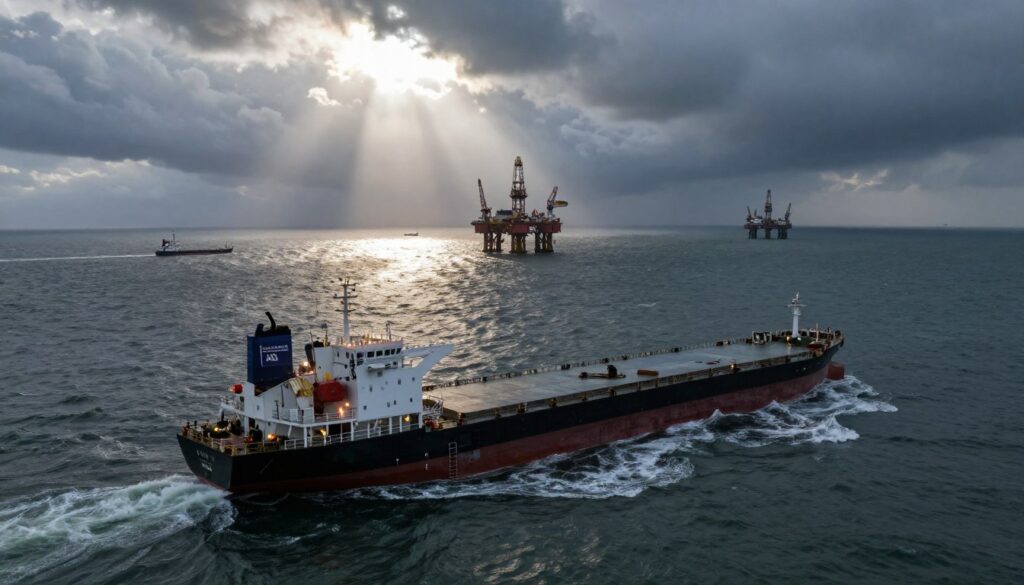
Global trade depends on key points that keep resources flowing. Keeping these areas safe is key to avoiding supply chain failures. Most of the world’s energy travels by sea, not by land.
Places like the Strait of Malacca and the Suez Canal are important backups. But they’re almost full. Moving more ships to these spots can cause big delays. Shippers need to be efficient in these tight spaces.
The Role of the Bab-el-Mandeb Strait
The Bab-el-Mandeb Strait connects the Red Sea to the Gulf of Aden. It’s a key spot for ships going to Europe. But, trouble in this area can make energy markets shaky.
Any danger here means ships have to go around the Cape of Good Hope. This makes trips longer and uses more fuel. Keeping this area safe is key to our energy security.
Future Shipping Developments
The industry is working on new ways to keep energy flowing. International shipping concerns are leading to bigger, more flexible tankers. There’s also a focus on building projects that avoid single points of failure.
Looking further ahead, we’re planning for stronger pipeline networks. These would go around risky sea areas. Investing in better infrastructure helps keep markets stable, even when there are conflicts.
Environmental Considerations
The Strait of Hormuz crisis is more than just an economic issue. It poses a serious threat to our environment. Military instability in the Persian Gulf has far-reaching effects. Protecting civilian infrastructure is key for both economic and environmental reasons.
Risks of Oil Spills
The area is packed with energy infrastructure, making it a high-risk zone for disasters. If conflict damages tankers or platforms, oil spills could be devastating. Stopping such spills in a busy shipping lane is a huge challenge.
Big leaks would overwhelm cleanup efforts in the region. The damage to coastal areas would last for decades. Such events would disrupt global supply chains and harm the landscape forever.
Impact on Marine Life
The Persian Gulf has many marine ecosystems that are sensitive to pollution. An oil spill could harm coral reefs, seagrass beds, and endangered species. The underwater world’s balance is at risk due to human actions.
Oil spills would also disrupt food chains, affecting local fisheries. The loss of biodiversity is a hidden cost of conflict that gets little attention. Saving these habitats is vital for the sea’s health.
Climate Change Dialogue
The crisis shows we need to move faster to sustainable energy. Relying on unstable regions for oil is risky. Switching to renewable energy can reduce these risks.
This crisis reminds us that our energy choices affect global climate goals. Cutting our oil use can prevent future environmental disasters. Investing in green tech helps ensure security and protects the environment.
Public Perception and Media Coverage
Media coverage plays a big role in how Americans see the Strait of Hormuz’s instability. The stories about this area change with each news outlet. By looking at these changes, we learn how news reaches us.
How the Crisis is Portrayed in News
Big news groups often talk about the global economy impact in their reports. They focus on how supply chain issues and energy market swings might affect us. It’s key to understand that this can make people feel like something urgent is happening.
The Role of Social Media
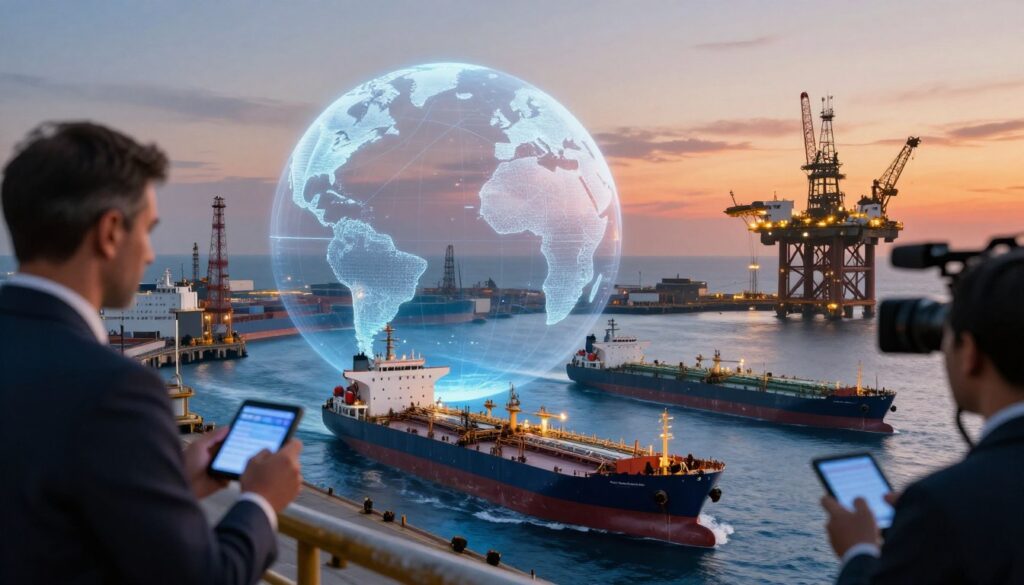
Social media has changed how we get news about sea conflicts. News spreads fast on these platforms, sometimes without checks. This lets many views come out, but it also means more chance of false information.
Viral content usually aims to grab our feelings, not give detailed analysis. This makes it hard for people to understand the real situation. Digital platforms help spread awareness but also raise public worry.
Influence on US Public Opinion
What Americans think about fuel prices is closely linked to how stable they feel. When international shipping concerns are in the news, people feel it directly. This feeling often leads to calls for action from leaders.
The media’s way of telling these stories shapes our politics. Public opinion drives government decisions when things are unclear. Knowing how media works helps us see how the crisis affects more than just energy markets.
Conclusion and Outlook
The stability of the Strait of Hormuz is key for the global economy. It’s a major route for one-third of the world’s seaborne fertilizer trade. This shows how important regional stability is for our food and energy needs.
Long-term Consequences
Instability in the Strait can harm supply chains far from the Persian Gulf. It makes investors and businesses worldwide uncertain. This leads to higher costs and unpredictable delivery times.
Potential Resolutions
Peace needs a clear path to calm and fixing key infrastructure. Better Iran-US relations are essential for lasting peace. Open talks are the best way to avoid accidents in these busy waters.
The Future of Global Oil Supply
Our energy future relies on strong maritime security everywhere. We need global cooperation to keep the Strait safe. Share your ideas on how to balance interests for a steady flow of resources.