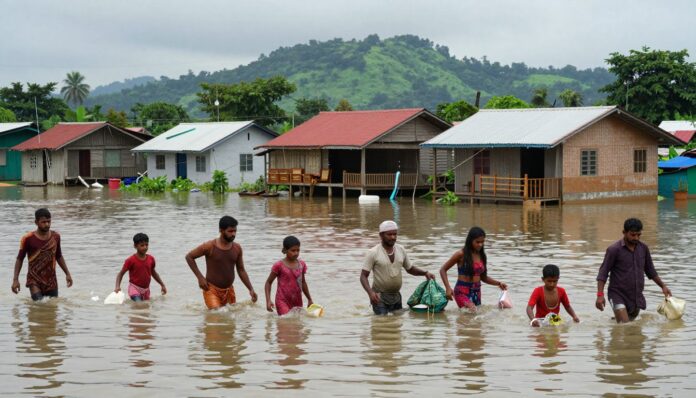
Recent severe flooding has left a lasting impact on Bangladesh’s Sylhet division, particularly in Sunamganj, where families are struggling to rebuild homes destroyed by rising waters. The disaster has exposed deep socioeconomic vulnerabilities in the region and underscored the need for urgent, long-term solutions.
The Unfolding Crisis
Sunamganj’s low-lying geography makes it highly susceptible to flooding. The area acts as a natural basin, collecting water from surrounding hills. During the monsoon season, rivers often cannot drain water fast enough, leading to widespread overflow. Even moderate rainfall can trigger rapid flooding, isolating communities within hours.
The latest surge caught many residents off guard, turning roads into rivers and cutting off communication. Emergency response teams and volunteers worked to reach affected villages, but the scale of the disaster strained available resources.
Thousands of families were forced to abandon their homes, leaving behind crops, livestock, and belongings. Many are now living in temporary shelters. The displacement has broken community ties and created a profound sense of loss. For many, the transition from self-sufficient living to reliance on aid has been difficult.
The psychological toll has been significant. Children and the elderly have been particularly affected by the trauma of losing their homes. Mental health support is increasingly recognized as essential alongside physical relief efforts.
Health Risks
The floods caused extensive damage to infrastructure. Schools and community centers were destroyed, disrupting education and social support systems. Many families now lack access to basic services.
Sanitation systems failed in many areas, leading to contaminated water and a rise in waterborne diseases. Medical facilities are struggling with shortages of supplies, making it difficult to treat illnesses effectively. Mobile medical teams have been deployed, but demand often exceeds available resources.
Agriculture is the backbone of Sunamganj’s economy. The floods destroyed large areas of Boro rice crops, threatening food security and the livelihoods of small-scale farmers. Many families who depend on farming for income now face uncertainty about the next planting season.
The loss of this key harvest is not only an economic blow but also a threat to local nutrition. Small-scale farmers are particularly vulnerable, with limited resources to recover from such setbacks.
Both government and grassroots organizations mobilized quickly. The government provided dry food, clean water, and emergency shelter. However, damaged roads and submerged areas made distribution challenging.
Local networks played a vital role where large-scale aid was slow to arrive. Neighbors shared resources and sheltered those who lost everything. Volunteers used their knowledge of the terrain to reach remote villages that larger vehicles could not access.

As floodwaters recede, attention is shifting from emergency relief to long-term recovery. Rebuilding homes remains difficult due to the high cost of materials. Many families lack the resources to reconstruct without significant external support.
Experts recommend building flood-resilient homes using elevated structures and water-resistant materials. Restoring essential utilities such as power and clean water systems is also a major priority, but the process is slow and expensive.
The floods have caused a serious disruption to education. Many schools were damaged or destroyed, forcing students into temporary learning spaces that often lack proper resources. Some families, facing economic hardship, have pulled children out of school to help with recovery efforts. There are concerns that many students may not return once the immediate crisis passes.
The Sylhet division is experiencing more frequent and intense flooding, a trend linked to changing weather patterns associated with climate change. Warmer air holds more moisture, leading to heavier rainfall and faster flooding in low-lying areas.
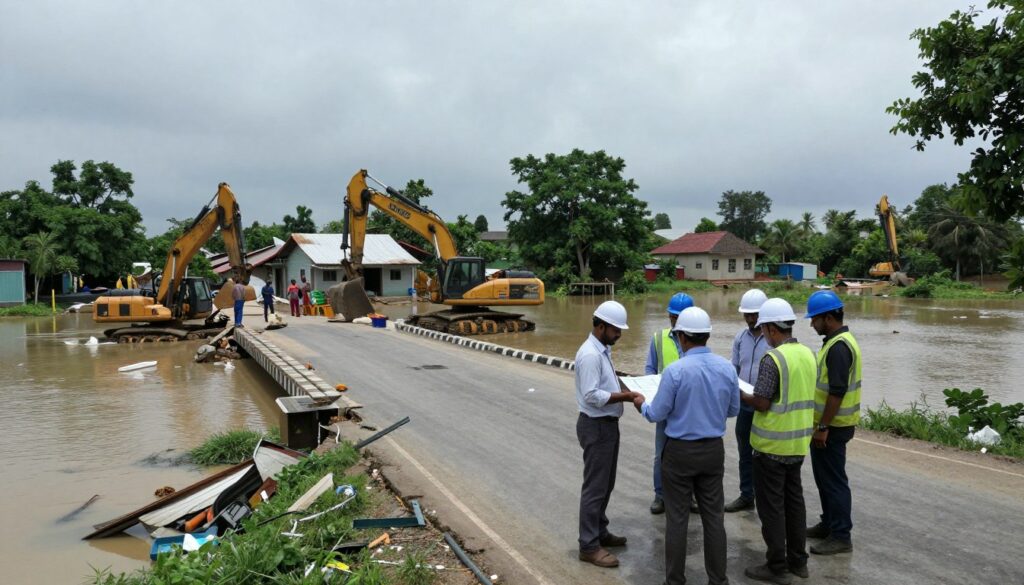
Local and national authorities are exploring ways to build greater resilience. This includes improved water management systems, better early warning mechanisms, and infrastructure designed to withstand future floods. Sustainable rebuilding methods that combine modern engineering with local knowledge are being considered.
Path Toward Long-Term Recovery
Sunamganj is at a critical point. Recovery efforts must go beyond immediate relief to create stronger, more resilient systems.
This includes better storage facilities for crops, improved transportation networks, and stronger community support structures.
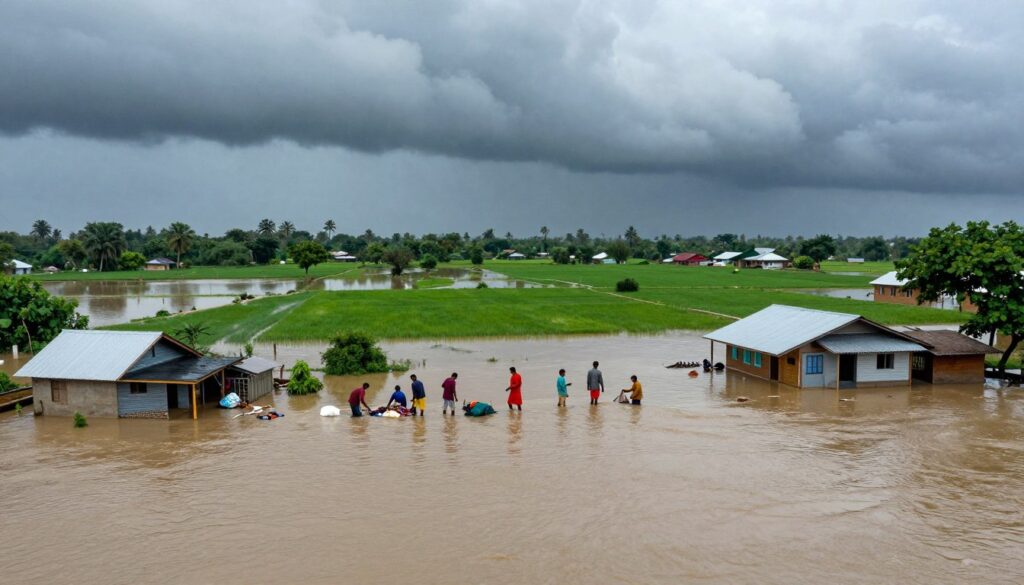
By addressing both immediate needs and long-term vulnerabilities, authorities and aid organizations hope to reduce the impact of future floods.
The crisis in Sylhet division serves as a reminder of the growing challenges posed by climate change in Bangladesh and the importance of proactive planning.