Global energy markets depend on a narrow waterway. This waterway connects the Persian Gulf to the open ocean. It’s a critical chokepoint for the world economy.
When tensions rise in this area, energy prices often change. This affects households across the United States.
Recent geopolitical friction has put a lot of pressure on this maritime route. Many experts wonder if international diplomacy can lower these risks. They ask if it can ensure safe passage for commercial vessels.
Finding a lasting solution needs careful negotiation. It also requires a commitment to regional stability.

Understanding The Future of the Strait of Hormuz means looking at how nations balance their security needs. We aim to explore these complex dynamics in a friendly and accessible way.
Key Takeaways
- The waterway acts as a vital artery for global oil supplies.
- Regional tensions frequently threaten the stability of energy markets.
- Diplomatic efforts remain essential for maintaining open shipping lanes.
- Global powers must balance security interests with economic needs.
- Long-term resolution requires sustained cooperation between neighboring states.
Current State of the Strait of Hormuz
Recent events in the Persian Gulf have made its security a major concern worldwide. This area is key for global trade, and keeping it stable is a priority. Maintaining open transit is vital for the global economy’s health.
Recent Maritime Tensions and Vessel Seizures
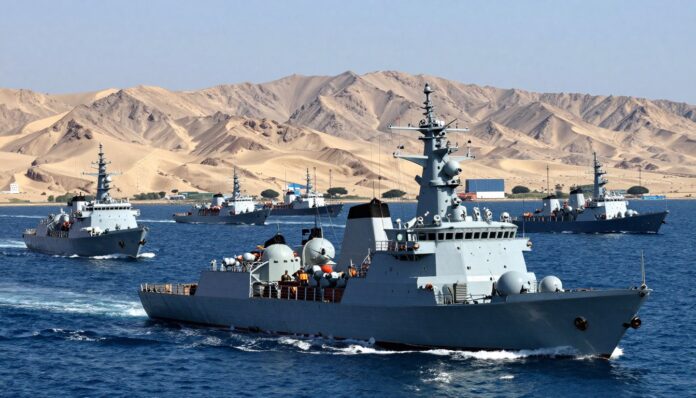
The region has seen a rise in vessel seizures, which challenge international navigation rules. These incidents involve detaining commercial tankers, causing worry for shipping companies and insurers. This has led to a focus on Persian Gulf maritime security to stop more disruptions.
These actions are seen as part of a larger strategy to create tension in the area. When ships are targeted, it affects markets worldwide. So, international groups are working to keep these waters open to all legitimate ships.
The Current Military Posture in the Persian Gulf
The United States has increased its presence in the region to tackle these challenges. This military posture in the Gulf aims to stop aggression and quickly respond to threats against ships. The deployment includes a mix of assets to keep order.
The mission, called Project Freedom, uses a wide range of defensive tools. Key parts of this effort include:
- 15,000 service members stationed to support regional stability.
- Advanced guided-missile destroyers for enhanced naval patrol.
- Over 100 land and sea-based aircraft for aerial surveillance.
- Multi-domain unmanned platforms to monitor maritime activity.
This strong military posture in the Gulf shows the commitment to international law. By using these diverse assets, the coalition aims to protect Persian Gulf maritime security and ensure safe energy transport. These steps are key to avoiding more conflict in this tense area.
The Strategic Importance of the Global Energy Corridor
The Strait of Hormuz is a key spot in the global economy. It’s the main global energy corridor. It connects the Middle East’s oil and gas to the world. Without it, resources wouldn’t move, affecting every continent.
Volume of Oil and Liquefied Natural Gas Transit
Millions of barrels of oil and LNG pass through daily. This flow is a vital lifeline for the world’s economy. It powers industries and homes from Asia to the Americas.
The economic impact of oil transit is huge. Delays or blockages put pressure on the supply chain. This shows why keeping lanes open is critical.
Impact on Global Energy Markets and Price Volatility
Stability issues in this area cause energy market volatility. Traders watch the Strait closely. Even small tensions can raise oil prices quickly.
These changes affect us at the gas pump and in bills. Disruptions lead to energy market volatility. Keeping the corridor safe is key for the global economy.
Analyzing The Future of the Strait of Hormuz
The future of the Strait of Hormuz is a big question for global energy and sea policy. As tensions change, experts use advanced tools to guess what might happen next. Knowing this helps keep resources flowing to the world.
Predictive Modeling for Regional Stability
Predictive modeling helps see possible futures by mixing lots of data. Analysts watch naval actions and talks to guess geopolitical stability. They find that war is costly, which keeps big powers from fighting.
Strategic foresight helps leaders get ready for different situations. They can spot early signs of trouble. This way, they can stop big problems before they start. Keeping the waterway open for trade is key.
The Intersection of Geopolitics and Maritime Law
Keeping the sea safe in the Persian Gulf is hard because of different interests. International laws say ships can sail freely, but applying them is tricky. Countries often see laws through their own lens.
This mix of law and power is complex. To keep things stable, countries need to balance strict law following with smart diplomacy. The future of the Strait of Hormuz depends on if countries can agree on maritime law enforcement despite their differences.
Recent Escalations and Maritime Security Incidents
The Persian Gulf has seen a lot of tension between countries. Keeping the Persian Gulf maritime security safe is key for global trade. But, the area faces many challenges from different interests.
These issues can affect energy prices and shipping insurance rates all over the world.
Chronology of Recent Tanker Interdictions
In the last few years, tanker interdiction events have increased a lot. These actions involve boarding or seizing commercial vessels for legal or security reasons. This disrupts the flow of oil and gas, worrying international shipping companies.
The pattern of these interdictions shows a plan to pressure regional rivals. Each incident makes maritime operators think about their routes and safety plans. Maritime law enforcement agencies find it hard to keep up in such a small waterway.
Responses from International Maritime Organizations
Global groups have asked for calm and following international navigation laws. But, these calls often face challenges from the changing political scene. Ebrahim Azizi, the head of Iran’s parliament security committee, has warned about this.
He said any American action in the Strait of Hormuz’s new rules will be seen as a violation of the ceasefire. This shows how hard it is to have neutral oversight in a place full of mistrust. Diplomatic efforts are weak as countries see maritime rights differently.
The Role of the United States in Regional Stability
The Gulf’s security gets a boost from the U.S.’s strong military posture in the Gulf and teamwork on defense. The U.S. keeps a steady presence to stop aggression and keep energy routes open. This effort is key to keeping peace in a critical maritime area.
Naval Presence and Freedom of Navigation Operations
The U.S. Central Command (Centcom) is key in enforcing maritime law. Centcom has said it will support Project Freedom to safeguard shipping lanes. This move supports freedom of navigation, making sure ships can pass through the Strait of Hormuz safely.
A strong US naval presence stops possible threats at sea. The U.S. shows its commitment by using many military resources. These efforts are important for several reasons:
- Keeping global energy supplies flowing.
- Stopping illegal vessel seizures and harassment.
- Supporting the rules-based international order.
- Being ready to respond quickly in crises.
Strategic Alliances with Gulf Cooperation Council Members
The U.S. also teams up with the Gulf Cooperation Council to build a united front. These partnerships help share intelligence and plan responses to security threats. Together, they make the military posture in the Gulf stronger.
Working together, the U.S. and the Gulf Cooperation Council focus on lasting stability. They do joint training and use shared communication to defend the region. This teamwork is key to keeping freedom of navigation and protecting everyone’s economic interests.
In the end, the US naval presence is essential for security. By building strong relationships with regional partners, the U.S. helps make the area more stable. This approach is the best way to secure the Strait of Hormuz’s future.
Diplomatic Channels and Multilateral Negotiations
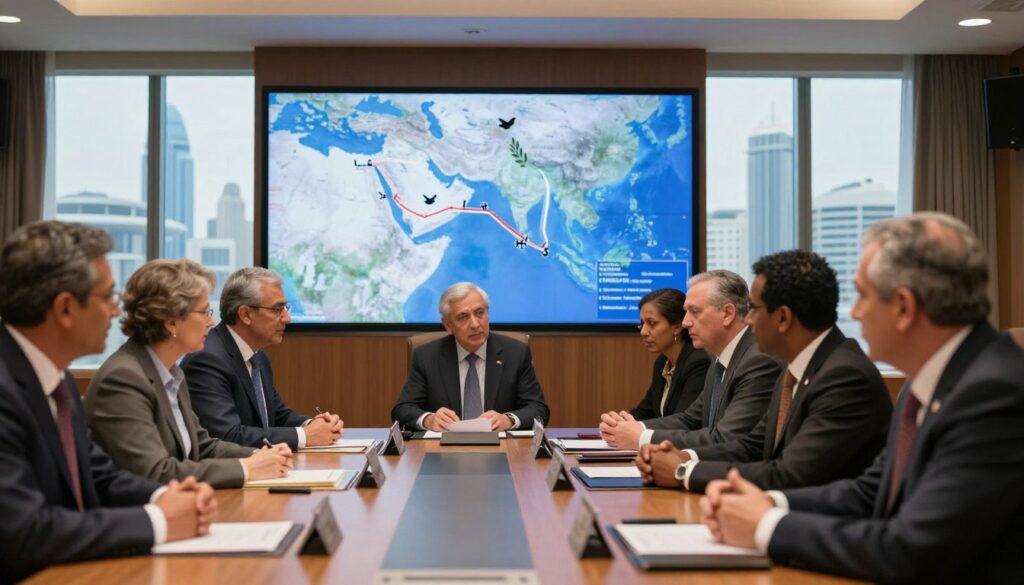
Behind the scenes, quiet talks are shaping the future of maritime safety in the Persian Gulf. Military actions get the headlines, but international diplomacy is key to preventing more trouble. The fragile ceasefire has lasted three weeks, giving the world a cautious sense of relief.
Back-channel Communications and De-escalation Efforts
Key players are using back-channel negotiations to keep things calm. These private talks allow for honest conversations that can’t happen in public. They help prevent misunderstandings from turning into conflicts.
This method is vital for keeping geopolitical stability in a volatile area. Direct talks between leaders lower the chance of mistakes during naval patrols. These efforts are the silent engine driving the current calm.
The Future of a Regional Security Framework
There’s a growing idea that a formal regional security framework is needed. Relying only on outside powers is seen as a short-term fix. A system that includes the Gulf Cooperation Council members could bring a lasting balance of power.
A joint effort would share the responsibility for maritime safety. It would build trust among neighbors, permanently lowering tensions in the Strait. Creating this cooperation is tough, but it’s the best way to ensure lasting security for everyone.
Regional Power Dynamics and Iranian Influence
The Strait of Hormuz is a key spot for big power plays. It’s not just a path for ships; it’s where big interests meet every day. To understand what’s happening, we need to see how each side uses its power.
Tehran’s Strategic Objectives in the Strait
Iran sees its role in the Persian Gulf as key to its safety. It wants to keep control over the world’s oil by growing its Iranian maritime influence. It does this by stopping tankers, seen as a way to fight back against sanctions.
But, how Iran acts is seen differently by others. For example, former President Donald Trump called a certain action a humanitarian gesture. This shows how different countries see the same events in different ways.
The Balance of Power Between Regional Rivals
The area is full of rivalries, but there’s a balance. Many are looking at a regional security framework to avoid war. This would help by talking things out instead of fighting.
But, these talks often happen in secret. Back-channel negotiations are key to keeping things calm. Whether these talks work will decide the Strait’s future in a busy sea.
Economic Impacts of Possible Blockades
Imagine a world where the main artery for global energy stops. A Strait of Hormuz blockade would be a disaster for the world economy. This narrow passage is the most critical spot for oil and gas.
Supply Chain Disruptions and Insurance Premiums
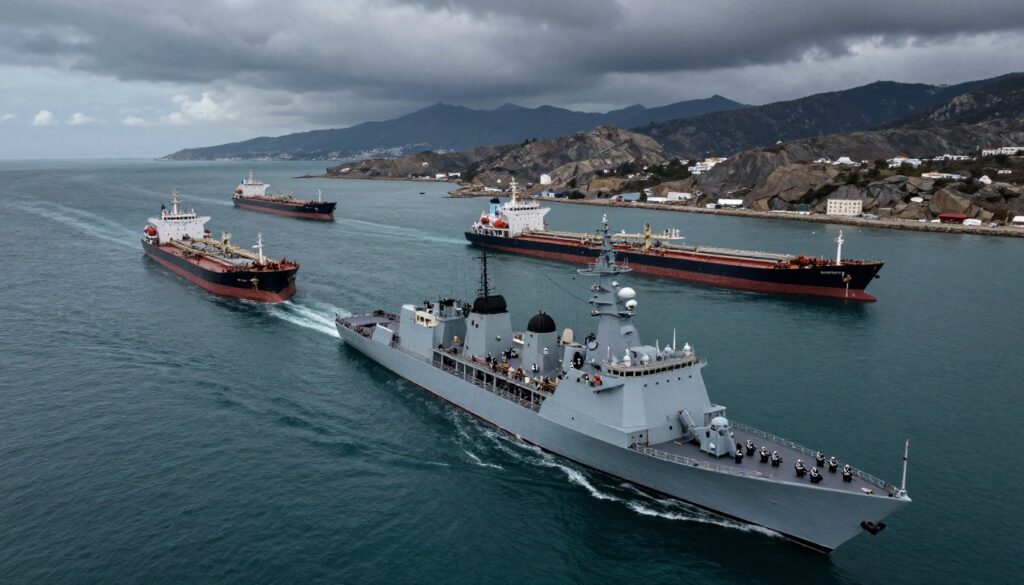
When tensions rise, shipping costs go up. Iranian maritime influence makes it hard for ships to pass safely. This leads to higher insurance costs for everyone.
These costs affect the whole supply chain. It makes fuel and goods more expensive. Global trade efficiency needs stable costs and times. Without it, the logistics network struggles.
Long-term Consequences for Emerging Economies
Emerging nations are hit hard by market changes. They often can’t handle sudden energy market volatility. High energy prices slow their growth, causing inflation and unrest.
The economic impact of oil transit disruptions can delay development. These countries need cheap energy to grow. Without it, their economic journey gets harder.
Keeping this region stable is a global necessity. It’s not just about oil prices. It’s about keeping the world economy running for everyone. We must work together to keep these waters safe.
Alternative Routes and Energy Diversification Strategies
The global energy corridor is seen as vulnerable. This has led to a search for safer ways to transport energy. Policymakers worry about a Strait of Hormuz blockade affecting markets worldwide. They aim to protect their economies by creating new energy networks.
Pipeline Infrastructure Projects in the Middle East
Countries are building new Middle East pipeline infrastructure to avoid the narrow Strait of Hormuz. These pipelines take oil and gas to the open sea, avoiding the Persian Gulf. This is a key safety measure for exporters.
Some major projects include:
- The East-West Pipeline in Saudi Arabia, connecting eastern oil fields to the Red Sea.
- The Habshan-Fujairah pipeline in the UAE, for exporting crude to the Gulf of Oman.
- Expanding storage facilities to keep supplies flowing during disruptions.
- Agreements to share pipeline space among neighboring countries.
The Shift Toward Renewable Energy and Reduced Dependency
The renewable energy transition is a long-term answer to maritime risks. By using solar, wind, and hydrogen, countries need less fossil fuel. This move is good for the planet and for energy security.
Less oil means a stronger energy system. Local power generation makes a country less vulnerable to global issues. Investing in green tech means a future based on sustainable and domestic resources, not on risky sea routes.
Navigating the Path Toward Long-Term Maritime Security
Keeping the Strait of Hormuz safe needs a mix of quick fixes and long-term plans. A steady US naval presence is key to keeping the peace in these critical waters. This helps keep global trade flowing smoothly every day.
It’s also important to work on diplomacy to ease tensions in the area. Building better pipeline systems in the Middle East is a big step. It makes it easier to send oil and gas without relying on one main route.
The world is moving toward cleaner energy, which will change how we get our oil. As we use more renewable energy, we’ll need less oil from the Persian Gulf. This shift helps protect us from sudden changes in the region.
Creating a stable future requires teamwork from around the world. We want to hear your ideas on how to make global energy safer. Your input helps us tackle the challenges of our connected world.