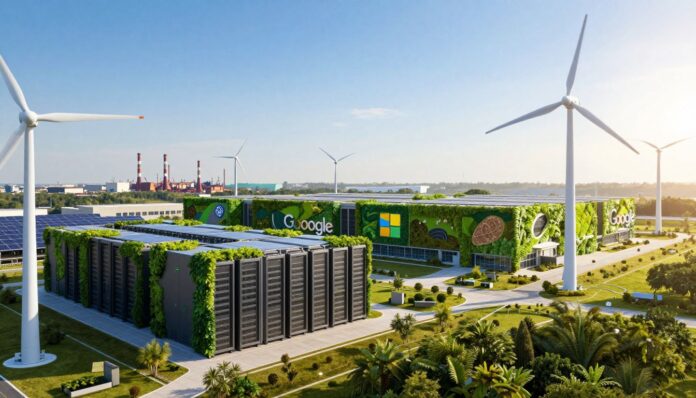
The rise of artificial intelligence has led to a huge need for digital infrastructure in the U.S. Tech giants are growing fast, and their server farms’ environmental impact is a big issue. Microsoft and Google are racing to find better ways to power these huge facilities.
This move towards Sustainable Computing is not just a goal; it’s a must. Both companies are changing how they use Data Center Energy to meet climate goals and stay ahead in innovation.
This competition shows a big challenge: growing tech vs. caring for the planet. As these leaders explore new energy sources, everyone is watching to see who will lead in responsible infrastructure. Who manages Data Center Energy best will likely rule the digital world for the next decade.
The Escalating Energy Demands of Generative AI
As generative AI models get more complex, they need a lot more electricity. This isn’t just a short-term increase. It’s a big change for tech companies and their data centers. They need a lot of energy to process these models, which is hard for the grid to handle.
The Shift Toward Massive Compute Clusters
Companies are moving to massive compute clusters for generative AI. These clusters have thousands of high-performance GPUs in one place. This creates big challenges for managing heat and power.
Old server farms weren’t made for this. Now, they need a complete redesign of their setup. Engineers must fit in special hardware and make sure power systems can handle it. This change is key for keeping up with modern AI needs.
Infrastructure Requirements for Large Language Models
Large language models need special hardware that uses a lot of electricity. They also need to cool down because they get very hot. So, data centers are using advanced cooling systems to keep things running smoothly.
They also need uninterrupted power to avoid downtime during long training sessions. This means they look for places with reliable energy and strong grid connections. As AI keeps growing, finding a balance between power and sustainability will be key.
Microsoft and Google: Divergent Paths to Carbon Neutrality
Microsoft and Google lead the tech world but have different ways to fight climate change. They both see the urgent need to reduce carbon emissions. Yet, they use different methods to do so, showing a big debate in the tech world.


Microsoft’s Investment in Carbon Removal Technologies
Microsoft is leading by focusing on removing carbon from the air, not just cutting emissions. They know some old emissions are hard to get rid of with today’s green energy. So, they’re spending big on new tech to capture CO2 from the air and plants.
They want to be carbon negative by 2030. By backing startups that remove CO2, Microsoft aims to balance out the energy needed for their big data centers. This shows their serious effort to fix their past environmental harm.
Google’s Focus on 24/7 Carbon-Free Energy Matching
Google is focusing on making the power grid clean all the time. They aim for 24/7 carbon-free energy matching for every hour they run. This is different from just buying renewable energy credits for the whole year.
Google uses smart data to make sure their data centers run on clean energy right when they need it. This granular approach means working closely with local power companies to keep the grid stable. Google thinks making the whole energy market always clean is the best way to be carbon neutral.
The Core Conflict: Defining Sustainable Computing
The journey to sustainable computing is clouded by a lack of agreement. Tech giants often talk about their green efforts, but their methods differ. This makes it hard to know which cloud providers really help the environment.
Differing Methodologies for Measuring Environmental Impact
Companies use their own ways to measure carbon footprints, leading to varied reports. Some focus on emissions from operations, while others look at the whole supply chain. This makes it hard to compare the environmental impact of different cloud providers.
Without a common way to report, the tech world finds it hard to be open with investors and regulators. Consistency is key in today’s digital world. Until everyone agrees on how to measure sustainability, doubts will linger.
The Debate Over Renewable Energy Credits Versus Direct Procurement
The use of renewable energy credits (RECs) is a big issue. Some say RECs let companies seem green without really adding to the clean energy mix. This is seen as more of a financial trick than a real step towards clean energy.
On the other hand, buying power directly from new renewable projects is seen as more genuine. This way, companies help create more clean energy just for their needs. It shows a real commitment to clean energy.
These different ways of measuring success lead to mixed messages. One company might brag about buying lots of credits, while another focuses on building new clean energy projects. This debate shows how hard it is to make the tech world truly sustainable.
Data Center Proximity and Grid Strain
Building the next AI generation needs more than just tech. It requires a new way to choose where to build. As big tech companies grow, picking the right spot for new sites is key to managing energy needs.
The Challenge of Locating Facilities Near Power Sources
Choosing the right site is tricky. It must be close to green power and fast internet. Companies look for places near dams or wind farms for clean energy.
But, these spots often lack the strong power lines needed for big operations. This makes it hard to get power to these sites. Developers might have to spend a lot on grid upgrades.
Regional Grid Stability and the Impact of Hyperscale Demand
The fast growth of Hyperscale Demand is stressing electrical grids in the U.S. A big facility can pull hundreds of megawatts, causing problems for the whole grid.
Grid managers must balance supporting growth with keeping the grid stable. Without careful planning, too many big sites could lead to power shortages. This would hurt local businesses and communities.
Water Consumption and Cooling Efficiency
Energy usage gets a lot of attention, but the environmental impact of cooling server racks is also key. Tech giants need a lot of hardware for artificial intelligence, which makes a lot of heat. Air cooling can’t keep up with the heat in these big facilities anymore.
The Hidden Environmental Cost of Liquid Cooling
Data centers are switching to liquid cooling to handle the heat. This method is great at cooling, but it uses a lot of water. This means saving electricity comes with using a lot of water.
Using a lot of water for cooling is hard on local resources, like in areas with droughts. Companies must balance fast computing with saving water. If not managed well, cooling systems could harm the environment and company climate goals.
Regulatory Pressures on Data Center Water Usage
Local and state officials are worried about the water used by big data centers. They’re setting limits on industrial water use to keep water for everyone. This makes companies think about new cooling systems.
Not following these rules can lead to trouble. Companies must find new ways to cool to avoid delays and extra checks. Water efficiency is as important as saving energy in making green data centers.
Corporate Lobbying and Energy Policy Influence
As energy needs grow, companies like Microsoft and Google are stepping up. They’re not just buying power; they’re shaping the laws that govern it. They see a stable, green power supply as key to their growth. So, they’re getting involved in making laws to meet their needs.

Shaping State and Federal Energy Regulations
Big tech firms talk to lawmakers to push for policies that help them. They lobby at both state and federal levels to support renewable energy. They say current rules don’t keep up with the fast pace of tech.
They focus on making rules that let them buy power in flexible ways. By shaping energy policy, they aim for a steady power supply for their big data centers. This effort helps them deal with complex rules and promotes cleaner energy.
Public-Private Partnerships in Grid Modernization
Big tech companies are also teaming up to improve the power grid. These partnerships are key for fitting in the high energy needs of data centers with old infrastructure. They work on making the grid stronger and supporting a shift to decentralized power.
These partnerships involve investing in new transmission tech and smart grid software. By teaming up with utilities, tech firms speed up the use of innovative solutions for the energy system. This teamwork is critical for keeping the grid stable as more people turn to renewable energy.
The Role of Nuclear Energy in Tech Infrastructure
Big tech companies are looking into nuclear energy for reliable, green power. As they grow their data centers for AI, they need constant electricity. Wind and solar can’t always provide the steady power needed for huge computer systems.
Microsoft’s Interest in Small Modular Reactors
Microsoft sees Small Modular Reactors (SMRs) as a key solution. These reactors are compact and scalable, making them perfect for data centers. They want a steady power supply that doesn’t rely on the public grid’s ups and downs.
This move helps Microsoft control its energy needs better. Using SMRs, they can avoid grid issues that slow down big projects. This keeps their growth in line with their green goals.
Google’s Strategy for Integrating Advanced Geothermal and Nuclear
Google is mixing nuclear energy with clean power sources like geothermal. They aim for a strong, varied energy mix. This multi-faceted approach keeps their global operations carbon-free.
Google is pushing the limits of grid modernization with these new techs. They want to show that clean, firm power can power high-demand computing. This shows the race among tech leaders to make the digital world more sustainable.
Supply Chain Transparency and Scope 3 Emissions
To reach true Carbon Neutrality, we must look beyond just the energy used in data centers. The biggest part of a company’s impact often lies in its supply chain.
Scope 3 emissions cover the whole life of hardware, from raw material extraction to global shipping. Each step has an environmental cost that’s hard to measure.
Tracking the Carbon Footprint of Hardware Manufacturing
Creating high-performance chips and server racks uses a lot of energy. Transparency in this area is a big challenge. Many parts come from a complex network of global suppliers.
Companies need to work with manufacturers to see how their products are made. By tracking these emissions, they can understand the real environmental cost of their Cloud Infrastructure.
Accountability Standards for Cloud Service Providers
Setting clear accountability standards in tech is a big challenge. Right now, there’s no global standard for reporting indirect environmental impacts.
This makes it tough for people to compare how green different companies are. The industry needs to adopt rigorous, standardized reporting frameworks. This way, claims of being green can be proven with real data.
Investor Pressure and ESG Reporting Requirements
Shareholders are now active in pushing for sustainable computing. They want tech giants to be open about their energy use. This change makes companies focus on strict Environmental, Social, and Governance (ESG) standards.
How Shareholders Influence Energy Procurement Decisions
Big asset managers are using their votes to push for clean energy. They see sustainable energy procurement as a sign of good management. This way, they make sure Hyperscale Demand doesn’t harm the environment too much.
Companies must share their plans to use more renewable energy. This openness lets everyone see if leaders are making the right energy choices. So, companies are moving from traditional energy sources to cleaner ones.
The Financial Risks of Failing Sustainability Targets
Not meeting environmental goals can shake the market for tech stocks. Investors are careful about companies that don’t follow Energy Policy changes. If a company misses its goals, it might lose trust and money from big investors.
Also, dealing with Scope 3 Emissions is risky. If a company can’t track its indirect carbon footprint, it could face fines and lose investor trust. Proactive sustainability management is key to staying competitive in the cloud market.
Technological Innovations in Energy Efficiency
The quest for sustainable data centers is driven by new thermal management and hardware designs. As power needs soar, engineers are exploring advanced systems to cut waste. These innovations are key to balancing high-performance computing with environmental care.
Advancements in AI-Driven Cooling Optimization
Old cooling methods can’t handle the heat from today’s server racks. Generative AI helps facility managers predict and prevent thermal spikes. This lets them make exact adjustments to airflow and temperature, cutting down energy use.
The move to Liquid Cooling is a big leap for dense environments. Liquid cooling transfers heat better than air, keeping hardware safe and using less power. This innovative technology is a big step forward.
Hardware Efficiency Gains in Next-Generation Chips
Processor design is also evolving. Companies are working to boost performance per watt. This is essential for handling the big tasks of today’s software.
New chips tackle complex tasks with less power. By improving silicon design, companies lower their data center’s carbon footprint. This focus on smarter hardware is a big step toward sustainability in tech.

The Future of Cloud Infrastructure and Environmental Stewardship
Microsoft and Google are leading the charge to make our digital world greener. They know that growing fast means changing how they power their huge systems.
For them, success means using less energy while keeping artificial intelligence strong. This is key to making Cloud Infrastructure work for the long haul.
Nuclear Energy could be the answer for clean, steady power for data centers. It’s a reliable source that wind and solar can’t always be. Using this tech is essential for meeting climate goals.
Being open about environmental efforts through ESG Reporting is also critical. Investors want to see how companies are cutting carbon and using energy wisely. This push for transparency helps make the industry better.
The future needs both new ideas and strict rules. Tech leaders must keep improving to protect our planet. Your thoughts on these energy choices are important as we move toward a greener future.