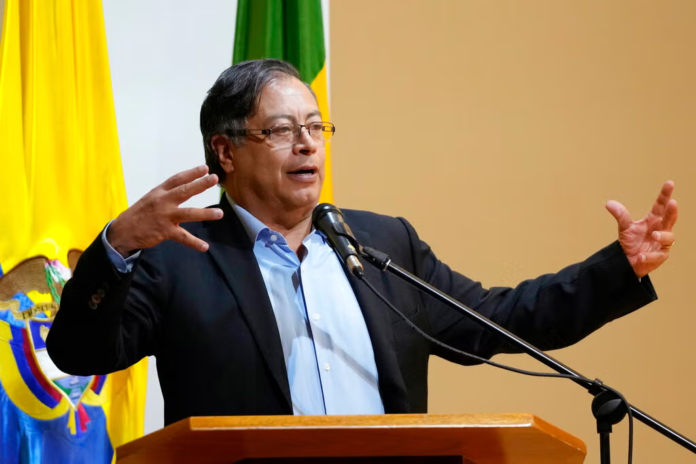
BOGOTÁ — Colombia elected former rebel fighter and veteran senator Gustavo Petro as its first left-wing president in a landmark 2022 vote that reshaped the country’s political landscape after generations of conservative and centrist rule.
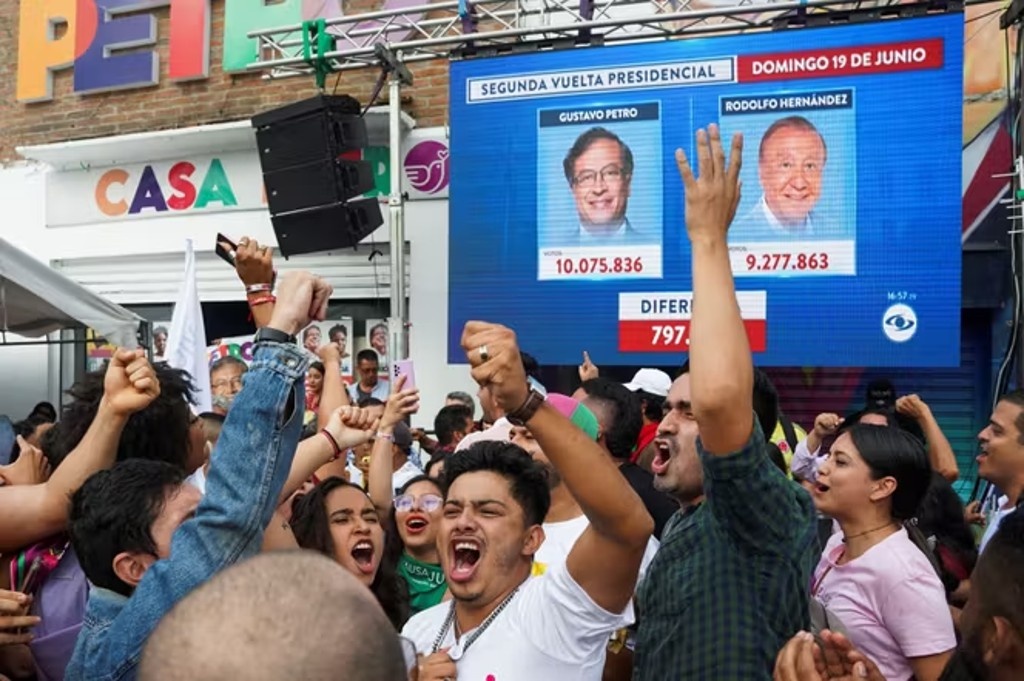
Petro won the June runoff election with just over 50 percent of the vote, defeating businessman Rodolfo Hernández after a bitterly fought campaign dominated by anger over inequality, corruption, insecurity, and soaring living costs.
The result was widely viewed as one of the most significant political shifts in modern Colombian history, reflecting a growing rejection of traditional elites and a demand for structural economic change.
A Break With Colombia’s Political Tradition
For decades, Colombia stood apart from many Latin American neighbors by never electing a left-wing president through democratic vote. Deep memories of guerrilla warfare, kidnappings, bombings, and ideological conflict had long made national voters wary of candidates associated with the left.
Petro’s victory signaled that those political instincts had changed.
Millions of younger voters, urban residents, lower income families, and Colombians frustrated by stagnant wages and weak public services rallied behind his promise of a more interventionist state and a fairer economic model.
Years of anti-government protests, especially demonstrations in 2019 and 2021 over tax proposals, police violence, and inequality, helped create the environment that made Petro’s rise possible.
Many Colombians who had never before backed the left viewed the election less as an ideological revolution and more as a protest against the status quo.
From Rebel to President
Petro’s personal journey has long made him one of Colombia’s most polarizing political figures.
In his youth, he joined the M-19 insurgent group, a nationalist urban guerrilla organization active in the 1970s and 1980s. M-19 later demobilized, disarmed, and entered legal politics.
Petro himself moved into democratic public life, eventually serving as a legislator, senator, and later mayor of Bogotá.
As senator, he built a reputation as a sharp critic of corruption, paramilitary links, and entrenched privilege. Supporters praised him as fearless and reformist. Critics described him as divisive and ideologically rigid.
His years in opposition helped make him one of the country’s best known national figures long before his presidential win.
Campaign Promises and Economic Reform
Petro campaigned on an ambitious domestic agenda focused on reducing inequality and expanding state support for vulnerable Colombians.
He pledged to broaden social programs, strengthen education and healthcare access, and reform the tax system so wealthier citizens and corporations would shoulder a greater burden.
A major pillar of his platform was reducing Colombia’s dependence on oil and coal exports. Petro argued the country needed to transition toward renewable energy and more sustainable industries rather than relying heavily on fossil fuel revenues.
That message appealed to environmentalists and younger voters but worried investors and business leaders concerned about fiscal stability.
He also promised stronger implementation of the 2016 peace accord signed with former Farc rebels, saying Colombia could not prosper while violence continued in rural areas.
Historic Running Mate
Petro selected Francia Márquez as his running mate, making history when she became Colombia’s first Black woman vice president.
Márquez, an environmental activist and lawyer from a poor rural background, became a symbol of representation for Afro-Colombian communities and historically marginalized regions.
Her rise resonated strongly in a country marked by racial inequality, regional neglect, and deep economic divides.
For many voters, the Petro-Márquez ticket represented not only political change but a broader transformation in who could hold power in Colombia.
Celebration and Anxiety
When the results were announced, supporters flooded streets in Bogotá and other major cities waving flags, dancing, and celebrating what they called a new era.
For allies, Petro’s victory meant hope for social justice, stronger labor protections, and a government more responsive to ordinary citizens.
But opponents expressed concern over his economic plans, fears of higher taxes, and questions about how a former leftist rebel would govern a country heavily dependent on private investment and commodity exports.
Business markets reacted cautiously, and analysts predicted an immediate test between reform ambitions and economic realities.
International Reaction
World leaders across Latin America, Europe, and North America congratulated Petro after the result.
Regional observers expected his presidency to alter Colombia’s diplomatic tone, especially on climate policy, inequality, and relations with neighboring countries such as Venezuela.
Petro also entered office at a time when many Latin American nations were moving toward left-leaning governments, placing Colombia within a broader regional political trend.

Inflation was straining household budgets. Armed groups remained active in rural regions. Cocaine trafficking continued to fuel violence and corruption. Public debt and fiscal pressures limited room for spending.
Many Colombians wanted sweeping reforms, but expectations were high and patience uncertain.
Sworn In With Promise of a “Politics of Life”
Petro was formally sworn into office in August 2022 for a four-year term.
In his inaugural message, he promised to build a “politics of life,” reduce social divisions, and govern for those long excluded from opportunity.
Whether viewed as a reformer, risk taker, or historic outsider, Gustavo Petro’s election marked a turning point in Colombian democracy and the clearest sign yet that the country’s political map had fundamentally changed.