France confirmed on Wednesday the first case of Ebola detected outside the African continent in 2026. The infected individual, a humanitarian doctor who had recently returned from the Democratic Republic of Congo (DRC), was placed in isolation upon landing in Paris and transferred to a specialist hospital for treatment.
French health officials were quick to reassure the public that the situation was under control. The patient arrived on a commercial Air France flight from Kinshasa and was described as being “almost asymptomatic,” experiencing only mild headaches during the journey. His condition reportedly deteriorated slightly mid-flight, prompting swift isolation measures the moment the aircraft touched down.
France’s Ministry of Health confirmed that the patient was in a “stable condition” with a “very low” viral load, and stressed that there was no indication of local transmission. Five other passengers on the same flight were identified as potential contacts and placed in precautionary home isolation for 21 days under close medical supervision.
This marks the first time France has ever detected a case of Ebola on its own soil. While two patients were transported to France during the 2014 West African outbreak, both had been diagnosed with the disease before their arrival.
The Ebola virus responsible for the 2026 outbreak is the Bundibugyo strain, a particularly troubling variant for which there is currently no approved vaccine or treatment. The vaccines developed between 2018 and 2019 that proved effective in controlling previous major outbreaks targeted the Zaire strain and offer no protection against the Bundibugyo strain now ravaging eastern Congo.
The doctor who tested positive in France was affiliated with ALIMA (The Alliance for International Medical Action), which confirmed its staff member’s infection and said it was working to understand how the contamination occurred. Humanitarian workers operating in outbreak zones are normally required to complete a three-week quarantine before returning to their home countries.
The outbreak at the epicenter of this international alarm has been unfolding at a pace that has stunned public health experts. The DRC’s Ministry of Health declared the country’s 17th Ebola outbreak on May 15, after a cluster of unexplained deaths emerged in the mineral-rich but conflict-torn eastern Ituri province.
Since then, the virus has spread with alarming speed. As of late June, more than 1,094 confirmed cases and at least 277 deaths had been recorded across three provinces — Ituri, North Kivu, and South Kivu — making it the fastest-growing Ebola outbreak ever documented in terms of its first-month trajectory.
The United Nations warned that the outbreak is spreading at an unprecedented pace. The organization noted that it took just 37 days for the current crisis to reach 250 deaths, compared with 78 days during the devastating 2014–2016 West Africa outbreaks.
The World Health Organization and international health agencies have sought to temper global anxiety even as they scale up containment efforts. WHO Director-General Tedros Adhanom Ghebreyesus stated that the global risk from this Ebola outbreak “remains low,” a sentiment echoed by the European Centre for Disease Prevention and Control, which assessed the risk to European residents and general travelers as “very low.”
The number of treatment beds in the DRC has risen sharply in recent weeks, from a handful to over 500 beds across 19 health zones, while laboratory testing capacity has expanded from 30 tests per day at the start of the outbreak to more than 2,000 daily tests. Despite these gains, officials are candid that the outbreak continues to outpace the response, and experts warn that the peak has not yet been reached.
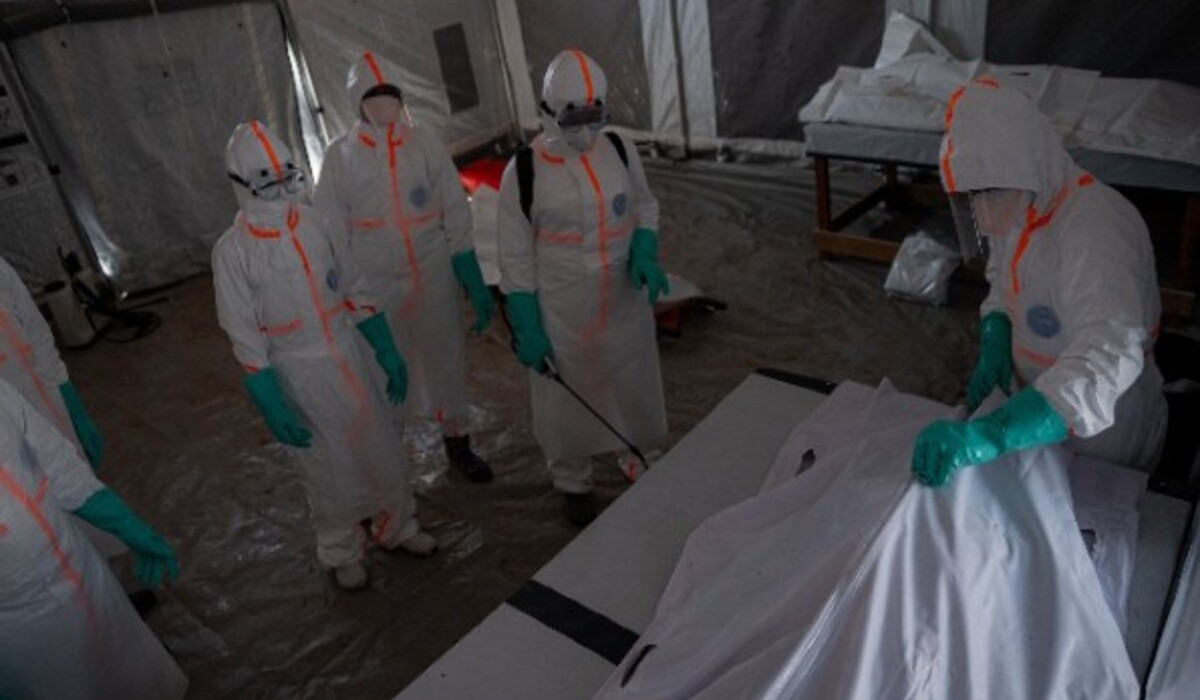

The France case comes weeks after an American surgeon who contracted Ebola in the DRC was medevaced to Germany for treatment and subsequently recovered after 17 days of intensive care, including experimental therapies. Together, these cases demonstrate that Ebola is no longer confined to remote jungle corridors. It is now expanding to the horizons of Europe and could escalate further if further actions are not taken.