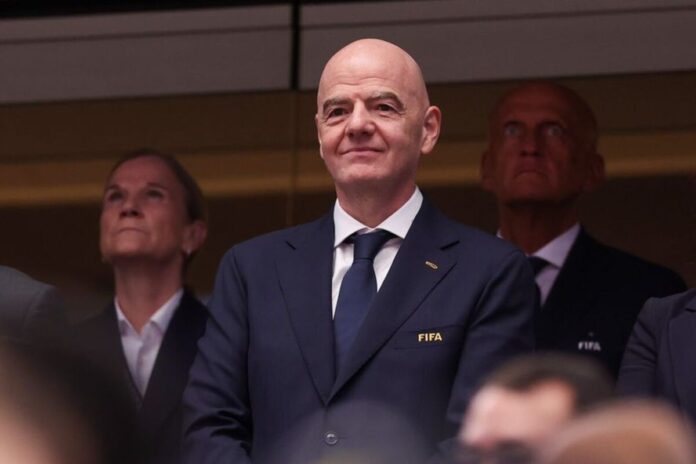
FIFA has defended its plan to bring private investment into football’s commercial machinery, declaring that “nobody is selling football” even as opposition from UEFA, CONCACAF and leagues across Europe continues to mount. In a statement issued on Friday morning, the international football governing body said it would press ahead with a consultation process on the proposal despite days of fierce criticism, insisting the backlash stemmed from confusion rather than substance.
The row erupted earlier this week after reports revealed that FIFA was exploring the creation of a new commercial entity, known internally as FIFA Forward Enterprise, that would allow outside investors to take a stake in revenues generated by tournaments including the World Cup. FIFA president Gianni Infantino has publicly backed the idea, with an investment group led by Joshua Kushner reportedly positioned to acquire a minority stake should the plan go ahead.
UEFA reacted with fury within 48 hours of the reports emerging. All 55 of its member associations agreed that European nations would refuse to take part in any FIFA competition until the proposal was scrapped entirely. UEFA described its opposition as “unanimous and unequivocal,” warning that no national teams under its umbrella would appear in FIFA tournaments unless the plan was abandoned and the international football governing body gave binding guarantees that private ownership would never again be introduced into its governance or competitions.
CONCACAF, which represents 41 countries across North and Central America and the Caribbean, also came out against the scheme, formally rejecting the proposal. That leaves FIFA facing resistance from two of the sport’s most powerful confederations, alongside domestic and international leagues that fear a commercially driven FIFA would push for bigger, more frequent tournaments at the expense of already congested club schedules.
In its response, the international football governing body sought to lower the temperature without retreating from the plan itself. “We have heard the feedback provided by the respective confederations,” the governing body said, adding that it respected the concerns raised publicly. They maintained that the initiative was intended only to give member associations a genuine stake in the commercial value generated by football in their own countries, and stressed this would not come at the expense of the sport’s governance or spirit. The statement’s central line, repeated by FIFA officials, was blunt: “Nobody is selling football. This is not something FIFA would ever entertain.”
FIFA also placed blame on the media coverage that triggered the uproar, arguing that its planned consultation had been disrupted by inaccurate reporting and that it intended to continue the process so member associations could vote based on facts rather than speculation. Every FIFA member association, the statement said, should have the chance to review the proposal and have a say in shaping its own future.
Critics, however, argue that the international football governing body’s rhetoric does little to address the underlying substance of the plan. Sky Sports News’ Kaveh Solhekol described the statement as “desperate” and “tone-deaf,” noting it was issued overnight and never once mentioned Infantino by name, raising questions about how much internal support the FIFA president retains. He suggested Infantino’s standing within football’s governing body is eroding rapidly and that presenting the row as a simple democratic consultation may not be enough to contain the crisis engulfing the organization.

The dispute now leaves the international football governing body in an unusually exposed position heading into a period that should otherwise be dominated by the buildup to major men’s and women’s tournaments. Even if Infantino were to secure majority backing among the 211 FIFA member associations, doubts remain over whether the financial returns promised under the plan could realistically be delivered without European participation. For now, FIFA shows no sign of abandoning the consultation, setting up a prolonged standoff with UEFA and other confederations over the future ownership of the world’s most valuable football properties.