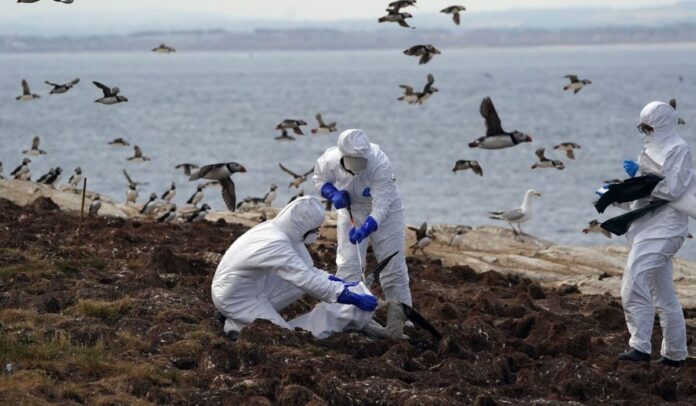
Queensland has become the fourth Australian state to record a case of H5N1 bird flu, authorities said Saturday, after a dead seabird found on an island off Brisbane tested positive for the highly pathogenic virus.
The confirmation came after park rangers discovered a dead petrel on Moreton Island, a wilderness area reachable by a roughly 40-kilometer ferry ride from the Queensland capital. Laboratory testing confirmed the bird was carrying H5N1 bird flu, making Queensland the latest state to report the virus after Western Australia, South Australia and New South Wales.
With Queensland’s case added to the tally, Australia has now confirmed 18 detections of H5N1 bird flu in wild seabirds nationwide. Western Australia has recorded the largest share of cases, with additional confirmed infections in South Australia and New South Wales, where two giant petrels found near Hawks Nest tested positive earlier this month.
Authorities emphasized that the virus remains confined to wild bird populations for now. “There remain no detections in poultry, nor evidence of large-scale deaths in any animals in Queensland,” officials said in a statement, adding that the risk H5N1 bird flu poses to human health remains low.
Australia was the last inhabited continent to confirm a mainland case of H5N1 bird flu, with the virus reaching the mainland only in June even though it had already been detected in late 2025 on Heard Island, a remote sub-Antarctic Australian territory roughly 4,100 kilometers from the mainland. The first mainland detection involved a sick brown skua found at Cape Le Grand National Park near Esperance in Western Australia, and additional cases in giant petrels quickly followed along the same stretch of coastline.
The strain of H5N1 bird flu now circulating in Australian wildlife is part of a broader global epidemic that has spread through wild bird and mammal populations since 2021, killing millions of birds, devastating poultry and dairy operations, and infecting a number of farmworkers overseas. Its arrival in Australia had long been anticipated by scientists, who warned that migratory shorebirds traveling the East Asian-Australasian Flyway from breeding grounds in Russia and China could eventually carry the virus south.
Earlier this month, Australia’s federal government confirmed the country’s first case of H5N1 bird flu in a local seabird, a milestone that raised concerns the virus was beginning to establish itself more broadly across the continent. Since then, officials in each newly affected state have moved to step up surveillance, urging the public to report sick or dead birds and to avoid touching wildlife carcasses.
National biosecurity authorities have kept heightened precautions in place for the poultry industry while assessing the risk from H5N1 bird flu. Australia’s Consultative Committee for Emergency Animal Disease has backed continued elevated measures for at least another two weeks, including voluntary housing of free-range flocks where practical.
For now, officials say the outbreak remains limited to wild birds, with no signs it has jumped into commercial flocks or caused mass die-offs among other animals. But with H5N1 bird flu now present in four states and Australia’s migratory bird season still underway, authorities are bracing for more detections in the weeks ahead.


Health officials note that human cases of H5N1 bird flu remain rare worldwide and the virus does not spread easily between people. Even so, wildlife agencies are urging anyone who comes across a sick or dead bird to avoid touching it and report the sighting to their state’s biosecurity hotline, so authorities can keep tabs on how far the virus is traveling.