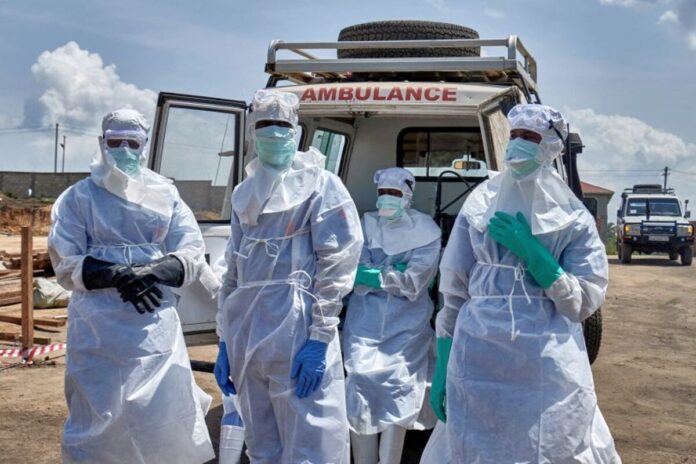
A volunteer in England has become the first person in the world to receive an experimental Ebola vaccine built specifically to fight the outbreak currently tearing through the Democratic Republic of Congo. Researchers at the University of Oxford confirmed on Friday that they had given the injection as part of a newly launched clinical trial, marking a rare moment when a vaccine has moved from concept to human testing in a matter of weeks rather than years.
The shot targets the Bundibugyo strain of the Ebola virus, a version of the disease that has no approved vaccine and no specific treatment. Health officials say this particular strain is spreading more quickly than any previous Ebola outbreak on record, which has added urgency to the effort to get a vaccine candidate into human trials as fast as possible.
The volunteer, a 37-year-old Oxford resident named Ed Hunt, told reporters that he had wanted to take part in a vaccine study for some time. He said he had originally hoped to join a COVID-19 vaccine trial but could not because of work commitments. After following news coverage of the Ebola crisis in Congo, he decided to sign up for this trial instead, saying he simply wanted to “do his bit” to help find a solution to the outbreak.
The vaccine being tested, known as ChAdOx1 BDBV, relies on the same viral vector platform used to build the Oxford-AstraZeneca COVID-19 vaccine. Scientists say that shared technology, combined with years of manufacturing experience at Oxford’s Clinical BioManufacturing Facility and support from the Serum Institute of India, allowed the team to take the vaccine from an early concept to a real clinical trial in only about eight weeks. The Serum Institute has reportedly already produced and stored more than 600,000 doses in anticipation of wider use if the trial goes well.
Researchers involved in the project described the pace of development as an extraordinary achievement made possible only through close cooperation between the university’s Pandemic Sciences Institute, its manufacturing partners, and international health bodies.
The Oxford Vaccine Group, which is running the study, said it intends to keep recruiting and immunizing additional volunteers over the coming weeks, while closely monitoring everyone who takes part for safety and immune response.
The trial comes as the situation in Congo continues to worsen. Since the outbreak was declared in May, more than 2,500 cases of this Ebola strain have been confirmed, with over 1,000 deaths reported so far, according to the World Health Organization.
Officials have warned that the true number of Ebola infections is likely much higher than the confirmed figures, since ongoing armed conflict in the region has made it difficult for health workers to reach many affected communities. The WHO’s director-general has noted that a large share of new cases are turning up outside known contact-tracing networks, and that most deaths are now happening within communities rather than in treatment centers, underscoring how hard this Ebola outbreak has been to contain.
This is the seventeenth Ebola outbreak recorded in Congo since the virus was first identified back in 1976, but health experts say its scale and speed set it apart from earlier episodes. With cases continuing to climb and no licensed vaccine yet available, the early-stage human trial launched in Oxford is being closely watched as one of the few active efforts to get ahead of the outbreak before it spreads further.


For now, the trial remains in its earliest phase, designed mainly to test the vaccine’s safety and how well it is tolerated in healthy volunteers. Oxford researchers say further results, along with plans for expanding the study, are expected in the coming months as more participants are enrolled and monitored.