President Donald Trump signed an executive order on Monday that reshapes the federal government’s approach to childhood vaccines, directing officials to trim the list of shots recommended for infants and to push for the combined measles, mumps and rubella vaccine to be broken apart into three separate doses.
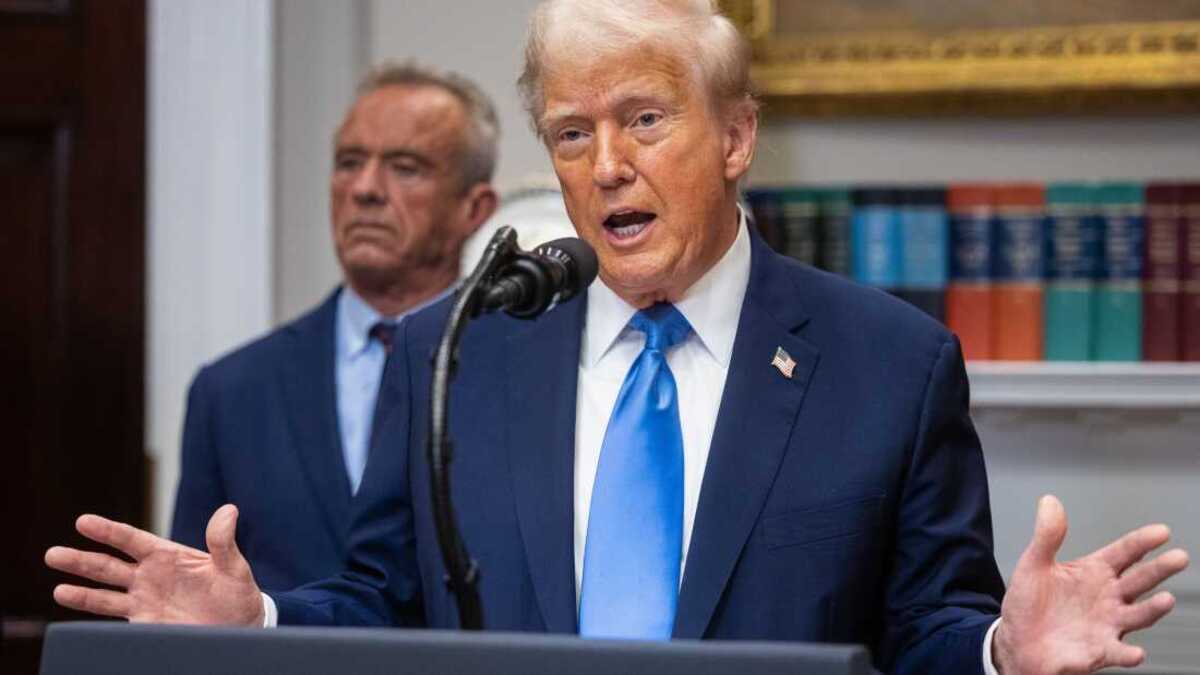
Speaking in the Oval Office alongside Health and Human Services Secretary Robert F. Kennedy Jr., Trump said the MMR vaccine should eventually be given as three individual shots at separate visits rather than as one combined dose. He argued that spacing out vaccines would be gentler on infants, though the single-disease versions of the shot are not currently sold in the United States and could take years to reach the market, according to public health officials.
The order calls for the government to recognize only 11 core childhood vaccines as part of the official federal schedule, down from the 17 currently recommended by health authorities. It also encourages doctors to spread required vaccines across more appointments instead of administering several vaccines during a single visit, a practice pediatricians have long used to reduce the number of trips families must make in a child’s early years.
Vaccine safety researchers and medical groups swiftly criticized the move. Physicians and scientists at the Centers for Disease Control and Prevention and the American Academy of Pediatrics have said there is no credible evidence that combining vaccines overwhelms a child’s immune system, and no data supporting a link between the MMR vaccine and autism. Splitting vaccines into additional appointments, critics warned, is likely to raise the odds that families miss doses altogether, leaving more children vulnerable to measles and other preventable illnesses.
The order is the latest step in a broader campaign by Trump and Kennedy to overhaul how vaccines are studied, recommended and administered nationwide. It follows a December directive ordering the Department of Health and Human Services to compare United States vaccine schedules with those of other wealthy nations. That review led the department to shrink its list of recommended vaccines earlier this year, a decision that courts have since blocked from taking effect. Monday’s order also instructs the Justice Department to examine whether states are improperly denying exemptions from school vaccine requirements on religious, medical or personal grounds.
For much of the summer, the White House had steered away from vaccine policy, focusing instead on less divisive priorities such as nutrition and prescription drug costs ahead of the November midterm elections. Trump’s renewed push suggests the administration is willing to revive a politically charged debate over vaccines even as it campaigns on other issues.
Kennedy, a longtime skeptic of vaccine safety data, has pursued similar changes since taking over the health department, including reshaping the CDC’s vaccine advisory panel and weakening guidance on shots that combine protection against chickenpox with the MMR vaccine. Monday’s order builds directly on those efforts and signals that changes to childhood vaccines will remain a priority for the administration.
The White House said the order is meant to give doctors and parents more flexibility in deciding how and when children receive vaccines, rather than mandating a single rigid approach. Officials framed the changes as part of a broader push to modernize vaccine research and address parental concerns about the number of shots given to infants.
Public health experts caution that any changes affecting how vaccines are scheduled or administered will take time to implement, given that manufacturers do not currently produce standalone measles, mumps and rubella vaccines for the U.S. market. Even so, doctors say the order alone could unsettle parents who already have questions about vaccines, potentially reducing childhood immunization rates before any formal changes take effect.

It remains unclear how quickly federal health agencies will act on the order or how state governments, many of which set their own school vaccine requirements, will respond. Lawmakers on both sides of the aisle are expected to weigh in as the debate over childhood vaccines continues in the months leading up to the midterm elections.