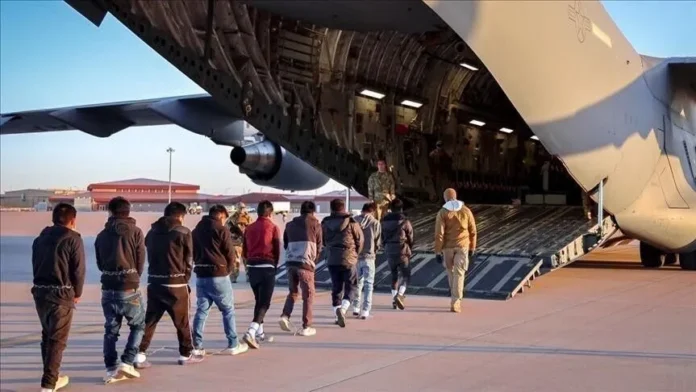
The United States has resumed Venezuela deportation flights after temporarily suspending removals following the devastating earthquakes that struck the South American nation in late June. The first repatriation flight since the disaster arrived on Monday, carrying more than 140 Venezuelan migrants back to their home country.
The aircraft departed from Miami with 147 Venezuelan nationals and landed safely at General José Antonio Anzoátegui International Airport in Barcelona, located in Anzoátegui state. The return marks the restart of deportation operations that had been placed on hold while Venezuela dealt with one of the deadliest natural disasters in its recent history.
Before the suspension, the United States had been carrying out regular deportation flights, returning hundreds of Venezuelan migrants each week. However, the campaign was interrupted after two powerful earthquakes, each exceeding magnitude 7, struck Venezuela within a short period. The disaster claimed the lives of more than 6,000 people, destroyed homes, businesses, and public infrastructure, and left large parts of the country struggling to recover.
The final deportation flight before the earthquakes transported 146 Venezuelans back to the country only hours before the disaster occurred. Tragically, several of those returnees reportedly lost their lives when the hotel where they were staying collapsed during the earthquake.
US immigration authorities confirmed that the latest removal operation had been completed successfully while declining to provide details about future deportation schedules, citing operational security.
On the Venezuelan side, officials overseeing the government’s repatriation program welcomed the returning migrants, describing the flight as an opportunity for citizens to reunite with their families, continue their education, rebuild their lives, and contribute to the country’s recovery.
For years, millions of Venezuelans have left their homeland to escape prolonged economic hardship, political instability, and declining living conditions. Many have undertaken dangerous journeys across several countries in hopes of reaching the United States and finding better opportunities.
Migration policies shifted significantly after the US Supreme Court allowed the termination of Temporary Protected Status for approximately 300,000 Venezuelans who had been living legally in the United States under humanitarian protections. Following that decision, deportation flights increased substantially, with official monitoring data showing that more than 1,700 Venezuelans were returned during May alone, shortly before the earthquakes forced a temporary suspension.
Political developments in Venezuela have also influenced migration cooperation between Washington and Caracas. Following the capture of former President Nicolás Maduro during a military operation earlier this year, deportation efforts expanded under the country’s acting president, Delcy Rodríguez.
According to Venezuela’s repatriation authorities, Monday’s operation was the 165th deportation flight conducted since both governments resumed migration cooperation in early 2025 under a bilateral agreement aimed at facilitating the orderly return of Venezuelan nationals.
Despite the restart of deportation flights, Venezuela continues to face enormous recovery challenges. The twin earthquakes caused widespread destruction across several regions, damaging critical infrastructure and disrupting economic activity. The United Nations Development Programme estimates that the disaster inflicted economic losses equivalent to approximately six percent of the country’s gross domestic product, with reconstruction expected to take several years.
At the same time, Venezuela’s transitional leadership has taken steps to improve diplomatic relations with the United States. Recent efforts have included expanding opportunities for American investment in the country’s oil industry, releasing a number of political prisoners, and strengthening cooperation on regional initiatives.
The resumption of deportation flights signals a return to regular migration operations after an extraordinary humanitarian interruption. As Venezuela continues rebuilding from one of the worst disasters in its history, both governments are expected to maintain cooperation on migration while balancing the country’s ongoing recovery efforts with the challenges of managing returning citizens.